






MS and Demyelinating Disorders
Latest News
Advertisement
Latest Videos








Shorts

0:51
Outlining the Shift to Precision Neurorehabilitation
6 months ago
by
Louie Pasculli
0:35
Brain Chat with Nerdy Neurologist: Myths About Insurance Coverage
6 months ago
by
Mitzi Joi Williams, MD
0:35
Brain Chat with Nerdy Neurologist: Why Your Insurance Card is Crucial
6 months ago
by
Mitzi Joi Williams, MD
0:45
Implications of Positive Phase 3 METEROID Study of Satralizumab in MOGAD
6 months ago
by
Michael Levy, MD, PhD
1:33
Design Considerations for Stem-Cell Based MS Trials
6 months ago
by
Jeffrey Cohen, MD(+1 more)
1:18
Recapping the 2026 ACTRIMS Forum
6 months ago
by
Isabella Ciccone, MPH(+1 more)
1:25
Living a Full Life with MS: Finding Hope and Specialized Care
7 months ago
by
Constance V. Katsafanas, DO(+1 more)
0:45
MS Roundtable: Educational Changes Needed With New Diagnostic Criteria
7 months ago
by
Marco Meglio(+1 more)
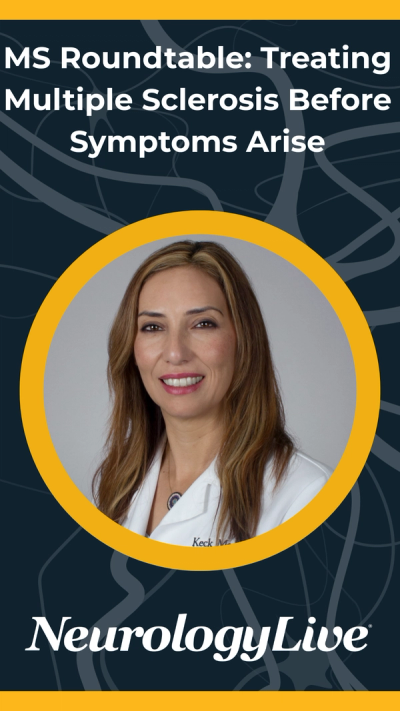
1:17
MS Roundtable: Treating Multiple Sclerosis Before Symptoms Arise
7 months ago
by
Marco Meglio(+1 more)
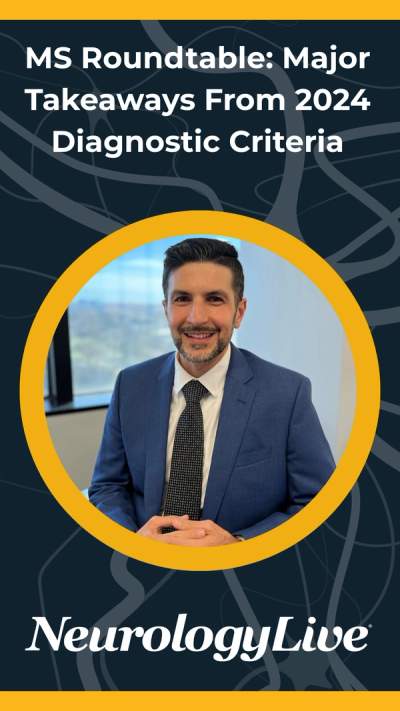
1:17
MS Roundtable: Top Takeaways From 2024 McDonald Criteria
7 months ago
by
Marco Meglio(+1 more)
CME Content












Advertisement
More News

A recent study revealed that a substantial proportion of patients with NMOSD required escalation from first-line immunosuppressants to rituximab, with baseline severe disability emerging as a key associated factor.

A recent study reported that relapse prevention was the most influential factor in treatment selection, with respondents favoring profiles similar to ravulizumab over other approved options for NMOSD.

A data-driven slideshow for National Public Health Week highlights the global burden of neurologic diseases, featuring key statistics on prevalence, disability, and workforce gaps across major conditions.

Here's some of what is coming soon to NeurologyLive® this week.

Real-world MOGAD data show tocilizumab drives relapse-free control, improves disability and vision, but requires infection monitoring.

Modafinil Effective for Treating EDS, Ravulizumab Controls NMOSD, Regardless of Rituximab Use, Reviewing 2026 Q1 FDA Approvals
Published: | Updated:
Neurology News Network for the week ending April 11, 2026. [WATCH TIME: 4 minutes]

Take 5 minutes to catch up on NeurologyLive®'s highlights from the week ending April 10, 2026.

A multicenter study showed that kappa free light chain index offers strong diagnostic accuracy for distinguishing MS from MOGAD and NMOSD, with added value when combined with oligoclonal band testing in complex cases.

The director of the Neurology Residency Program at the Marcus Neuroscience Institute talked about the role of research, patient empowerment, and expanding treatment options in multiple sclerosis. [WATCH TIME: 5 minutes]

A small case series published in JAMA Neurology found interstitial lung disease in 9% of long-term ocrelizumab-treated patients, with cases emerging after a mean of 10.5 years of therapy.

A neuroimmunology fellow at the Cleveland Clinic shared her experience attending the 2026 ACTRIMS Forum, specifically focusing on the late-breaking data presented in multiple sclerosis.
The director of the Neurology Residency Program at the Marcus Neuroscience Institute discussed the importance of early recognition of invisible symptoms in comprehensive multiple sclerosis care. [WATCH TIME: 9 minutes]
Stay informed on the latest therapeutic advancements with this clinical recap from the NeurologyLive® team, featuring a centralized look at 7 FDA-approved treatments from the first quarter of 2026.

A new post hoc analysis of the CHAMPION-NMOSD trial reported similar safety and relapse prevention outcomes with ravulizumab-cwvz in patients with and without prior rituximab exposure.

Findings from a recently published study suggest peripapillary retinal nerve fiber layer thickness measured by OCT could support clinicians with early distinction between MOGAD-optic neuritis and NMOSD-optic neuritis.
Here's some of what is coming soon to NeurologyLive® this week.

Early clinical and real-world data suggest meningococcal vaccination is associated with a low risk of short-term relapse in patients with anti–aquaporin-4 antibody–positive NMOSD.
Take 5 minutes to catch up on NeurologyLive®'s highlights from the week ending April 3, 2026.

A neuroimmunology fellow at the Cleveland Clinic reflected on the 2026 ACTRIMS Forum, highlighting key takeaways in multiple sclerosis research presented in the program. [WATCH TIME: 6 minutes]

A recent retrospective cohort analysis suggests newer NMOSD-specific treatments may offer improved efficacy and safety compared with rituximab and commonly used off-label therapies.

A case report of a 12-year-old boy highlighted a potential association between immunoglobulin G subclass imbalance and antibody detection in myelin oligodendrocyte glycoprotein antibody disease.

Peter Sguigna, MD, assistant professor of neurology at UT Southwestern Medical Center in Dallas, Texas, spoke on emerging research, innovative biomarkers, and expanding targeted therapies for patients living with NMOSD.
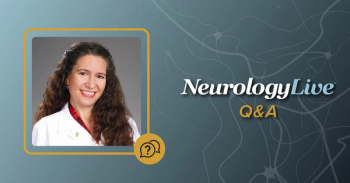
Constance V. Katsafanas, DO, director of the Neurology Residency Program at the Marcus Neuroscience Institute, highlighted the importance of individualized treatment strategies in multiple sclerosis.
The director of the Neurology Residency Program at the Marcus Neuroscience Institute detailed the importance of tailoring treatment to patients with multiple sclerosis. [WATCH TIME: 5 minutes]
A group of neuroimmunologists discuss how the updated McDonald criteria will shape neurologist training and highlight key barriers to implementation, including imaging access, resource limitations, and knowledge dissemination.
Advertisement
Advertisement
Trending on NeurologyLive - Clinical Neurology News and Neurology Expert Insights
1
FDA Approves Autoinjector for Self-Administered Zilucoplan in Generalized Myasthenia Gravis
2
New Phase 1 Study Tests Intrathecal Gene Therapy Agent INS1201 in Duchenne Muscular Dystrophy
3
Arimoclomol Plus Miglustat Shows Early, Sustained Slowing of Niemann-Pick Disease Type C Progression
4
Fenfluramine Shows Consistent Seizure Reduction Across Age Groups in CDKL5 Deficiency Disorder
5