



MS and Demyelinating Disorders
Latest News

Satralizumab Post-Marketing Study Demonstrates Consistently Lower Patterns of Infection Than US Claims Data
By Marco Meglio

Researchers Identify Distinct Differences in Acute Optic Neuropathy of MOGAD vs Nonarterior Anterior Ischemic Optic Neuropathy
By Marco Meglio
Advertisement
Latest Videos

CME Content










Advertisement
More News

Here's some of what is coming soon to NeurologyLive® this week.
Test your neurology knowledge with NeurologyLive®'s weekly quiz series, featuring questions on a variety of clinical and historical neurology topics. This week's topic is on the sleep disorders.
Take 5 minutes to catch up on NeurologyLive®'s highlights from the week ending April 19, 2024.
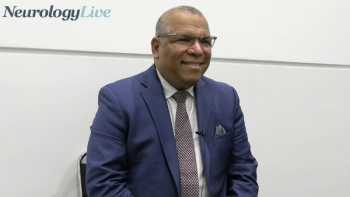
Advancing MS Care for Minority Populations Using the VISIBL-MS Bilingual Framework: Jaime Imitola, MD
Published: | Updated:
The chief of the Division of MS and Neuroimmunology at UConn Health talked about the unevenly distributed progress in multiple sclerosis care, impacting minority populations who often face worse disease outcomes. [WATCH TIME: 6 minutes]
The neurology resident at Massachusetts General Brigham talked about assessing the safety of cancer treatments in patients with multiple sclerosis using checkpoint inhibitors. [WATCH TIME: 6 minutes]

The professor of neurology at the NYU Grossman School of Medicine discussed a study presented at AAN 2024 highlighting the risks of cannabis use in patients with multiple sclerosis. [WATCH TIME: 4 minutes]
The associate professor of neurology at University of California, San Francisco talked about findings from an analysis that assessed the safety of ocrelizumab when administered close to pregnancy. [WATCH TIME: 5 minutes]
The executive vice president of research at National MS Society talked about the Dystel Prize which is presented at AAN to a recognized individual who promotes further advancements in understanding and treating MS. [WATCH TIME: 3 minutes]
Here's some of what is coming soon to NeurologyLive® this week.
The director of the Allegheny Multiple Sclerosis Treatment Center at Allegheny General Hospital discussed exploring the potential role of BTK inhibitors and advanced MRI techniques to address smoldering multiple sclerosis. [WATCH TIME: 10 minutes]
Test your neurology knowledge with NeurologyLive®'s weekly quiz series, featuring questions on a variety of clinical and historical neurology topics. This week's topic is on the American Academy of Neurology Annual Meeting.

Patients with first MS symptoms less than 3 years prior to enrollment saw greater long-term benefits with ublituximab than those with longer disease course.
Take 5 minutes to catch up on NeurologyLive®'s highlights from the week ending April 12, 2024.

The professor of materials science and engineering at Cornell University and chief executive officer at Artificial Axon Labs talked about the development of artificial axons through 3D printing. [WATCH TIME: 6 minutes]
The professor of neurology at Johns Hopkins Medicine discussed the trial design of the phase 4 RENEW study assessing the long-term safety profile of mitoxantrone in multiple sclerosis. [WATCH TIME: 9 minutes]
Here's some of what is coming soon to NeurologyLive® this week.
The assistant professor of neurology at Johns Hopkins Medicine talked about her preclinical research in immunology to explore the intricate mechanisms controlling chronic inflammation in the central nervous system. [WATCH TIME: 5 minutes]
Test your neurology knowledge with NeurologyLive®'s weekly quiz series, featuring questions on a variety of clinical and historical neurology topics. This week's topic is on limb girdle muscular dystrophy.
Take 5 minutes to catch up on NeurologyLive®'s highlights from the week ending Aprl 5, 2024.

Mind Moments®, a podcast from NeurologyLive®, brings you an interview with Francesco Saccà, MD, PhD. [LISTEN TIME: 18 minutes]
The professor of neurology at Johns Hopkins Medicine discussed the limited impact of current therapies on retinal atrophy rates in progressive multiple sclerosis at the 2024 ACTRIMS Forum. [WATCH TIME: 5 minutes]

Elizabeth Miller, MA, the manager of health literacy at the National MS Society, discussed the impact of health literacy in the multiple sclerosis community.

The associate professor of neurology at the University of Naples discussed a recently enrolled study assessing the use of dimethyl fumarate, an approved therapy for relapsing MS and psoriasis, in patients with Friedreich ataxia.
The associate professor of clinical neurology at Weill Cornell Medicine discussed the progress made in multiple sclerosis in terms of expanding access to therapies and the challenges that persist for progressive forms of the disease in the field. [WATCH TIME: 10 minutes]
Overall, the data empower the potential of CAR-T cell therapy for patients with advanced multiple sclerosis that are refractory to conventional antibody-mediated B cell depletion.
Advertisement
Advertisement
Trending on NeurologyLive - Clinical Neurology News and Neurology Expert Insights
1
uniQure Submits BLA for Gene Therapy in HD, AAN, AHS Issue Updated Guideline on Migraine Prevention, CTE Prevalence, Brain Donation Findings in Former NFL Players
2
EU Approves Modified-Release Carbidopa/Levodopa Capsules for Parkinson Disease Motor Fluctuations
3
Phase 4 Study Highlights Valbenazine's Positive Impact on Patient-Reported Quality of Life, Daily Functioning in Tardive Dyskinesia
4
American Academy of Neurology, American Headache Society Issue Updated Guideline on Migraine Prevention
5