






MS and Demyelinating Disorders
Latest News
Advertisement
Video Series



Latest Videos






Shorts
1:25
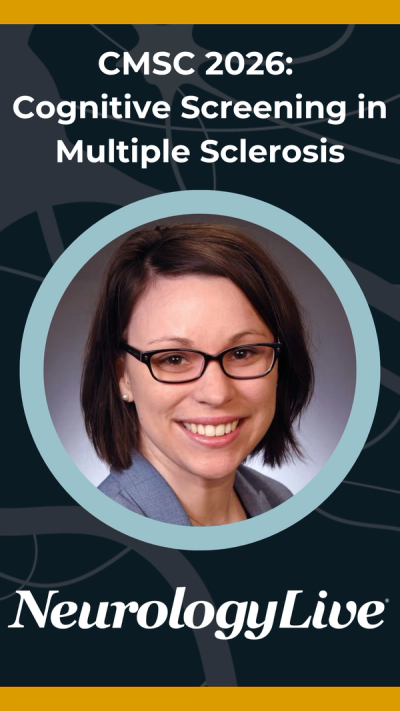
CMSC 2026: Cognitive Screening in Multiple Sclerosis
4 months ago
by
Elizabeth S. Gromisch, PhD(+1 more)
0:41
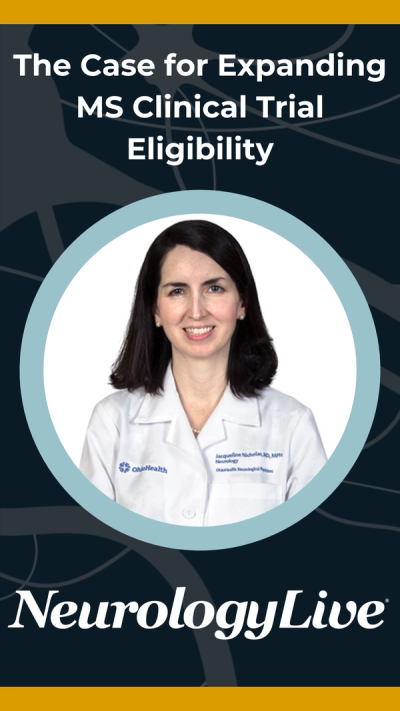
The Case for Expanding MS Clinical Trial Eligibility
4 months ago
by
Jacqueline Nicholas, MD, MPH(+1 more)

1:25
CMSC 2026: The Patient Journey of Living With MS
5 months ago
by
Jamie Lynn Sigler(+1 more)
0:51
Are MS Trial Categories Outdated?
5 months ago
by
Stephen Krieger, MD(+1 more)
1:25
CMSC 2026: Misconceptions on Stopping DMTs in Multiple Sclerosis
5 months ago
by
John Corboy, MD(+1 more)
1:13
CMSC 2026: 3 Myths About Pregnancies and MS
5 months ago
by
Kristen Krysko, MD(+1 more)
0:35
Rethinking the MS Clinical Trial Process
5 months ago
by
Cecilia Meza, MA(+1 more)

0:43
How Self-Motivation and Consistency Support Long-Term Wellness
5 months ago
by
Mitzi Joi Williams, MD
1:11
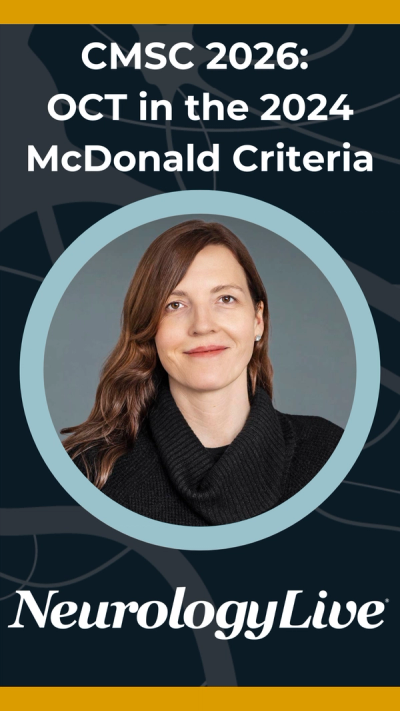
CMSC 2026: OCT in the 2024 McDonald Criteria
5 months ago
by
Rachel Kenney, PhD(+1 more)
1:01
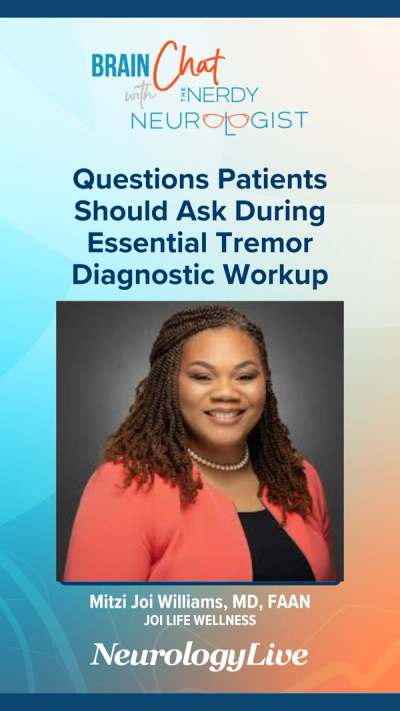
Questions Patients Should Ask During Diagnostic Workup for Essential Tremor
5 months ago
by
Mitzi Joi Williams, MD
Podcasts


CME Content












Advertisement
More News

Take 5 minutes to catch up on NeurologyLive®'s highlights from the week ending June 5, 2026.

The professor of neurology at the University of Colorado discussed evidence from DISCOMS and other trials on disease-modifying therapy discontinuation in older, stable patients with multiple sclerosis. [WATCH TIME: 8 minutes]
Mitzi Joi Williams, MD, sits down with sleep specialist Shantel Branson, MD, to discuss how sleep impacts brain health, memory, mood, and long-term neurologic well-being.

At CMSC 2026, the neuroimmunologist and director at OhioHealth MS Center, discussed results from the phase 3 FENhance 1 and 2 studies, highlighting significant reductions in relapse rates and robust MRI outcomes. [WATCH TIME: 3 minutes]

As the MS community reflects on World MS Day, Alla Wilson, a clinical ambulatory pharmacist at Shields Health Solutions, discusses how integrated specialty pharmacy models can improve treatment access, adherence, and patient-reported outcomes for multiple sclerosis.

The neurologist at Orlando Health discussed findings from an analysis of cladribine tablets in patients aged 50 years and older with relapsing multiple sclerosis presented at CMSC 2026. [WATCH TIME: 7 minutes]

Improving Access to Cognitive Screening in Multiple Sclerosis Care: Elizabeth S. Gromisch, PhD, MSCS
The research neuropsychologist at Mount Sinai Rehabilitation Hospital outlined hallmark patterns of cognitive impairment in multiple sclerosis at the 2026 CMSC Annual Meeting. [WATCH TIME: 6 minutes]
The assistant professor of neurology at NYU Grossman School of Medicine discussed how optical coherence tomography can support the 2024 McDonald Criteria for multiple sclerosis at CMSC 2026.

A clinical research coordinator at SunnyBrook Health Sciences Centre, explained key factors of the computerized cognitive training program that contributed to cognitive improvement. [WATCH TIME: 3 minutes]

The neurologist at St. Michael's Hospital shared findings presented at CMSC 2026 from a large dataset on preconception ocrelizumab exposure among women with multiple sclerosis. [WATCH TIME: 5 minutes]

Kyle Blackburn, MD, a neurologist at UT Southwestern Medical Center, discussed new proposed updates to the diagnostic criteria and nosology for myelitis presented at the 2026 CMSC Annual Meeting.

CMSC 2026 registry data showed low relapse rates and no new safety signals among adults with AQP4-positive NMOSD treated with eculizumab or ravulizumab in real-world practice.

Here's some of what is coming soon to NeurologyLive® this week.

At CMSC 2026, Jamie Lynn Sigler, an actress and patient advocate, shared her perspective on living with multiple sclerosis, emphasizing informed decision-making and treatment consistency. [WATCH TIME: 7 minutes]

GLP-1s Improve MS Physical Activity, BLA Submitted for Z-Rostudirsen, Ofatumumab Outperforms Rituximab in NMOSD Study
Published: | Updated:
Neurology News Network for the week ending May 30, 2026. [WATCH TIME: 4 minutes]

The director of the Stony Broke MS Comprehensive Care Center reviewed late-breaking subgroup data evaluating high-efficacy therapy in patients with highly active relapsing multiple sclerosis and discussed the evolving role of early intervention. [WATCH TIME: 5 minutes]
Take 5 minutes to catch up on NeurologyLive®'s highlights from the week ending May 29, 2026.

New data presented at CMSC 2026 suggest ocrelizumab provides comparable relapse and MRI control in pediatric- and young-adult–onset multiple sclerosis, with greater disability improvement observed in pediatric patients.
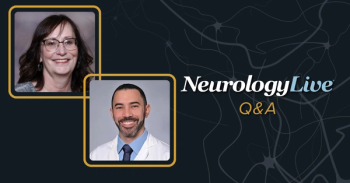
Nurses Jeffrey Hernandez, DNP, APRN, and Bonnie Blain, RN, discussed important behind the scenes work nurses carry out in neurology care.

A literature review suggests ferritin may serve as a “dual-edged” biomarker in multiple sclerosis, with elevated levels associated with disease progression and low levels linked to impaired remyelination.

A retrospective study presented at CMSC 2026 found GLP-1 receptor agonist use in multiple sclerosis was associated with higher physical activity levels and improvements across several patient-reported symptom domains.

Three-year extension data presented at CMSC 2026 showed sustained suppression of MRI activity and low relapse rates with frexalimab in relapsing multiple sclerosis.

A new analysis presented at CMSC 2026 suggests that rescue treatment with complement inhibition may help stabilize disease activity in Hispanic patients with NMOSD who experienced relapse despite treatment.

A real-world study presented at CMSC 2026 reported year-1 improvements in treatment satisfaction and disease impact measures in patients with MS treated with ublituximab.

An analysis from the phase 3b ENLIGHTEN study presented at the 2026 CMSC Annual Meeting showed that cognitive performance remained stable during long-term treatment with ozanimod in patients with relapsing multiple sclerosis.
Advertisement
Advertisement
Trending on NeurologyLive - Clinical Neurology News and Neurology Expert Insights
1
FDA Approves Autoinjector for Self-Administered Zilucoplan in Generalized Myasthenia Gravis
2
New Phase 1 Study Tests Intrathecal Gene Therapy Agent INS1201 in Duchenne Muscular Dystrophy
3
Arimoclomol Plus Miglustat Shows Early, Sustained Slowing of Niemann-Pick Disease Type C Progression
4
Fenfluramine Shows Consistent Seizure Reduction Across Age Groups in CDKL5 Deficiency Disorder
5