


Stroke
Latest News
Advertisement
Latest Videos
![Video 4 - "Computed Tomography Perfusion [CTP] In Stroke Management"](https://cdn.sanity.io/images/0vv8moc6/neurolive/22a5299dacb2d682893012688ede0e3cda33a713-1920x1080.png?w=320&fit=crop&auto=format)
CME Content











Advertisement
More News
Test your neurology knowledge with NeurologyLive®'s weekly quiz series, featuring questions on a variety of clinical and historical neurology topics. This week's topic is multiple sclerosis and MS mimics.
Take 5 minutes to catch up on NeurologyLive®'s highlights from the week ending March 29, 2024.
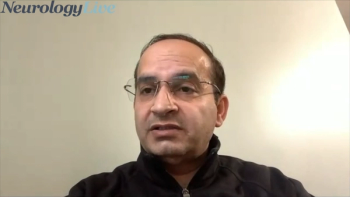
The associate professor of neurology at The Ohio State University Wexner Medical Center provided insight on research assessing the use of a developed artificial intelligence/machine learning tool for automated stroke scale calculation. [WATCH TIME: 6 minutes]

Here's some of what is coming soon to NeurologyLive® this week.
Test your neurology knowledge with NeurologyLive®'s weekly quiz series, featuring questions on a variety of clinical and historical neurology topics. This week's topic is movement disorders and multiple system atrophy.
Take 5 minutes to catch up on NeurologyLive®'s highlights from the week ending March 22, 2024.
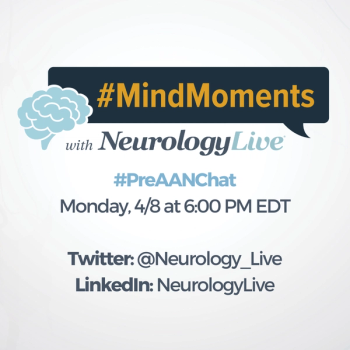
Join us on April 8 on our LinkedIn and X pages for our #PreAANChat premeeting social chat ahead of the 2024 American Academy of Neurology Annual Meeting!
Here's some of what is coming soon to NeurologyLive® this week.
Test your neurology knowledge with NeurologyLive®'s weekly quiz series, featuring questions on a variety of clinical and historical neurology topics. This week's topic is Purple Day and epilepsy awareness.
Take 5 minutes to catch up on NeurologyLive®'s highlights from the week ending March 15, 2024.
Here's some of what is coming soon to NeurologyLive® this week.
Catch up on any of the neurology news headlines you may have missed over the course of February 2024, compiled all into one place by the NeurologyLive® team.
Test your neurology knowledge with NeurologyLive®'s weekly quiz series, featuring questions on a variety of clinical and historical neurology topics. This week's topic is Purple Day and epilepsy awareness.
Take 5 minutes to catch up on NeurologyLive®'s highlights from the week ending March 8, 2024.
Here's some of what is coming soon to NeurologyLive® this week.
Catch up on any of the neurology news headlines you may have missed over the course of March 2024, compiled all into one place by the NeurologyLive® team.
Test your neurology knowledge with NeurologyLive®'s weekly quiz series, featuring questions on a variety of clinical and historical neurology topics. This week's topic is Alzheimer disease and dementia.
Take 5 minutes to catch up on NeurologyLive®'s highlights from the week ending March 1, 2024.
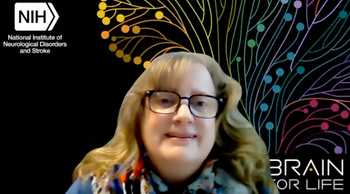
The program director in the division of Neuroscience at the National Institute of Neurological Disorders and Stroke provided context on the importance of Rare Disease Day and strides made over the years. [WATCH TIME: 5 minutes]

Caroline Just, MD, reflects on the challenges of diagnosing and treating rare neurological diseases, urging for improved education, collaboration, and research efforts.
Experts in stroke care expressed a need for significant increases in awareness of stroke risk factors and symptoms in patient communities that experience racial disparities.
The associate professor of neurology at McMaster University talked about findings from secondary analyses on the phase 4 ANNEXA-I trial assessing andexanet alfa in patients with acute intracerebral hemorrhage. [WATCH TIME: 10 minutes]
The conversations behind cerebroprotection in stroke have begun to get louder, with a pipeline that includes several different approaches to treatment.
The neurointerventional radiologist at NYU Langone provided clarity on the individualized treatment options for cervical artery dissection following a scientific statement paper from the American Heart Association. [WATCH TIME: 7 minutes]

The primary result showed a highly significant effect of edaravone dexborneol on good functional outcome, defined by scores of 0 (no symptoms) or 1 (some symptoms) on the standard modified Rankin scale assessed at 90 days postrandomization.
Advertisement
Advertisement
Trending on NeurologyLive - Clinical Neurology News and Neurology Expert Insights
1
Clene Submits NDA Seeking Accelerated Approval for ALS Drug
2
Real-World Data Show Switch to Subcutaneous Ocrelizumab Well Tolerated
3
Early Data Show Dual-Targeting CAR-T Agent CTA313 Stabilizes Progressive Multiple Sclerosis
4
CALLIPER Extension Data Show Sustained Disability Outcomes With Vidofludimus Calcium in Progressive MS
5