





Stroke
Latest News
Advertisement
Latest Videos






CME Content













Advertisement
More News

In comparison with placebo, treatment with remote ischemic conditioning was not associated with a significant shift toward better functional outcome at 90 days.
Catch up on any of the neurology news headlines you may have missed over the course of September 2023, compiled all into one place by the NeurologyLive® team.

Here's some of what is coming soon to NeurologyLive® this week.
Test your neurology knowledge with NeurologyLive®'s weekly quiz series, featuring questions on a variety of clinical and historical neurology topics. This week's topic is sleep disorders.
Take 5 minutes to catch up on NeurologyLive®'s highlights from the week ending October 6, 2023.

The codirector of interventional neuroradiology and vice-chief of the department of neuroscience at Baptist Health Miami Neuroscience Institute discussed the questions that still remain with identifying and treating subarachnoid hemorrhage. [WATCH TIME: 3 minutes]

The codirector of interventional neuroradiology and vice-chief of the department of neuroscience at Baptist Health Miami Neuroscience Institute provided clarity on the complexities with treating subarachnoid hemorrhage on an individual case basis. [WATCH TIME: 4 minutes]
Here's some of what is coming soon to NeurologyLive® this week.
Test your neurology knowledge with NeurologyLive®'s weekly quiz series, featuring questions on a variety of clinical and historical neurology topics. This week's topic is epilepsy and seizure disorders.
Take 5 minutes to catch up on NeurologyLive®'s highlights from the week ending September 29, 2023.
The associate professor of neurology at Vanderbilt University Medical Center discussed the progress in stroke care, focusing on ischemic strokes and cerebral hemorrhages, and their connection with vascular diseases and cognitive disorders. [WATCH TIME: 3 minutes]
Here's some of what is coming soon to NeurologyLive® this week.
Test your neurology knowledge with NeurologyLive®'s weekly quiz series, featuring questions on a variety of clinical and historical neurology topics. This week's topic is headache and migraine.

In the largest meta-analysis of patients with poststroke seizures, findings showed that those with early seizures had a greater mortality risk than those with late.
Take 5 minutes to catch up on NeurologyLive®'s highlights from the week ending September 22, 2023.
The associate professor at Washington University School of Medicine provided commentary on the state of care for pediatric stroke, and the challenges with identifying the most likely etiology. [WATCH 3 minutes]
Here's some of what is coming soon to NeurologyLive® this week.
Test your neurology knowledge with NeurologyLive®'s weekly quiz series, featuring questions on a variety of clinical and historical neurology topics. This week's topic is Alzheimer and dementia.
Take 5 minutes to catch up on NeurologyLive®'s highlights from the week ending September 15, 2023.

Black adults who had a stroke because of a severe blockage of a major artery in the brain were younger, had higher rates of high blood pressure and type 2 diabetes, and had lower physical activity scores compared with nonBlack adults.
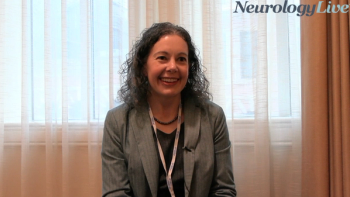
The associate professor at Washington University School of Medicine discussed the reasons for why some institutions have different risk benefit analyses for thrombolysis, and whether this causes challenges for the healthcare system. [WATCH TIME: 4 minutes]
Here's some of what is coming soon to NeurologyLive® this week.
Test your neurology knowledge with NeurologyLive®'s weekly quiz series, featuring questions on a variety of clinical and historical neurology topics. This week's topic is stroke.
Take 5 minutes to catch up on NeurologyLive®'s highlights from the week ending September 8, 2023.
Catch up on any of the neurology news headlines you may have missed over the course of August 2023, compiled all into one place by the NeurologyLive® team.
Advertisement
Advertisement
Trending on NeurologyLive - Clinical Neurology News and Neurology Expert Insights
1
New Phase 1 Study Tests Intrathecal Gene Therapy Agent INS1201 in Duchenne Muscular Dystrophy
2
MDS Congress 2026: Late-Breaking Data Snapshot
3
Satralizumab Reduces MOGAD Relapse Risk in Phase 3 METEOROID Trial
4
FDA Approves Autoinjector for Self-Administered Zilucoplan in Generalized Myasthenia Gravis
5