


Stroke
Latest News
Advertisement
Latest Videos
CME Content











Advertisement
More News
To honor Black History Month, NeurologyLive® spoke with influential Black clinicians on the leaders they look up to, the ongoing fight to overcome racial disparities, and ways to encourage diversity in health care.

Although the magnitude of the association for smoking, atrial fibrillation and left ventricular hypertrophy did not decrease, their importance for stroke risk likely increases with age.
To honor Black History Month, NeurologyLive® spoke with influential Black clinicians on the leaders they look up to, the ongoing fight to overcome racial disparities, and ways to encourage diversity in health care.
The director of Cleveland Clinic’s Cerebrovascular Center discussed the decisions mobile stroke units face and why opting for direct transfer to angiography is meant for certain scenarios. [WATCH TIME: 3 minutes]
To honor Black History Month, NeurologyLive® spoke with influential Black clinicians on the leaders they look up to, the ongoing fight to overcome racial disparities, and ways to encourage diversity in health care.
The director of Cleveland Clinic’s Cerebrovascular Center provided perspective on a new study presented at the International Stroke Conference on experiences of poststroke patients taken directly to angiography suite. [WATCH TIME: 3 minutes]

Here's some of what is coming soon to NeurologyLive® this week.

Investigators Macarena Hernandez, PhD, and Marc Ribo, MD, provided commentary on positive phase 2a findings assessing ApTOLL in combination with EVT in patients with ischemic stroke.

Blood pressure medications may not be safe or effective to use for lowering systolic blood pressure following endovascular treatment for acute ischemic stroke.
Take 5 minutes to catch up on NeurologyLive®'s highlights from the week ending February 10, 2023.
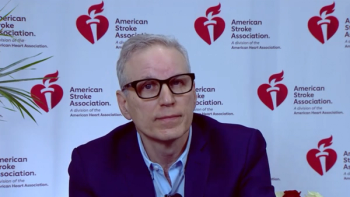
The professor of neurology at Harvard Medical School spoke at the 2023 ISC Conference about highlights from the STROKE-AF study after a 3-year follow-up. [WATCH TIME: 5 minutes]

In comparison with those who underwent additional imaging, patients with large vessel occlusion who directly went to angiography suite had higher mortality, but with no difference in functional outcome.
Mind Moments®, a podcast from NeurologyLive®, brings you an exclusive interview with Carolina Ferreira Atuesta, MD, MSc. [LISTEN TIME: 26 minutes]
At the conclusion of the trial, treatment with 0.2 mg/kg of ApTOLL with EVT resulted in reduced brain edema and hemorrhagic transformation, as well as fewer deaths than placebo and 0.05 mg groups.

Patients with noncardioembolic ischemic stroke do not typically monitor post-stroke longterm to detect atrial fibrillation although findings from a trial follow-up suggest otherwise.
Catch up on any of the neurology news headlines you may have missed over the course of January 2023, compiled all into one place by the NeurologyLive® team.
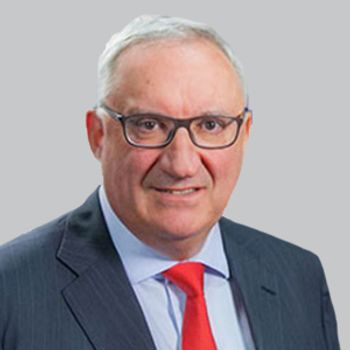
REACT randomly assigned 409 patients—treated with either microsurgical clipping or endovascular coiling aneurysm securing procedures—1:1 to placebo or clazosentan 15 mg/hr, for a 14-day treatment period.
The medical director of stroke at Fairview Hospital, an affiliate of Cleveland Clinic, provided perspective on a new intervention that improves communication and reduces hospital readmission for stroke.

Results from a recent study suggest that greater cumulative exposure to estrogen throughout a woman’s lifespan could increase her risk of stroke.
Here's some of what is coming soon to NeurologyLive® this week.
The list of women's contributions to the field of medicine is a long one, encompassing the hard work of hundreds of individuals. To highlight some of these pioneers, NeurologyLive® has compiled a timeline of 10 of the moments that matter in the history of women in medicine.
Take 5 minutes to catch up on NeurologyLive®'s highlights from the week ending February 3, 2023.
Here's some of what is coming soon to NeurologyLive® this week.
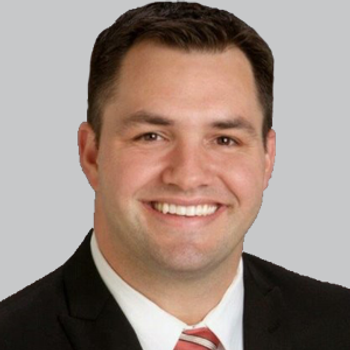
Richard Williamson, MD, FAANS, a neurosurgeon at Allegheny Health Network, provided commentary on the explosion of technology in neurosurgery and how exoscopes ease the process.
Take 5 minutes to catch up on NeurologyLive®'s highlights from the week ending January 27, 2023.
Advertisement
Advertisement
Trending on NeurologyLive - Clinical Neurology News and Neurology Expert Insights
1
New Phase 1 Study Tests Intrathecal Gene Therapy Agent INS1201 in Duchenne Muscular Dystrophy
2
MDS Congress 2026: Late-Breaking Data Snapshot
3
Satralizumab Reduces MOGAD Relapse Risk in Phase 3 METEOROID Trial
4
The Road Ahead for Precision Medicine in Multiple Sclerosis
5