

Jeffrey Cohen, MD, professor of neurology and staff physician at the Cleveland Clinic Mellen Center for Multiple Sclerosis, discusses interim BREAKFREE-2 findings for zola-cel, a CD19-directed CAR T cell therapy, in relapsing and progressive MS.





Jeffrey Cohen, MD, professor of neurology and staff physician at the Cleveland Clinic Mellen Center for Multiple Sclerosis, discusses interim BREAKFREE-2 findings for zola-cel, a CD19-directed CAR T cell therapy, in relapsing and progressive MS.

At MSToronto 2026, investigators applied machine learning to health records, retinal scans, and blood samples to flag multiple sclerosis and neuromyelitis optica spectrum disorder years before diagnosis or disability worsening, and identified the symptoms and conditions that tend to come first.

Kim Henriksen, PhD, discusses research evaluating blood-based biomarkers of blood-brain barrier remodeling and immune cell activity in multiple sclerosis, including their potential to track treatment responses and inform future biomarker development.

At MSToronto 2026, researchers showed deep learning models that extract more from routine MRI scans than volume measures alone, and clinicians described uses beyond imaging, but speakers warned that most published MS models have never been tested outside the center that built them.
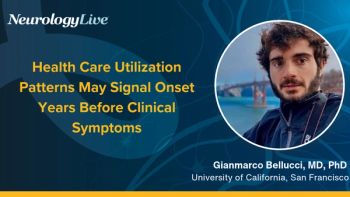
Changes in health care use emerged 5 to 6 years before the first clinical manifestation of MS, with shifts in encounter patterns potentially reflecting underlying autoimmune activity and other disease-associated processes.

Terrie Livingston, PharmD, vice president of medical affairs at Octave Bioscience, discussed the evolving role of blood-based biomarkers in multiple sclerosis care.

New biomarker data showed smaller post-onset increases in plasma neurofilament light chain and glial fibrillary acidic protein with privosegtor added to steroids in patients with acute optic neuritis.

Phase 3 data show the oral BTK inhibitor reduced annualized relapse rate by 35.2% and 31.2% vs teriflunomide, with no liver safety signal or Hy's Law cases.

A professor at Polytechnique Montreal discussed advances in brain and spinal cord MRI for multiple sclerosis, including improved lesion detection, imaging standardization, and the opportunities and challenges of AI. [WATCH TIME: 5 minutes]
A phase 2 trial found liposomal mitoxantrone hydrochloride had an acceptable safety profile and a potential trend toward fewer relapses in neuromyelitis optica spectrum disorder.

The phase 2 FENerations1 study is an open-label, single-arm, small-scale study evaluating fenebrutinib dosing in 8 to 12 children and adolescents with relapsing MS.

Updated data from Breakfree-2 study showed that treatment with a single zola-cel infusion achieved NEDA-3 in highly active relapsing multiple sclerosis and led to mostly stable disability in progressive multiple sclerosis.

Data from the real-world, CONFIDENCE study found switching from intravenous to subcutaneous ocrelizumab was well tolerated in patients with relapsing and primary progressive MS.

Open-label extension data showed that disability trends observed with vidofludimus calcium during the double-blind period of the phase 2 CALLIPER trial persisted with continued treatment in progressive MS.

Early phase 1 data in 3 patients suggest CTA313, an allogeneic CD19/BCMA CAR-T, may stabilize disability with a manageable safety profile in progressive MS.

One-year data from the phase 3 AQUARELLE study found that divozilimab, an anti-CD20 antibody, reduced relapse risk in patients with neuromyelitis optica spectrum disorder.

The clinical assistant professor at Feinberg School of Medicine outlined some of the major revisions proposed for the NMOSD diagnostic criteria presented at ECTRIMS 2025. [WATCH TIME: 8 minutes]

At ECTRIMS 2025, the professor of biomedical engineering at the University of Bern discussed virtual reality technologies for multiple sclerosis rehabilitation. [WATCH TIME: 3 minutes]

The staff neurologist at the Mellen Center for Multiple Sclerosis at Cleveland Clinic shared data from the phase 2 CALIPER trial of vidofludimus calcium in progressive MS presented at ECTRIMS 2025. [WATCH TIME: 7 minutes]

At ECTRIMS 2025, the William S. and Lois Stiles Edgerly Professor of Neurology at Yale School of Medicine discussed evolving insights into the disease pathogenesis of multiple sclerosis.
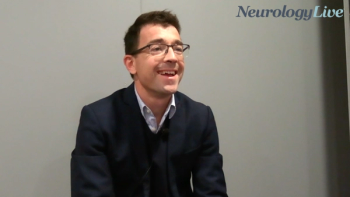
The neurologist at the Multiple Sclerosis Center of Catalonia talked about the challenges of defining seronegative in new diagnostic criteria for neuromyelitis optica spectrum disorder [WATCH TIME: 5 minutes]

At ECTRIMS 2025, the associate professor at Pontifical Catholic University of Chile discussed global challenges in diagnosing multiple sclerosis early. [WATCH TIME: 5 minutes]
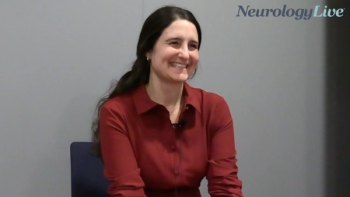
At ECTRIMS 2025, the staff neurologist at Cleveland Clinic’s Mellen Center for MS discussed developing a machine-learning tool to predict individualized risk of recurrent disease activity in multiple sclerosis. [WATCH TIME: 6 minutes]
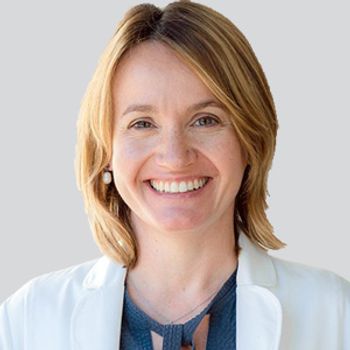
Riley Bove, MD, an associate professor of neurology at the University of California, San Francisco, discussed phase 4 findings from the MINORE and SOPRANINO studies that examined ocrelizumab exposure during pregnancy and lactation in women with MS.

The professor of neurology at Barts and The London School of Medicine and Dentistry provided commentary on the ways to improve inclusion for multiple sclerosis clinical trials, factoring in patients with more advanced stages of disease. [WATCH TIME: 4 minutes]
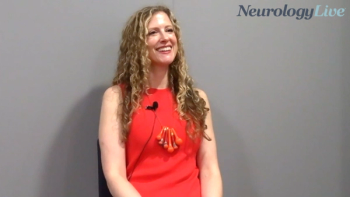
The assistant professor of neurology at Oregon Health & Science University discussed emerging evidence that aerobic exercise may enhance remyelination in patients with multiple sclerosis. [WATCH TIME: 5 minutes]

The pediatrician in chief at Johns Hopkins Children’s Center outlined the logistical, ethical, and regulatory hurdles of conducting pediatric MS trials, emphasizing the need for faster, more inclusive study designs to bring emerging therapies to clinic. [WATCH TIME: 5 minutes]
The professor of neurology at Barts and London School of Medicine and Dentistry discussed data from the phase 3b ORATORIO-HAND trial, which tested ocrelizumab’s effect in patients with more advanced primary progressive multiple sclerosis. [WATCH TIME: 5 minutes]
The pediatrician in chief at Johns Hopkins Children’s Center provided clinical insights on new findings demonstrating ocrelizumab’s potential in treating pediatric multiple sclerosis. [WATCH TIME: 4 minutes]

Gavin Giovannoni, MBBCh, PhD, FCP, FRCP, FRCPath, lead investigator of the phase 3 ORATORIO-HAND trial, provided comment on the results presented at ECTRIMS 2025, highlighting ocrelizumab’s therapeutic benefit in more advanced forms of multiple sclerosis.