

KuangHua Guo, MD, PhD, sleep specialist at Northwestern Medicine, discussed emerging orexin agonist therapies and refined diagnostic approaches for hypersomnia.
KuangHua Guo, MD, PhD, sleep specialist at Northwestern Medicine, discussed emerging orexin agonist therapies and refined diagnostic approaches for hypersomnia.

Microstructure Imaging has announced that the FDA cleared its MICSI-PET, an MR-guided PET enhancement platform with automated amyloid Centiloid and tau quantification.
Subgroup analyses from the phase 2 ADDRESS-LC trial showed bezisterim significantly improved fatigue, malaise, and cognition in long COVID patients with more severe baseline symptoms.
Seven experimental DM1 therapies show promise and pitfalls; see latest trial data, a major phase 3 miss, and key 2026 readouts.
The FDA has approved zilganersen (Zanvastro), the first Alexander disease treatment, giving clinicians a disease-modifying option and a clearer framework for counseling patients across the full age and phenotype spectrum.

Newly published data of oveporexton from the phase 3 FirstLight and RadiantLight trials showed that the ageny improved wakefulness, sleepiness, cataplexy, and quality of life among patients with narcolepsy type 1.

A review of 12 studies showed that maternal migraine was linked to a higher likelihood of infant colic, and that infant colic was in turn linked to a higher risk of migraine later in childhood.

Here's some of what is coming soon to NeurologyLive® this week.

Emerging therapies for muscular dystrophy are targeting a range of disease mechanisms, from RNA-based approaches and muscle-directed delivery to cell therapy and DUX4 suppression.
Test your neurology knowledge with NeurologyLive®'s weekly quiz series, featuring questions on a variety of clinical and historical neurology topics. This week's topic is emerging muscular dystrophy agents!

The AHA and ASA have replaced their 2016 stroke rehabilitation guideline with expanded, evidence-graded recommendations helping clinicians decide on care settings, comorbidity management, and long-term recovery support.

A new case report underscored the need to consider CNS lymphoproliferative disease when patients on chronic immunosuppression for neuromyelitis optica spectrum disorder develop unexplained neurologic decline.

Neurology News Network for the week ending September 12th, 2026. [WATCH TIME: 5 minutes]

FDA approval of apitegromab introduces a muscle-targeting approach to SMA treatment, with phase 3 data demonstrating motor-function benefit when added to existing SMN2-directed therapies.

Rory Siegel, DO, discusses the emerging evidence linking football participation with ALS, the potential role of repetitive head impacts, and key questions that remain about long-term neurological risk.

Take 5 minutes to catch up on NeurologyLive®'s highlights from the week ending September 11, 2026.

Mitzi Joi Williams, MD, is joined by Jakai McEwen, DO, and Charnetta Colton-Poole, MD, to discuss the challenges of communication between patients and their health care teams, including navigating medical language, promoting shared decision-making, and advocating for clear, patient-centered care.

The phase 3 LUNA study showed that atogepant, an oral calcitonin gene-related peptide receptor antagonist, significantly reduced perimenstrual migraine days among patients with menstrual migraine compared with placebo.

The AAN and AHS have replaced their 2012 migraine prevention guideline with new, evidence-graded recommendations, giving neurologists clearer direction on when to start preventive therapy, how to choose among older and newer options, and how to adjust treatment for specific patients.

The FDA granted priority review to satralizumab for MOGAD, positioning it to become the first approved treatment for the rare autoimmune disease.
A newly launched global phase 3 trial will compare once-daily trientine to D-penicillamine as a first-line treatment for patients with Wilson disease, a rare genetic disorder.

Updated phase 1/2 POLARIS data showed sustained reductions in seizure frequency and progressive gains in cognitive and adaptive measures following a single administration of investigational ETX101 in children with SCN1A+ Dravet syndrome.
New real-world data showed that daily corticosteroid therapy preserved motor function longer in patients with Duchenne muscular dystrophy compared with an intermittent dosing regimen.
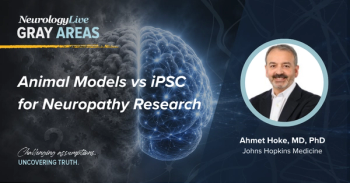
Episode 1 features a conversation with Ahmet Hoke, MD, PhD, of Johns Hopkins Medicine, discussing the clinical debate behind keeping animal models for neuropathy research vs switching to induced pluripotent stem cell models.
The clinical neuropsychologist and assistant professor of medicine at the Icahn School of Medicine at Mount Sinai discussed the mechanisms behind brain fog from Long COVID and its potential links to Alzheimer risk.
A new study suggests excessive daytime sleepiness in obstructive sleep apnea may be associated with cognitive impairment and altered brain network connectivity in the middle frontal gyrus and inferior parietal lobule.

Delpacibart etedesiran did not demonstrate statistically significant improvement in myotonic dystrophy type 1 in the phase 3 HARBOR study, despite reported signals of clinical activity across secondary and exploratory measures.
An indirect comparison found zorevunersen-treated patients with Dravet syndrome showed greater gains in adaptive functioning and behavior than natural history patients.

A randomized clinical trial found that intravenous tirofiban plus aspirin did not significantly reduce early neurological deterioration or new stroke compared with aspirin alone i patients with branch atheromatous disease–related stroke.

A recent study of Brazilian adolescents showed a high prevalence of excessive daytime sleepiness, with severe depressive symptoms and smartphone addiction emerging as the strongest independent risk factors.