
Advancements in the detection and care of multiple sclerosis have led to improved diagnosis rates and a more multidisciplinary approach to treating the autoimmune disorder.
Advancements in the detection and care of multiple sclerosis have led to improved diagnosis rates and a more multidisciplinary approach to treating the autoimmune disorder.

The company also submitted a request for a fast track designation specific to a subcutaneous version of lecanemab and is expected to hear back within 60 days from March 2024.
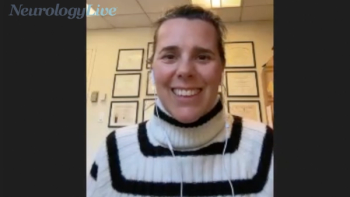
The medical director of the Center for Sleep Medicine at Weill Cornell Medicine talked about the importance of sleep health in modern life with the increasing prevalence of sleep disorders such as narcolepsy in the United States. [WATCH TIME: 5 minutes]

Overall, the reduction of hyperactivity of delta- and gamma-band activities in mTBI suggest the treatment may reduce deafferentation and GABA-ergic inhibitory interneuron dysfunctions.

The director of the Feil Family Brain and Mind Research Institute at Weill Cornell Medicine discussed ways to use a comprehensive approach when maintaining brain health. [WATCH TIME: 7 minutes]

Here's some of what is coming soon to NeurologyLive® this week.

The APPRAISE randomized clinical trial provided clinically meaningful evidence that early initiation of migraine prevention with erenumab was superior over other nonspecific oral migraine preventive medications.
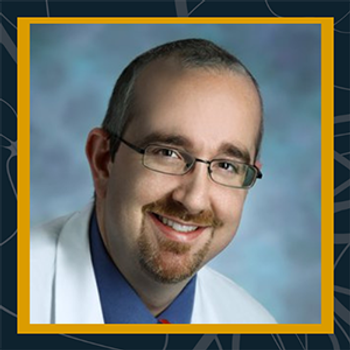
As part of our monthly clinician spotlight, NeurologyLive® highlighted multiple sclerosis expert Scott Newsome, DO, MSCS, FAAN, FANA, director of the Stiff Person Syndrome Center and professor of neurology at Johns Hopkins Medicine.
Test your neurology knowledge with NeurologyLive®'s weekly quiz series, featuring questions on a variety of clinical and historical neurology topics. This week's topic is multiple sclerosis and MS mimics.
A recent study presented key predictors of survival in patients living with Friedreich ataxia, which led to the creation of a prognostic model for disease management.

The randomized, double-blind, placebo-controlled trial failed to show any beneficial symptomatic effect of 4-month treatment with 1.75–3.5 mg/day bumetanide on Parkinson disease.
Neurology News Network. for the week ending March 30, 2024. [WATCH TIME: 3 minutes]
Take 5 minutes to catch up on NeurologyLive®'s highlights from the week ending March 29, 2024.

Mind Moments®, a podcast from NeurologyLive®, brings you an exclusive interview with Sharon Hesterlee, PhD. [LISTEN TIME: 10 minutes]

Sleeping Around the Podcast is joined by Rachel Nesmith, a patient with narcolepsy, who shares her story of overcoming the burdens and impairments of living with narcolepsy and cataplexy.

Grace Griesbach, PhD, the national director of clinical research for Centre for Neuro Skills, discussed the impact of REM sleep on memory following traumatic brain injury and the importance of considering sex as a biological variable.
A feature on NeurologyLive®, IJMSC Insights offers a closer look at the latest research and the people behind it from the community of the International Journal of Multiple Sclerosis Care (IJMSC) and the Consortium of Multiple Sclerosis Centers (CMSC).
The findings were consistent with the chemical's known carcinogenicity and supportive of the emerging preclinical and epidemiological evidence that ties TCE exposure to patients with PD.
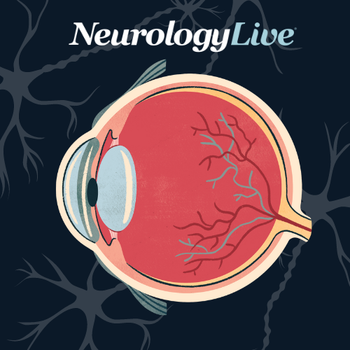
Newly approved treatments in neuromyelitis optica spectrum disorder have shown efficacy in recent years, yet unaddressed concerns voiced by clinicians and patients living with the disease remain.

A recent study revealed that digital composite measures for bradykinesia outperformed traditional assessment methods for Parkinson disease over a 12-month period.

The associate professor of neurology at the University of Naples provided context on the mechanism of action for dimethyl fumarate and why there’s belief it can benefit patients with Friedreich ataxia. [WATCH TIME: 4 minutes]

In a small-scale study, treatment with PRAX-628 resulted in significant reduction in the number of generalized photo paroxysmal response events.
The chief executive officer at Elixirgen Therapeutics discussed the company’s mRNA as a promising therapeutic avenue for Duchenne muscular dystrophy. [WATCH TIME: 6 minutes]

At AD/PD 2024, AC Immune SA presented an update on the company's phase 2 VacSYn trial assessing ACI-7104.056, an anti-α-synuclein active immunotherapy, for patients with Parkinson disease.
The director of the Multiple Sclerosis Program at the Cleveland Clinic’s Lou Ruvo Center for Brain Health discussed findings from a study that compared cognitive profiles between patients with multiple sclerosis and Alzheimer disease. [WATCH TIME: 5 minutes]
Over the 24-week treatment period, satralizumab demonstrated a well tolerated safety profile that was consistent with its previous indication.
The associate professor of neurology at The Ohio State University Wexner Medical Center provided insight on research assessing the use of a developed artificial intelligence/machine learning tool for automated stroke scale calculation. [WATCH TIME: 6 minutes]
The professor of neurology at Vanderbilt University Medical Center discussed advocating for reinstating personalized resources, expanding genetic testing, and improving transitional care in muscular dystrophy. [WATCH TIME: 5 minutes]
The director of the Adult Genetic Epilepsy Program at the University of Toronto talked about the significant challenges posed by transitioning patients with epilepsy from pediatric to adult care settings.
The president and chief executive officer of Satellos Bioscience provided an overview of the previously observed preclinical data supporting SAT-3247 as a potential therapy for muscular dystrophies. [WATCH TIME: 4 minutes]