
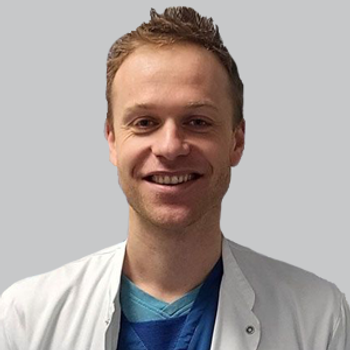
In comparison with placebo, treatment with remote ischemic conditioning was not associated with a significant shift toward better functional outcome at 90 days.
In comparison with placebo, treatment with remote ischemic conditioning was not associated with a significant shift toward better functional outcome at 90 days.
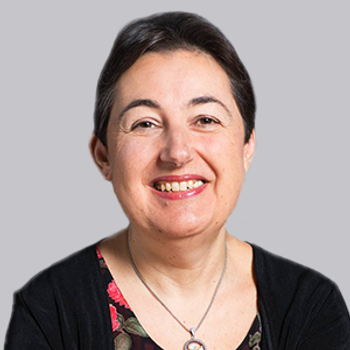
Jacqueline French, MD, professor of neurology at NYU Grossman School of Medicine and chief medical officer of the Epilepsy Foundation, talked about findings from a newly published study assessing XEN1101 in patients with drug-resistant epilepsy.
Catch up on any of the neurology news headlines you may have missed over the course of September 2023, compiled all into one place by the NeurologyLive® team.
The director of headache medicine at The Mount Sinai Hospital talked about the often-overlooked realm of primary headaches beyond migraines as well as the importance of developing targeted treatments and increasing understanding of their pathophysiology. [WATCH TIME: 7 minutes]
Loneliness was associated with a higher risk of subsequent PD after accounting for basic demographic variables and other risk, protective, prodromal, or confounding factors.
In preclinical models, treatment with GT-02287 restored GCase enzymatic function, reduced aggregated a-synuclein, neuroinflammation and neuronal death, increased dopamine levels, and improved motor function.
The associate professor, department of medicine, division of neurology, Institute of Medical Science, University of Toronto, talked about the importance of establishing normal values for sleep studies, particularly the multiple sleep latency test, to help with effectively diagnosing sleep disorders. [WATCH TIME: 5 minutes]
The director of the Duke ALS Clinic at Duke Health discussed the advances in drug development for ALS and ways to evolve future trials to get optimal therapeutic benefit. [WATCH TIME: 3 minutes]
In a phase 3 study, patisiran met its primary and first secondary end point, demonstrating significant benefit in functional capacity, quality of life, and health status, in comparison with placebo.

Here's some of what is coming soon to NeurologyLive® this week.

The director of Geriatric Psychiatry at the St Louis University School of Medicine talked about an oral film form of BXCL501, an alternative to intravenously administered therapies that shows promise in rapidly alleviating acute agitation in patients with Alzheimer disease. [WATCH TIME: 7 minutes]
Test your neurology knowledge with NeurologyLive®'s weekly quiz series, featuring questions on a variety of clinical and historical neurology topics. This week's topic is sleep disorders.
After 1 year of treatment with risdiplam, 81% of the 26-infant cohort were able to sit independently for 30 seconds, a milestone not typically reached in SMA.
A recently developed machine learning model could analyze retinal images as well as associated data of specific features to recognize patients with mild cognitive impairment.
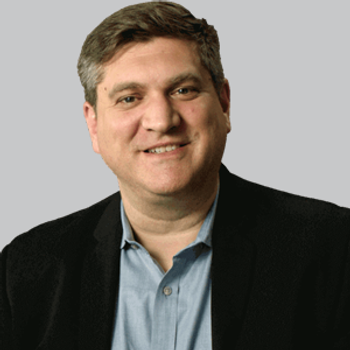
Michael Grandner, PhD, associate professor of psychiatry at the University of Arizona College of Medicine, discussed Sleep Reset, an app-based, personalized sleep program that uses sleep coaches to help guide patients in the care of their sleep disorders.
Take 5 minutes to catch up on NeurologyLive®'s highlights from the week ending October 6, 2023.

RGX-202, a gene therapy for Duchenne muscular dystrophy, was well-tolerated with no therapy-related serious adverse effects in 3 patients who received the level 1 dosage.
The chief scientific officer of AMO Pharma discussed results from a recent clinical trial evaluating the safety and efficacy impact of AMO-02 on children and adolescents with congenital myotonic dystrophy. [WATCH TIME: 6 minutes]
Mind Moments®, a podcast from NeurologyLive®, brings you an exclusive interview with Gunter Hoglinger, MD. [LISTEN TIME: 14 minutes]
The phase 3 study is expected to include 86 children with ataxia-telangiectasia who will be assessed on changes in a rescored modified International Cooperative Ataxia Rating Scale.
The codirector of interventional neuroradiology and vice-chief of the department of neuroscience at Baptist Health Miami Neuroscience Institute discussed the questions that still remain with identifying and treating subarachnoid hemorrhage. [WATCH TIME: 3 minutes]
During the week after emergency department discharge, both low- and high-dose participants reported a median of 2 headache days, signifying little difference.
The chief medical advisor at the Muscular Dystrophy Association gave his reaction to Amicus Pharmaceuticals’ recently FDA approved 2-part therapy for patients living with Pompe disease. [WATCH TIME: 7 minutes]
In a cohort of moderately severe Alzheimer disease, patients on placebo demonstrated cognitive decline while those on active treatment showed no significant decline.
Researchers proposed a harmonized definition of progression independent of relapse activity that may improve the comparability of results in current and future study cohorts, according to a newly published systematic review.
Using treatment failures and antiseizure medication retention, findings pointed to levetiracetam as a more effective initial monotherapy in females with juvenile myoclonic epilepsy.
Elena Koundourakis, PhD, head of orexin franchise development at Takeda, talked about the phase 2 trial investigating TAK-994 in patients with narcolepsy type 1, which showed significant improvements in wakefulness, despite discontinuation because of hepatotoxicity.
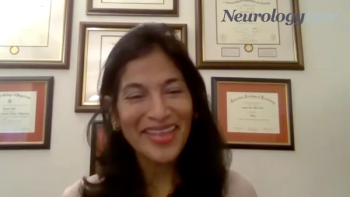
The clinical professor of neurology at Lenox Hill Hospital/Northwell Health talked about her experience with monoclonal antibodies for Alzheimer disease treatment as well as the challenges and risks associated with them. [WATCH TIME: 8 minutes]

After being diagnosed with acute flaccid myelitis more than 10 years ago, patient advocate Sarah Todd Hammer spoke on the ways in which disability should be viewed and discussed.
At the conclusion of a 12-weel treatment period, biomarker data provided mechanistic insights of senolytic effects using dasatinib and quercetin that need to be confirmed in fully powered, placebo-controlled studies.