
In the AAN 2022 presidential plenary session, a trio of neurologists discussed a variety of issues stemming from the COVID-19 pandemic and how they impacted research efforts in neurological diseases.
In the AAN 2022 presidential plenary session, a trio of neurologists discussed a variety of issues stemming from the COVID-19 pandemic and how they impacted research efforts in neurological diseases.

The Pharma Two B therapy combines a dopamine agonist, pramipexole, and an MAO-B inhibitor, rasagiline, and has shown significant improvements on UPDRS total scores and ESS scores for untreated patients with PD.

At week 26, patients on ABBV-951 had mean increases of 3.24 hours in ON time and decreases of 2.94 hours of OFF time, which was similar to previously reported studies.
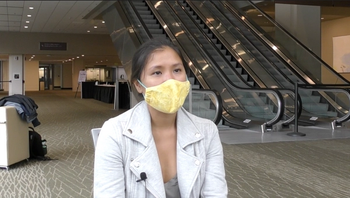
The resident physician at Montefiore Medical Center shared her experience with the novel and standardized quick examination tool and the data presented at AAN 2022. [WATCH TIME: 3 minutes]

One-year data from the single-arm phase 3b CONSONANCE trial (NCT03523858) suggest that the Genentech agent (Ocrevus) resulted in low levels of disease activity and improved cognitive performance in those with secondary and primary progressive multiple sclerosis.

In an AAN 2022 Hot Topics plenary session, Miranda E. Orr, PhD, highlighted the potential of targeting senescent cells with senolytics as a therapeutic approach to age-related diseases such as Alzheimer disease, and detailed the ongoing phase 2 SToMP-AD clinical trial (NCT04685590).

After switching from nusinersen to Zolgensma 147 days into life, the infant scored a 64 on CHOP-INTEND score, considerably higher than what is observed in the natural history.

In an assessment including 23 patients, the novel and standardized quick neurologic examination showed excellent interrater reliability and agreement, suggesting good validity.
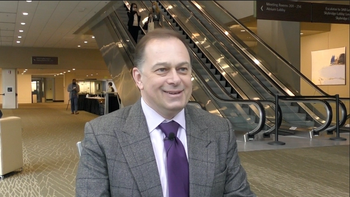
The clinical research director of the UCSF Multiple Sclerosis Center discussed new data presented at AAN on inebilizumab (Uplizna; Horizon) in neuromyelitis optica spectrum disorder. [WATCH TIME: 4 minutes]
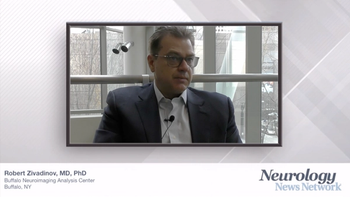
Robert Zivadinov, MD, PhD, offers his insight into the findings from the DeepGRAI registry of thalamic volume measurement on multicenter clinical-quality T2-FLAIR images in multiple sclerosis.

Here's what is coming soon to NeurologyLive®.

The Bushell Chair of Neurology at the University of Sydney offered his perspective on phase 2 data of CNM-Au8 in amyotrophic lateral sclerosis and spoke to the advances that the field has made in recent years. [WATCH TIME: 3 minutes]

At 2 hours post-stimulation, 42.5% of those on the Cefaly device had absence of most bothersome symptoms compared with 34.1% of those in the sham group.

The pediatric epileptologist from Cleveland Clinic provided commentary on the changes needed to improve research and drug development in CDKL5 deficiency disorder, as well as the organizations committed to advancing the state of care. [WATCH TIME: 3 minutes]

On fluorodeoxyglucose PET, pepinemab slowed or reversed decline in metabolic activity in all 26 brain regions observed, with significant benefit found in 15 regions.
Test your neurology knowledge with NeurologyLive®'s weekly quiz series, featuring questions on a variety of clinical and historical neurology topics. This week's topic is Alzheimer disease and dementia.

Sage Therapeutics’ investigational NMDA receptor positive allosteric modulator was well-tolerated, with signs of cognitive and functional improvements reported for patients with AD in the phase 2 LUMINARY study.
Through both 24 and 48 hours after single-dose treatment, 85% and 83% of patients, respectively, remained free of the need for rescue medication.
The pediatric epileptologist at Cleveland Clinic discussed the impact of ganaxolone’s approval for CDKL5 deficiency disorder and how it may create an opportunity for future pipeline agents. [WATCH TIME: 3 minutes]

Episode 20 of the AUPN Leadership Minute features Rohit Das, MD, of University of Texas Southwestern Medical Center at Dallas; and Cormac O'Donovan, MD, of Wake Forest Baptist. [WATCH TIME: 4 minutes]

Interim data from the phase 2 RESCUE-ALS trial open-label extension suggest that Clene Nanomedicine’s investigational agent, CNM-AU8, offered benefits to patients with ALS in terms of survival, in addition to prior results suggestive of slowed progression.
Neurology News Network for the week ending April 2, 2022. [WATCH TIME: 3 minutes]
The Bushell Chair of Neurology at the University of Sydney shared his insight into the latest data on CNM-Au8 as a potential treatment for amyotrophic lateral sclerosis and the frameshift in treatment that it represents. [WATCH TIME: 3 minutes]
Take 5 minutes to catch up on NeurologyLive®'s highlights from the week ending April 1, 2022.

To build off the data, Cerevance plans on initiating additional phase 2/3 studies evaluating CVN424, including a trial assessing its potential as a standalone treatment.
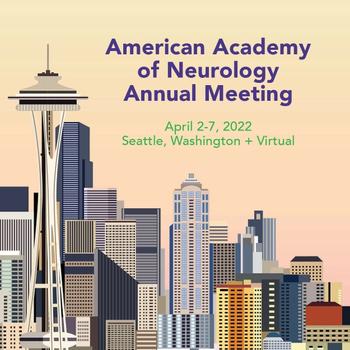
This year’s meeting, themed “the Great Neuro-Reunion,” will feature a dual virtual and in-person format, spanning 9 days and including more than 200 sessions and 11 plenaries, as well as featuring 2400 abstracts presentations.

The virtual MJH Life Sciences Sleeves Up Blood Drive, put on by NeurologyLive®'s parent company, will be held from March 31 through April 30, 2022.

Annual progression rates to dementia were 14.7% for those with mild behavior impairment and 8.3% for the those without neuropsychiatric symptoms, with reversion rates of 2.5% and 5.3%, respectively, for each group.

The president and chief executive officer of The ALS Association provided insight on the most pressing needs for patients with ALS and the organization’s focus going forward. [WATCH TIME: 5 minutes]

In a sensitivity analysis that excluded women with evidence of possible demyelinating events before MS diagnosis, the associations between pregnancy-related ICD-10 code recording and disease risk were even more pronounced.