

A recent study demonstrated that distinct aquaporin-4 changes in neuronal and glial synucleinopathies reflect different pathomechanisms and may warrant further investigation.
A recent study demonstrated that distinct aquaporin-4 changes in neuronal and glial synucleinopathies reflect different pathomechanisms and may warrant further investigation.

A recent trial reveals perispinal etanercept is safe for chronic stroke patients but shows no significant efficacy compared with placebo.
The vice chair of neurology at West Virginia University outlined key challenges in academic neurology and reflected on the evolving responsibilities of vice chairs in supporting departmental growth and leadership. [WATCH TIME: 3 minutes]

Novo Nordisk's semaglutide gains EU approval as the first oral GLP-1 RA to reduce cardiovascular risks in type 2 diabetes patients.
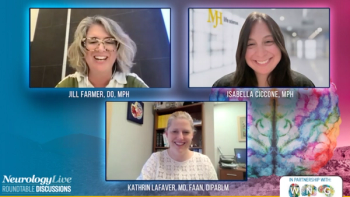
Movement disorder specialists from the Women Neurologists Group discussed supporting women in neurology through mentorship, innovation, and community connections. [WATCH TIME: 5 minutes]

Avidity's del-zota shows promising results in reversing disease progression in Duchenne muscular dystrophy, paving the way for potential FDA approval.
Movement disorder specialists reflected on a decade of community, research, and career support in-person and online for members of the Women Neurologists Group. [WATCH TIME: 7 minutes]
Movement disorder specialists talked about how the 4th Annual Women in Neurology Conference will offer educational updates, career development, and networking opportunities for women across neurology. [WATCH TIME: 5 minutes]

Here's some of what is coming soon to NeurologyLive® this week.
Movement disorder specialists reflected on the community’s growth over the past decade in the Women Neurologists Group and shared program highlights of the group’s upcoming conference. [WATCH TIME: 5 minutes]
Test your neurology knowledge with NeurologyLive®'s weekly quiz series, featuring questions on a variety of clinical and historical neurology topics. This week's topic is on pre-surgical evaluation tools for epilepsy.

New guidelines enhance gene therapy delivery for Duchenne muscular dystrophy, emphasizing multidisciplinary care and safety monitoring for optimal patient outcomes.
Neurology News Network. for the week ending September 13, 2025. [WATCH TIME: 4 minutes]
Take 5 minutes to catch up on NeurologyLive®'s highlights from the week ending September 12, 2025.
The director of the Neuroethics Program at Cleveland Clinic discussed ethics training, shared decision-making, and safeguards in guiding patients, families, and clinicians through complex clinical research decisions. [WATCH TIME: 3 minutes]

Saol Therapeutics faces challenges after FDA's complete response letter for SL1009, a potential treatment for rare mitochondrial disorder PDCD.
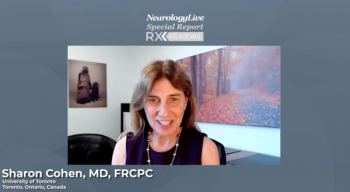
In this seventh episode, Cohen outlined emerging Alzheimer therapies targeting amyloid, tau, and inflammation, highlighting novel antibody approaches, genetic knockdown strategies, and repurposed GLP-1 receptor agonists. Supported by Eli Lilly.

Mind Moments®, a podcast from NeurologyLive®, brings you an exclusive interview with Patricia Pozo-Rosich, MD, PhD. [LISTEN TIME: 19 minutes]

The chief medical adviser at the Muscular Dystrophy Association spoke about the specific safety considerations clinicians should take when prescribing and administering gene therapy for patients with Duchenne muscular dystrophy. [WATCH TIME: 3 minutes]

Tamara Kaplan, MD, vice chair of education for the department of neurology at Mass General Brigham, shares insights on evolving neurology education, highlighting her framework for supporting clinician educators and the growing recognition of education as a career path.

The vice chair of neurology at West Virginia University reflected on receiving the AUPN Leadership Award, addressing challenges in academic neurology and the evolving responsibilities of vice chairs in advancing departmental goals.

A new qualitative study of 20 patients with migraine explored and documented the prodrome phase, revealing some of their common symptoms and timing before headache onset.
In this sixth episode, Cohen discussed aligning patient expectations with the goals of antiamyloid antibody treatment, emphasizing disease slowing, eligibility factors, and real-world satisfaction data. Supported by Eli Lilly.

A recent study reveals dual orexin receptor agonists (DORAs) show significantly lower abuse potential compared to traditional insomnia medications.
The vice president of scientific engagement at the Alzheimer's Association shared data presented at AAIC 2025 from the phase 3 U.S. POINTER study among patients at risk for dementia. [WATCH TIME: 4 minutes]

Teva's emrusolmin receives FDA fast track designation as a potential breakthrough treatment for multiple system atrophy, targeting neurodegeneration.

At 48 weeks, patients treated with blarcamesine showed an 84.7% reduction in decline on the primary cognitive end point compared with placebo.
In this fifth episode, Cohen explained the types, risks, and monitoring protocols for ARIA with antiamyloid antibodies, emphasizing MRI schedules, symptom vigilance, and individualized patient safety considerations. Supported by Eli Lilly.
The VP of clinical development at Alkermes detailed phase 2 results for alixorexton, an oral, selective orexin 2 receptor agonist, in narcolepsy type 1, including benefits for fatigue, cognition, and weakness.
Catch up on any of the neurology news headlines you may have missed in August 2025, compiled into 1 place by the NeurologyLive® team.