
PMD Alliance unveils a revamped website, enhancing accessibility and resources for the movement disorder community as it celebrates its 10th anniversary.
PMD Alliance unveils a revamped website, enhancing accessibility and resources for the movement disorder community as it celebrates its 10th anniversary.

Johan Luthman, executive vice president and head of R&D at Lundbeck, discussed the rationale behind amlenetug, its mechanism of action, and the company’s ongoing efforts in multiple system atrophy through the phase 3 MASCOT trial.

Roche's Elecsys pTau181 test receives FDA clearance, revolutionizing Alzheimer diagnosis in primary care with a minimally invasive blood test.

Denali Therapeutics prepares for potential FDA approval of tividenofusp alfa, a groundbreaking therapy for Hunter syndrome, with a revised review date set.

The pediatrician in chief at Johns Hopkins Children’s Center provided clinical insights on new findings demonstrating ocrelizumab’s potential in treating pediatric multiple sclerosis. [WATCH TIME: 4 minutes]

Gavin Giovannoni, MBBCh, PhD, FCP, FRCP, FRCPath, lead investigator of the phase 3 ORATORIO-HAND trial, provided comment on the results presented at ECTRIMS 2025, highlighting ocrelizumab’s therapeutic benefit in more advanced forms of multiple sclerosis.

Trofinetide shows significant real-world improvements in Rett syndrome symptoms for pediatric and adult patients, enhancing communication and quality of life.

Allison W. Willis, MD, MS, associate professor of neurology at the University of Pennsylvania School of Medicine, provided an overview of hot topics from the ANA 2025 program.
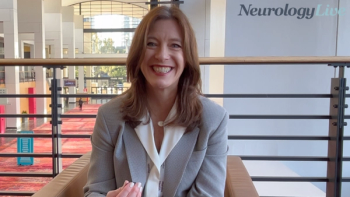
The pediatrician-in-chief at Johns Hopkins Children’s Center shared her reaction to receiving this year’s Bernard Sachs Award in recognition of her contributions to child neurology. [WATCH TIME: 5 minutes]

Here's some of what is coming soon to NeurologyLive® this week.

Robert Shin, MD, FAAN, professor of neurology and ophthalmology at the University of Virginia and director of the UVA MS and Clinical Neuroimmunology Center, recently shared his expertise on how multiple sclerosis (MS) affects men on the National MS Society’s Ask an MS Expert program.

Experts shared their clinical perspectives on trending topics in the treatment and management of multiple sclerosis at the 41st Congress of the European Committee for Treatment and Research in Multiple Sclerosis.
Test your neurology knowledge with NeurologyLive®'s weekly quiz series, featuring questions on a variety of clinical and historical neurology topics. This week's topic is on gene therapy for Duchenne muscular dystrophy.
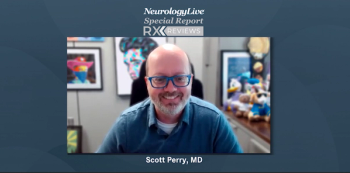
In this final segment, Perry reflects on how zorevunersen represents a shift toward disease-modifying therapies in epilepsy and what this means for the future of genetic epilepsies. [WATCH TIME: 2 minutes]
Neurology News Network. for the week ending October 11, 2025. [WATCH TIME: 4 minutes]

A case series reveals safe use of vamorolone and prednisolone during microdystrophin gene therapy for Duchenne muscular dystrophy in two boys.
Take 5 minutes to catch up on NeurologyLive®'s highlights from the week ending October 10, 2025.
In this fourth segment, Scott Perry, MD, outlines the design of the registrational EMPEROR trial and what it aims to confirm about zorevunersen’s long-term safety and clinical benefit. [WATCH TIME: 2 minutes]
Catch up on any of the neurology news headlines you may have missed in September 2025, compiled into 1 place by the NeurologyLive® team.

A recent study reveals the significant economic burden of Angelman syndrome, highlighting rising healthcare costs and ongoing therapeutic developments.
At CNS 2025, the executive director at the Child Neurology Foundation presented on the importance of collaboration among clinicians and advocacy groups to connect families with care support services. [WATCH TIME: 4 minutes]

A post hoc analysis of the phase 3 EPIDYS trial presented at CNS 2025 revealed that givinostat delayed disease progression in 2 distinct age groups of patients with Duchenne muscular dystrophy.
In this segment, epileptologist Scott Perry, MD, discusses zorevunersen’s effects on Vineland-3 scores and why improvements in communication, cognition, and adaptive behavior matter in Dravet syndrome. [WATCH TIME: 3 minutes]

A recent analysis highlights the link between vastus lateralis fat fraction and treatment outcomes in Duchenne muscular dystrophy patients using givinostat.

Neflamapimod treatment led to slowing of clinical worsening, as assessed by Clinical Dementia Rating-Sum of Boxes, when drug concentrations were achieved.
Joseph Vithayathil, MD, discusses being awarded the Elterman Research Grant at the 2025 CNS Annual Meeting in Charlotte, North Carolina.
The associate professor and clinician-scientist at the University of Toronto spoke to the current understanding of protein waste clearance in neurodegeneration. [WATCH TIME: 4 minutes]

The BeeLine trial is a placebo-controlled study designed to evaluate radiprodil’s impact on both seizure frequency and non-seizure symptoms associated with GRIN-NDD.

New data reveals bemdaneprocel, an innovative cell therapy for Parkinson disease, shows promising safety and efficacy over 36 months, paving the way for future trials.

Yuichi Iwaki, MD, PhD, chief executive officer at MediciNova, spoke on ibudilast’s mechanism of action, its role in the COMBAT-ALS trial, and its potential impact across neurodegenerative disease care.