
Presented at the 2023 AANEM meeting, new findings suggest that subcutaneous efgartigimod could be a valuable treatment option for patients with myasthenia gravis, with well-tolerated cycles and improved daily living activities.
Presented at the 2023 AANEM meeting, new findings suggest that subcutaneous efgartigimod could be a valuable treatment option for patients with myasthenia gravis, with well-tolerated cycles and improved daily living activities.
The vice-chair for research at Cleveland Clinic’s Neurological Institute provided commentary on the expanded research of GFAP in multiple sclerosis and whether certain biomarkers may predict treatment response. [WATCH TIME: 8]
Jay Alberts, PhD, the Edward F. and Barbara A. Bell Endowed Chair at Cleveland Clinic, provided comment on a recently published randomized controlled trial assessing the therapeutic potential of an augmented reality program for postural instability and gait dysfunction in Parkinson disease.
Over a 6-month period, ofatumumab-treated patients met the primary end point of no change or reduction in the number of gadolinium-enhancing lesions on MRI.
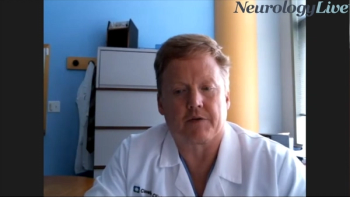
The associate staff member in the department of neurology at Cleveland Clinic discussed the major take-home points and post-hoc findings from a positive study of deep brain stimulation in poststroke patients. [WATCH TIME: 3 minutes]
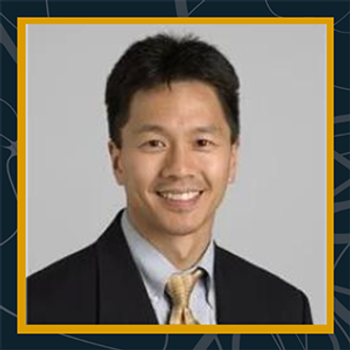
As part of our monthly clinician spotlight, NeurologyLive® highlighted expert Gary Hisch, MD, pediatric neurologist at Cleveland Clinic, who oversees programs for neuromuscular disorders such as for patients with spinal muscular atrophy.

The associate staff member in the department of neurology at Cleveland Clinic provided perspective on a recently published phase 1 study assessing deep brain stimulation in individuals with chronic poststroke hemiparesis.

The associate staff member in the department of neurology at Cleveland Clinic provided background on a recently published phase 1 trial showing benefits of DBS for chonic poststroke motor rehabilitation. [WATCH TIME: 3 minutes]
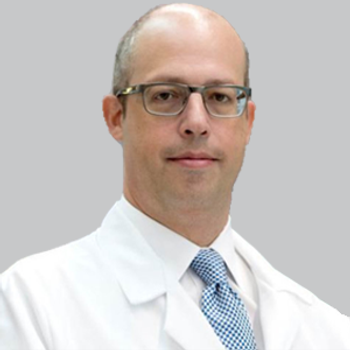
In addition to showing a safe and tolerable safety profile, patients who underwent the procedure showed a 7-point median improvement on the upper extremity Fugl-Meyer Assessment when used in combination with physical rehabilitation.
Since it was first discovered in the early 1900s, the therapeutic approaches to treating myasthenia gravis have changed significantly, with several proven treatment options.
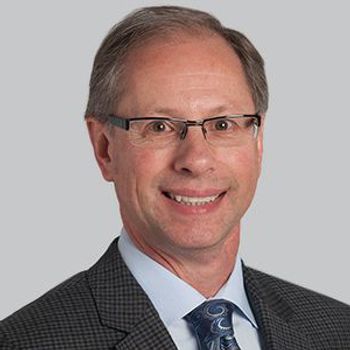
Differential diagnosis consideration for MS requires a circumspect approach dependent on the clinical presentation and accompanied by vigilance for clinical and paraclinical red flags suggesting alternative diagnoses.
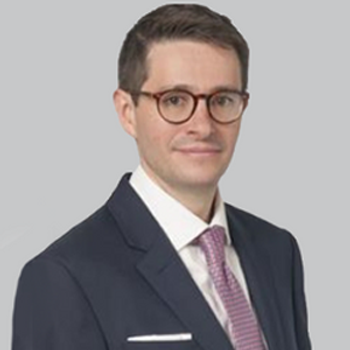
Despite similar proportion of females and ever-smokers, age of onset of multiple sclerosis was significantly earlier for Latinx patients compared with White non-Latinx individuals.
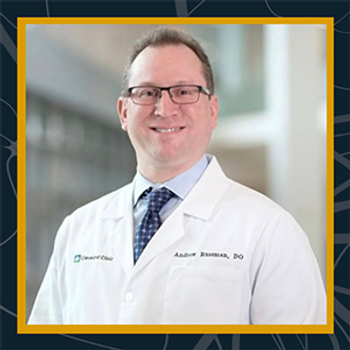
As part of our monthly clinician spotlight, NeurologyLive® highlighted stroke expert Andrew Russman, DO, head of the Stroke Program and medical director of the Comprehensive Stroke Center at Cleveland Clinic.
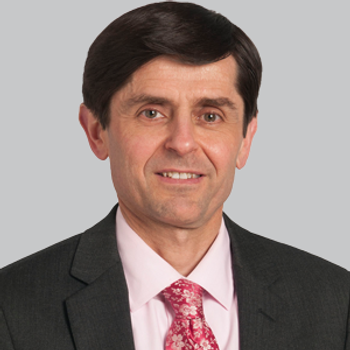
Neurological rehabilitation, or neurorehabilitation, can be described as the use of rehabilitation interventions to improve or maintain function and quality of life in the context of neurological conditions.
The associate professor of neurology at the Cleveland Clinic Lerner College of Medicine provided insight on the necessary research needed to understand why certain races experience more significant multiple sclerosis disease progress. [WATCH TIME: 4 minutes]
The director of the Sleep Disorders Center and staff in the Epilepsy Center at Cleveland Clinic provided perspective on the current state of sleep and epilepsy research, including the role of postical generalized EEG suppression as a biomarker for SUDEP.
The director of the Mellen Center for MS at Cleveland Clinic talked about the ENSEMBLE study results that were presented at the 2023 AAN Annual Meeting. [WATCH TIME: 6 minutes]
The director of Cleveland Clinic’s Epilepsy Center at the Cleveland Clinic Neurological Institute provided perspective on the in-depth testing neurologically healthy patients in the Brain Study will undergo. [WATCH TIME: 3 minutes]
The associate professor of neurology at the Cleveland Clinic Lerner College of Medicine of Case Western University provided commentary on the need for clinicians to be transparent with patients with MS about potential differences in disease course. [WATCH TIME: 3 minutes]
The director of Cleveland Clinic's Epilepsy Center at the Cleveland Clinic Neurological Institute shared his insight into the findings of the World Brain Study, 15 months after its initiation.
The director of the Sleep Disorders Center and staff in the Epilepsy Center at Cleveland Clinic discussed how additional sensors in seizure monitoring for patients with epilepsy may help better manage the risk of SUDEP. [WATCH TIME: 3 minutes]
The associate professor of neurology at the Cleveland Clinic Lerner College of Medicine of Case Western University discussed a presentation at AAN 2023 characterizing the clinical and MRI features of Latinx with multiple sclerosis. [WATCH TIME: 4 minutes]
The head of the Stroke Program and Medical Director of the Comprehensive Stroke Center at Cleveland Clinic provided perspective on the ENRICH trial, the first positive surgical trial for intracerebral hemorrhage. [WATCH TIME: 5 minutes]
The director of Cleveland Clinic’s Epilepsy Center provided an update on the World Brain Study, a large-scale, longitudinal study aimed to observe the early, underlying changes in neurological disorders. [WATCH TIME: 9 minutes]

In honor of Parkinson Disease Awareness Month, Hubert Fernandez, MD, director of the Center for Neurological Restoration at Cleveland Clinic, provided perspective on the advances in the care for the neurodegenerative disorder.
The vascular neurologist at Cleveland Clinic provided an overview of a study that assessed the extent HbA1c impacts the relationship between mechanical thrombectomy and poor outcomes. [WATCH TIME: 3 minutes]
The staff neurologist from the Mellen Center for MS Treatment and Research at the Cleveland Clinic discussed how patients with multiple sclerosis are more open to using telehealth for accessing their healthcare providers at the 2023 ACTRIMS Forum. [WATCH TIME: 4 minutes]
In recognition of Rare Disease Day, the NeurologyLive® team offered an extensive update on the state of care and treatment for a few rare neurological diseases, including Pompe disease, Rett syndrome, among others.
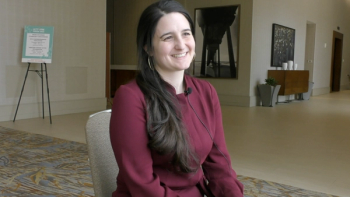
At the 2023 ACTRIMS Forum, the staff neurologist from the Mellen Center for MS Treatment and Research at the Cleveland Clinic talked about the lack of trust and engaging more with the MS community. [WATCH TIME: 5 minutes]
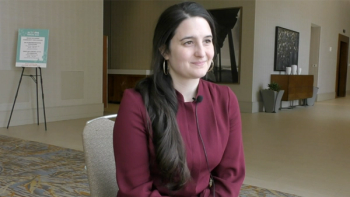
The staff neurologist at the Mellen Center for MS Treatment and Research at Cleveland Clinic, spoke at the 2023 ACTRIMS Forum about disparities in care access for patients with MS. [WATCH TIME: 5 minutes]