

The director of the Women’s Alzheimer’s Movement Preventer Center at Cleveland Clinic provided perspective on the possibility of gender-specific therapies to overcome disparities in Alzheimer disease. [WATCH TIME: 3 minutes]
The director of the Women’s Alzheimer’s Movement Preventer Center at Cleveland Clinic provided perspective on the possibility of gender-specific therapies to overcome disparities in Alzheimer disease. [WATCH TIME: 3 minutes]
The molecular biologist at the Cleveland Clinic Lerner Research Institute discussed research on the use of GFAP and sTREM2 in discerning dementia with Lewy bodies from Alzheimer disease. [WATCH TIME: 4 minutes]
The Edward F. and Barbara A. Bell Family Endowed Chair at Cleveland Clinic discussed seamless adjustment made by patients with Parkinson disease to virtual reality, and the benefits it may bring to care. [WATCH TIME: 4 minutes]
The director of the Women’s Alzheimer’s Movement Prevention Center at Cleveland Clinic discussed new research which looked at the differences in functional connectivity for men and women of older age.
The Edward F. and Barbara A. Bell Family Endowed Chair at the Cleveland Clinic provided an overview of the Cleveland Clinic Virtual Reality Shopping platform, a virtual reality tool for Parkinson disease. [WATCH TIME: 5 minutes]
The director of the Women’s Alzheimer’s Movement Prevention Center at Cleveland Clinic provided insight on data presented at AAIC 2022 that evaluated the interaction effect of sex and diagnosis on functional connectivity in various cognitive stages. [WATCH TIME: 3 minutes]

Jagan A. Pillai, MD, PhD, neurologist, Cleveland Clinic Lou Ruvo Center for Brain Health, discussed a recent study which found faster clinical progression in those with nonamnestic initial cognitive symptoms.

The neurologist at Cleveland Clinic’s Lou Ruvo Center for Brain Health detailed new findings on whether initial cognitive symptoms have similar rates of functional decline across a handful of neurodegenerative disorders. [WATCH TIME: 3 minutes]
The chair of Cleveland Clinic’s Department of Physical Medicine provided background on the usage of exoskeletons in the clinical and at-home settings for rehabbing patients with multiple sclerosis. [WATCH TIME: 2 minutes]
The chair of Cleveland Clinic’s Department of Physical Medicine discussed the different ways a newly approved robotic exoskeleton can improve gait in patients with multiple sclerosis. [WATCH TIME: 4 minutes]
The chair of Cleveland Clinic’s Department of Physical Medicine provided commentary on the goals for the newly approved EksoNR robotic exoskeleton in rehabilitative efforts for patients with multiple sclerosis.
The chair of Cleveland Clinic’s Department of Physical Medicine discussed a new rehabilitative approach using a robotic exoskeleton to improve fatigue and gait in patients with multiple sclerosis.
The chair of Cleveland Clinic’s Department of Physical Medicine detailed a pilot study on the rehabilitative impacts of the EksoRN robotic exoskeleton in patients with multiple sclerosis. [WATCH TIME: 5 minutes]
The chair of Cleveland Clinic’s Department of Physical Medicine provided insight on a newly approved modality aimed to improve rehabilitation efforts for patients with multiple sclerosis. [WATCH TIME: 3 minutes]
After 24 weeks of treatment, the adjusted mean annualized relapse rates were 0.53 with placebo vs 0.39 and 0.48 for the 30- and 45-mg groups of IMU-838.
Robert Fox, MD, who presented the DISCO-MS study results at the CMSC 2022 Annual Meeting, offered his closing thoughts on the data and the take-home messaging for clinicians.
Robert Fox, MD, offered perspective on data from the DISCO-MS study of disease-modifying therapy discontinuation in patients with multiple sclerosis and how it compares with day-to-day clinical practice.
Robert Fox, MD, shared the details of the DISCO-MS study of disease-modifying therapy discontinuation in patients with multiple sclerosis, presented at the CMSC 2022 Annual Meeting.
Patients with moderate-severe compared with normal-to-mild sleep disturbances had worse GAD-2 questionnaire scores, PHQ-2 scores, and PROMIS fatigue scores with no difference in age, sex, or hospitalization due to COVID-19.
Jeffrey Cohen, MD, spoke about the topic of his CMSC Presidential Lecture at the 2022 annual meeting, stem cell transplantation in multiple sclerosis, and what questions remain unanswered in this realm of treatment.
Jeffrey Cohen, MD, shared his perspective on the current use and study of stem cells for the treatment of multiple sclerosis, which he covered in the CMSC Presidential Lecture at the 2022 annual meeting.

Both ozanimod doses were associated with greater median reductions in plasma neurofilament light and mean improvements in SDMT score change than interferon beta-1a at month 12 of treatment.
The importance of addressing disorders of the brain cannot be overstated, and doing so will be essential to our generation and generations to come.
The pediatric epileptologist at Cleveland Clinic’s Epilepsy Center discussed data presented at AAN 2022 on the use of ganaxolone in CDD, as well as how its recent approval sets the stage for the future.
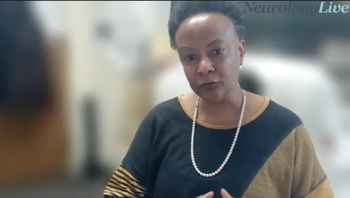
The pediatric epileptologist from Cleveland Clinic provided commentary on the changes needed to improve research and drug development in CDKL5 deficiency disorder, as well as the organizations committed to advancing the state of care. [WATCH TIME: 3 minutes]
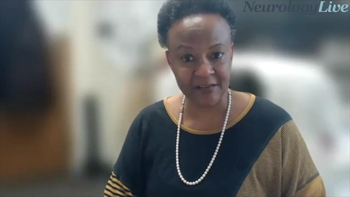
The pediatric epileptologist at Cleveland Clinic discussed the impact of ganaxolone’s approval for CDKL5 deficiency disorder and how it may create an opportunity for future pipeline agents. [WATCH TIME: 3 minutes]
The founding chair of the department of brain health at UNLV discussed a recently awarded NIH grant dedicated to advancing neuroscience research for the long-term future.
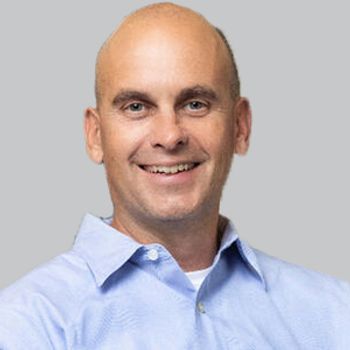
The newly awarded grant will build upon the efforts of phase 1, the foundation of a research infrastructure, which consisted of several different innovative projects aimed at understanding commonalities of neurodegenerative disorders.
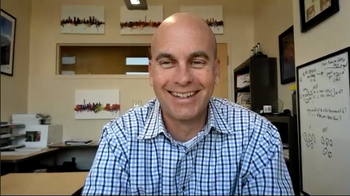
The founding chair of the department of brain health at the University of Nevada Las Vegas discussed the plethora of Alzheimer disease biomarkers and the need for consensus on the value of each. [WATCH TIME: 3 minutes]
The founding chair of the department of brain health at the University of Nevada Las Vegas provided background on how a newly funded NIH grant will contribute to translational neuroscience research infrastructure. [WATCH TIME: 3 minutes]