
Opinion|Videos|June 22, 2026 (Updated: June 8, 2026)
Comparing Anti-CD20 Therapies in MS
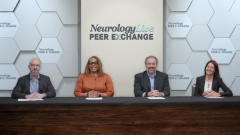
In this episode, moderator Dr. Mitzi Joi Williams discusses Anti-CD20 Therapies in multiple sclerosis with Dr. Stephen Krieger, Dr. Benjamin Greenberg, and Dr. Riley Bove. Dr. Williams notes that while three anti-CD20 agents are FDA-approved for MS (ocrelizumab approved in 2017, followed by ofatumumab and ublituximab), rituximab has been used off-label for many years. Though these agents target the same molecule, they differ in meaningful ways.
Advertisement
Episodes in this series
In this episode, moderator Dr. Mitzi Joi Williams discusses Anti-CD20 Therapies in multiple sclerosis with Dr. Stephen Krieger, Dr. Benjamin Greenberg, and Dr. Riley Bove. Dr. Williams notes that while three anti-CD20 agents are FDA-approved for MS (ocrelizumab approved in 2017, followed by ofatumumab and ublituximab), rituximab has been used off-label for many years. Though these agents target the same molecule, they differ in meaningful ways.
Dr. Greenberg explains that the anti-CD20 agents differ in molecular design, B-cell killing mechanism, and dosing schedules. The practical framework he uses with patients begins with administration mode: biannual IV infusion (ocrelizumab, ublituximab), biannual subcutaneous injection (ofatumumab at the higher dose), or monthly self-administered injection (ofatumumab). For patients without infusion center access, self-injection is often the default; for others, infusion center experience and time burden may be the deciding factors.
Beyond logistics, there are clinical distinctions: ublituximab has a shorter infusion time than ocrelizumab; infusion-related reaction profiles differ across agents; duration of clinical experience varies. Dr. Greenberg acknowledges the challenge of presenting information neutrally — clinician framing inevitably influences patient choice.
On rituximab, Dr. Greenberg and Dr. Williams note that while it remains widely used in some health systems and may be the only accessible option in certain settings, FDA-approved agents are preferred when access permits. The panel anticipates that future data may reveal more granular efficacy differences between agents within the class, though the high overall efficacy makes such differences difficult to detect at a population level.
In the next episode, "Long-Term Efficacy of Anti-CD20 Therapies in MS: What the Evidence Shows," the panel reviews what a decade of real-world experience and long-term extension data tell us about sustained B-cell depletion.
Advertisement
Related to this article
Arimoclomol Plus Miglustat Shows Early, Sustained Slowing of Niemann-Pick Disease Type C Progression
A post hoc analysis of the phase 2/3 NPC002 trial presented at CNS 2026 showed that the benefit of arimoclomol plus miglustat in Niemann-Pick disease type C emerged as early as 3 months after treatment initiation.
The professor of neurology and program director of Neuromuscular Medicine at UC Irvine, discusses phase 3 NIMBLE trial findings for cemdisiran in generalized myasthenia gravis, including its novel siRNA mechanism, efficacy, and hospitalization data.

New 48-week phase 3 data show many patients with generalized myasthenia gravis reached minimal symptom expression on telitacicept, and most who did sustained it.
The Galassia trial will evaluate the safety and tolerability of intranasal cenegermin in about 60 children with spastic cerebral palsy across Italy.
New analyses found differences in functional outcomes over 2 years among patients aged 8 to 12 years treated with delandistrogene moxeparvovec, while separate findings characterized micro-dystrophin expression in children younger than 3 years.

The director of the Center for Neurological Restoration at Cleveland Clinic discusses when to transition beyond oral medication and considerations for selecting device-aided therapies in PD.

Here's some of what is coming soon to NeurologyLive® this week.
Test your neurology knowledge with NeurologyLive®'s weekly quiz series, featuring questions on a variety of clinical and historical neurology topics. This week's topic is recent therapeutic advances in MS!
Advertisement
Advertisement
Trending on NeurologyLive - Clinical Neurology News and Neurology Expert Insights
1
ELEVIDYS Shows Sustained Functional Differences vs External Controls in Older Ambulatory Duchenne Patients
2
The Road Ahead for Precision Medicine in Multiple Sclerosis
3
Telitacicept Shows Deepening, Durable Response in Myasthenia Gravis
4
Dompé Begins Phase 2 Trial Testing Intranasal Nerve Growth Factor for Cerebral Palsy
5