
Opinion|Videos|June 8, 2026 (Updated: June 8, 2026)
MS Treatment Strategy: High-Efficacy Therapy vs. Escalation Approach
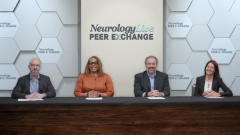
In this episode, panelists explore the question of "MS Treatment Strategy: High-Efficacy Therapy vs. Escalation Approach." Dr. Williams frames the central question: with earlier MS diagnoses now possible, how has treatment philosophy shifted? The traditional "start low, go slow" escalation model has given way to a high-efficacy-first approach for many clinicians.
Advertisement
Episodes in this series
In this episode, panelists explore the question of "MS Treatment Strategy: High-Efficacy Therapy vs. Escalation Approach." Dr. Williams frames the central question: with earlier MS diagnoses now possible, how has treatment philosophy shifted? The traditional "start low, go slow" escalation model has given way to a high-efficacy-first approach for many clinicians.
Dr. Greenberg explains that high-efficacy therapies are historically defined by annualized relapse rate (ARR) data from clinical trials, with agents achieving an ARR below approximately 0.15-0.2 generally classified as high efficacy. He notes that anti-CD52 agents, anti-CD20 agents, and S1P receptor modulators typically fall in this category, though the classification of individual drugs has evolved as trial populations have changed.
A notable example: teriflunomide, once considered a platform therapy based on older placebo-controlled trials (ARR ~0.33), now demonstrates an ARR of approximately 0.11 in head-to-head trials against BTK inhibitors — blurring the definition of "high efficacy." Dr. Greenberg observes that high-efficacy classification is partly drug- and partly population-dependent.
In his own practice, Dr. Greenberg describes leading with high-efficacy therapies for the majority of patients, citing a dramatic reduction in wheelchair use in his clinic over the past 2 decades as evidence of population-level benefit. He introduces the concept of de-escalation as an area to be addressed later in the discussion.
In the next episode, "Personalizing MS Therapy: Patient Preference and Family Planning Considerations," the panel examines how injection aversion, oral vs. infusion options, and family planning considerations factor into shared decision-making for newly diagnosed patients.
Advertisement
Related to this article
A retrospective cohort study found DTI-ALPS, a glymphatic function marker, did not independently predict survival in glioblastoma beyond extent of resection and sex.
The approval, based on phase 3 IB1001-303 trial data showing consistent SARA scale improvement, makes levacetylleucine the first treatment approved specifically for ataxia-telangiectasia.
Take 5 minutes to catch up on NeurologyLive®'s highlights from the week ending September 18, 2026.
A published protocol outlines the randomized, open-label EPOCH trial testing whether cilostazol accelerates hematoma resorption and improves recovery after intracerebral hemorrhage.

Brian Lin, PhD, discussed the current evidence linking football participation with ALS, the questions that remain unanswered, and how emerging research may help clarify the association.

Mind Moments®, a podcast from NeurologyLive®, brings you an exclusive interview with Jennifer Fokas, MD, and Minali Nigam, MD. [LISTEN TIME: 21 minutes]

A recent MS cohort study suggests that higher EBV nuclear antigen 1 antibody levels are associated with a lower risk of confirmed disability worsening, particularly among patients carrying both HLA-A02:01 and HLA-DRB115:01.

In honor of Muscular Dystrophy Awareness Month, held annually in September, NeurologyLive® looks back at the decade-long expansion of the DMD treatment landscape and the data that supports each approval.
Advertisement
Advertisement
Trending on NeurologyLive - Clinical Neurology News and Neurology Expert Insights
1
FDA Approves Levacetylleucine for Ataxia-Telangiectasia
2
FDA Clears Phase 1b/2 Trial of CAR T-Cell Therapy C-CAR168 for Refractory Progressive Multiple Sclerosis
3
FDA Approves UX111, First Gene Therapy for Pediatric Sanfilippo Syndrome Type A
4
Episode 175: Advancing the Ways of Treating Cluster Headache
5