
Opinion|Videos|June 15, 2026 (Updated: June 8, 2026)
First-Line MS Treatment Decisions: Guiding the Newly Diagnosed Patient
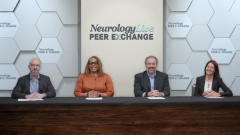
In this episode focused on first-line MS treatments, Dr. Williams poses the practical question: when a newly diagnosed, treatment-naive patient with relapsing-remitting MS sits across from you, what guides your treatment recommendation?
Advertisement
Episodes in this series
In this episode focused on first-line MS treatments, Dr. Williams poses the practical question: when a newly diagnosed, treatment-naive patient with relapsing-remitting MS sits across from you, what guides your treatment recommendation?
Dr. Krieger acknowledges the challenge posed by the new McDonald criteria — some patients diagnosed under expanded definitions have very limited supporting trial data. For patients with definitive clinical MS, Dr. Krieger describes a shared decision-making approach constrained to three or four reasonable, individualized options. He now always includes at least one high-efficacy therapy in that shortlist, as well as an S1P receptor modulator as a high-efficacy oral option. Platform injectables, he notes, have not been part of his practice for years.
He describes lesion localization as the most important prognostic factor: lesions in the spinal cord, brainstem, and cerebellum carry the greatest risk of crossing the clinical threshold into disability. Overall lesion burden and clinical presentation severity at onset further inform the urgency of aggressive treatment. Family planning considerations, informed by Dr. Bove's expertise, are also woven in from the beginning — allowing patients to see that high-efficacy treatment and a fulfilling personal life are not in conflict.
In the next episode, "Why Anti-CD20 Therapy Has Become a Cornerstone of MS Treatment," the panel explores B-cell targeting as a therapeutic strategy and the reasons anti-CD20 agents have risen to frontline status in MS management.
Advertisement
Related to this article
A retrospective cohort study found DTI-ALPS, a glymphatic function marker, did not independently predict survival in glioblastoma beyond extent of resection and sex.
The approval, based on phase 3 IB1001-303 trial data showing consistent SARA scale improvement, makes levacetylleucine the first treatment approved specifically for ataxia-telangiectasia.
Take 5 minutes to catch up on NeurologyLive®'s highlights from the week ending September 18, 2026.
A published protocol outlines the randomized, open-label EPOCH trial testing whether cilostazol accelerates hematoma resorption and improves recovery after intracerebral hemorrhage.

Brian Lin, PhD, discussed the current evidence linking football participation with ALS, the questions that remain unanswered, and how emerging research may help clarify the association.

Mind Moments®, a podcast from NeurologyLive®, brings you an exclusive interview with Jennifer Fokas, MD, and Minali Nigam, MD. [LISTEN TIME: 21 minutes]

A recent MS cohort study suggests that higher EBV nuclear antigen 1 antibody levels are associated with a lower risk of confirmed disability worsening, particularly among patients carrying both HLA-A02:01 and HLA-DRB115:01.
In honor of Muscular Dystrophy Awareness Month, held annually in September, NeurologyLive® looks back at the decade-long expansion of the DMD treatment landscape and the data that supports each approval.
Advertisement
Advertisement
Trending on NeurologyLive - Clinical Neurology News and Neurology Expert Insights
1
FDA Approves Levacetylleucine for Ataxia-Telangiectasia
2
FDA Clears Phase 1b/2 Trial of CAR T-Cell Therapy C-CAR168 for Refractory Progressive Multiple Sclerosis
3
FDA Approves UX111, First Gene Therapy for Pediatric Sanfilippo Syndrome Type A
4
Episode 175: Advancing the Ways of Treating Cluster Headache
5