
Opinion|Videos|July 27, 2026 (Updated: June 8, 2026)
Key Lessons Learned: Optimizing Anti-CD20 Therapy for Long-Term MS Care
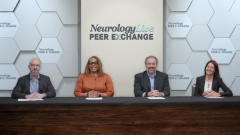
In the final episode titled "Key Lessons Learned: Optimizing Anti-CD20 Therapy for Long-Term MS Care," each panelist reflects on the most important lesson their clinical experience with anti-CD20 therapies has taught them.
Advertisement
Episodes in this series
In the final episode titled "Key Lessons Learned: Optimizing Anti-CD20 Therapy for Long-Term MS Care," each panelist reflects on the most important lesson their clinical experience with anti-CD20 therapies has taught them.
Dr. Greenberg urges new neurologists and fellows entering practice to communicate hope. MS is a fundamentally different disease from what it was two decades ago — one that is "insanely treatable" by historical standards. The next generation of practitioners has no frame of reference for how dramatically outcomes have improved, and it is their obligation to convey that transformation to every newly diagnosed patient. Looking forward, he anticipates a shift from the current era of broad-based B-cell depletion to personalized medicine approaches built on this foundation.
Dr. Bove encourages clinicians to be flexibile to tailor treatment using judgment and real-world evidence without expecting severe consequences.
Dr. Krieger emphasizes the lesson that high-efficacy treatment does not require high risk. The entire historical rationale for escalation therapy was that the most effective medicines were also the most dangerous. The decade of anti-CD20 experience has disproven that assumption: clinicians can achieve extraordinary disease suppression while managing risk thoughtfully — through monitoring, early recognition of adverse events, and proactive counseling.
Dr. Williams reflects on the importance of clinical humility. The field has shifted dramatically over the course of her career, and remaining nimble — following the data, reconsidering assumptions, and acknowledging uncertainty — is an essential professional disposition. The experience with pregnancy and anti-CD20 therapy exemplifies this: practice changed because clinicians were willing to learn and adapt. She closes by noting that learning continues, and communicating that spirit of ongoing inquiry to patients strengthens the therapeutic relationship.
Thank you for watching this Neurology Live Peer Exchange series on multiple sclerosis. Please subscribe to our eNewsletter for information on upcoming video series.
Advertisement
Related to this article
A retrospective cohort study found DTI-ALPS, a glymphatic function marker, did not independently predict survival in glioblastoma beyond extent of resection and sex.
The approval, based on phase 3 IB1001-303 trial data showing consistent SARA scale improvement, makes levacetylleucine the first treatment approved specifically for ataxia-telangiectasia.

Take 5 minutes to catch up on NeurologyLive®'s highlights from the week ending September 18, 2026.
A published protocol outlines the randomized, open-label EPOCH trial testing whether cilostazol accelerates hematoma resorption and improves recovery after intracerebral hemorrhage.

Brian Lin, PhD, discussed the current evidence linking football participation with ALS, the questions that remain unanswered, and how emerging research may help clarify the association.

Mind Moments®, a podcast from NeurologyLive®, brings you an exclusive interview with Jennifer Fokas, MD, and Minali Nigam, MD. [LISTEN TIME: 21 minutes]
A recent MS cohort study suggests that higher EBV nuclear antigen 1 antibody levels are associated with a lower risk of confirmed disability worsening, particularly among patients carrying both HLA-A02:01 and HLA-DRB115:01.

In honor of Muscular Dystrophy Awareness Month, held annually in September, NeurologyLive® looks back at the decade-long expansion of the DMD treatment landscape and the data that supports each approval.
Advertisement
Advertisement
Trending on NeurologyLive - Clinical Neurology News and Neurology Expert Insights
1
FDA Approves Levacetylleucine for Ataxia-Telangiectasia
2
FDA Clears Phase 1b/2 Trial of CAR T-Cell Therapy C-CAR168 for Refractory Progressive Multiple Sclerosis
3
FDA Approves UX111, First Gene Therapy for Pediatric Sanfilippo Syndrome Type A
4
Episode 175: Advancing the Ways of Treating Cluster Headache
5