


Epilepsy
Latest News

NeuroVoices: Martina Bebin, MD, MPA, on Critical Aspects of Infantile Spasms Awareness
By Marco Meglio
Advertisement
Latest Videos
CME Content









Advertisement
More News

Here's some of what is coming soon to NeurologyLive® this week.
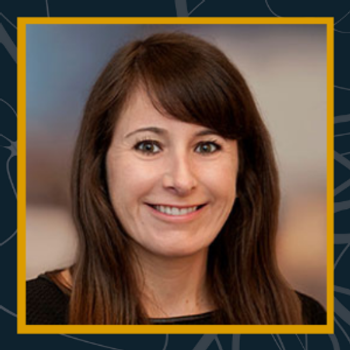
As part of our monthly clinician spotlight, NeurologyLive® highlighted epilepsy expert Stephanie C. Randle, MD, MS, director of the Tuberous Sclerosis Complex Clinic at Seattle Children's Hospital.
Here's some of what is coming soon to NeurologyLive® this week.
The trial, a 20-week study assessing lamotrigine in DLB, will use change in Clinical Dementia Rating-Sum of Boxes as the primary efficacy end point, with several other notable secondary outcomes.
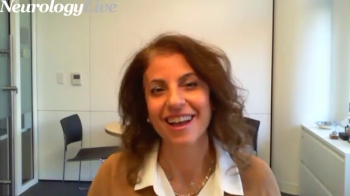
The epilepsy specialist and Cleveland Clinic’s Chief Research and Information Officer discussed the wide-spread applicability of scalp EEG and the potential for machine learning models to help predict epilepsy surgery outcomes. [WATCH TIME: 4 minutes]
Mind Moments®, a podcast from NeurologyLive®, brings you an exclusive interview with Lara Jehi, MD, MHCDS. [LISTEN TIME: 20 minutes]
The epilepsy specialist and Cleveland Clinic’s Chief Research and Information Officer provided clinical background on a promising study employing a machine learning algorithm to predict post-operative seizure outcomes using a peri-ictal scalp EEG. [WATCH TIME: 6 minutes]

Capsida’s CAP-002 gene therapy, currently advancing through IND-enabling studies, aims to address the unmet needs of patients with STXBP1-related developmental and epileptic encephalopathy by stably supplementing STXBP1 protein.
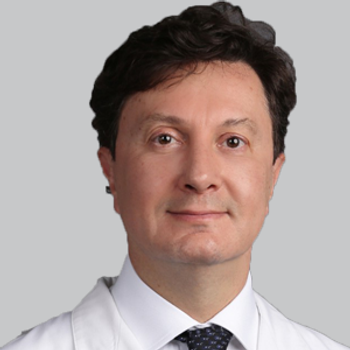
Italo Linfante, MD, director of interventional neuroradiology at Baptist Health Miami Neuroscience Institute, discussed the importance of brain aneurysms in the context of neurology.
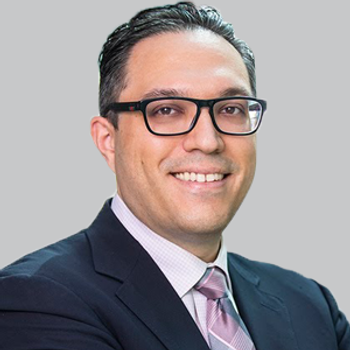
SEEG has transformed the surgical investigation of refractory epilepsy, enabling clinicians to map complex seizure networks with precision, leading to more targeted treatment options for patients.
FDA Places Hold on RAP-219, cAPPricorn-1 Study to Assess Mivelsiran in CAA, FDA Accepts Resubmitted NDA for Ataluren
Published: | Updated:
Neurology News Network. for the week ending November 9, 2024. [WATCH TIME: 4 minutes]
Take 5 minutes to catch up on NeurologyLive®'s highlights from the week ending November 8, 2024.
M. Scott Perry, MD, an expert in epileptic disorders and board president of PERC, provided insights on the group's mission and goals, its structure and membership, and its 60+ ongoing research projects.
Rapport Therapeutics’ is actively recruiting patients for its phase 2a trial investigating its lead therapy candidate RAP-219 among patients with focal epilepsy, with topline data anticipated in mid-2025.
Diego Torres-Russotto, MD, chair of neurology at Baptist Health Miami Neuroscience Institute, discussed the Miami Neuroscience Symposium’s focus on addressing the community’s neurological needs, balancing content delivery and fostering multidisciplinary collaboration.
Michael McDermott, MD, chief medical executive at Baptist Health Miami Neuroscience Institute, gave greater insights on the institute’s annual symposium, which offers attendees updates in cutting-edge imaging, surgical techniques, and neurocognitive research.
Michael McDermott, MD, chief medical executive at Baptist Health Miami Neuroscience Institute, gave greater insights on the institute’s annual symposium, which offers attendees updates in cutting-edge imaging, surgical techniques, and neurocognitive research.
The data scientist at Roche and mother of a child living with Lennox-Gastaut syndrome, provided insight on areas of the disease that need greater recognition, as well as an overview of how the disease is currently treated. [WATCH TIME: 4 minutes]
Bruce Leuchter, MD, president and chief executive officer at Neurvati Neurosciences, provided clinical insight on the newly initiated Astroscape trial of radiprodil for the treatment of tuberous sclerosis complex and focal cortical dysplasia type II.
Ahead of International LGS Awareness Day, Melanie Huntley, PhD, a data scientist for Roche and mother of child with Lennox-Gastaut syndrome, shed light on the realities of living with LGS, emphasizing the need for greater awareness of the condition’s impact.
The professor of neurology at NYU Grossman School of Medicine discussed the results of a phase 2b study on XEN1101, an investigational drug in development for focal epilepsy. [WATCH TIME: 4 minutes]
Here's some of what is coming soon to NeurologyLive® this week.
The professor of neurology at NYU Grossman School of Medicine provided clinical insight on the uniqueness of investigational XEN1101 and the idea behind potassium channel inhibitors to treat epilepsy. [WATCH TIME: 3 minutes]
Scott Perry, MD, discusses how effective management of Dravet syndrome requires a multidisciplinary approach, emphasizing the critical importance of early diagnosis and aggressive treatment aimed at achieving seizure freedom, which can significantly improve long-term outcomes and quality of life for patients.
Here's some of what is coming soon to NeurologyLive® this week.
Advertisement
Advertisement
Trending on NeurologyLive - Clinical Neurology News and Neurology Expert Insights
1
Remibrutinib Lowers Relapse Rate vs Teriflunomide in Relapsing MS
2
FDA Accepts Troriluzole NDA Resubmission for Spinocerebellar Ataxia
3
Phase 2 ACUITY Analysis Shows Privosegtor Associated With Smaller Early NfL and GFAP Increases in Acute Optic Neuritis
4
Investigating the Genetic Link Between EBV and MS Risk: David A. Hafler, MD, FANA; Yoshiaki Yasumizu, MD, PhD
5