












Our Jan. news & research list includes the possible lingering effects of childhood concussion and the benefits of vitamin D for MS.

Our Jan. news & research list includes the possible lingering effects of childhood concussion and the benefits of vitamin D for MS.

An open-label study looked at add-on cannabidiol in children and young adults with severe, intractable, childhood-onset treatment-resistant epilepsy.
Does it matter whether the medications we prescribe to patients are generated via the most cutting edge 3D printing technology?
Our Dec. news & research list includes groundbreaking research from AES 2015 as well as a few potential neurodegeneration biomarkers.

Highlights of recent pediatric epilepsy research include a minimally invasive surgical procedure and genetic testing.
Researchers discussed external devices that would allow individuals to monitor clinical and subclinical seizure activity in their home environment
Results of an MRI study and a 50-year follow-up study shed light on the effects of epilepsy on the brain’s aging process.
Researchers demonstrated promising results in surgical treatment of epileptic encephalopathy and refractory epilepsy.
What exactly should physicians do when presented with interictal epileptiform discharges (IEDs), or spikes?
Important bioequivalence issues regarding anti-epileptic drugs were highlighted at the FDA Town Hall meeting held during AES 2015.

Young epilepsy community members presented late-breaking research on Dravet syndrome, hippocampal neuron activity during seizure, and more at AES 2015.
During pre-surgery planning, decisions regarding which electrode(s) to utilize must be made on a case-by-case basis.
Is long-distance clinical health care and patient education a model that can work in the real world?
Experts from around the globe met to discuss the neuropsychological aspects of frontal lobe epilepsy.
Is it time to breathe new life into the traditional view of early life epilepsies?
How can the medical community advance research and tackle the difficult issue of sudden unexplained death in epilepsy (SUDEP)?

A twin/sibling study investigated a possible link between balance dysfunction and long-time AED use.
Our Nov. news & research list includes 2 successful genetic Alzheimer treatments in mouse models and a potential drug for Parkinson disease psychosis.

Recent findings could explain underlying pathophysiology of these disorders and have therapeutic implications.
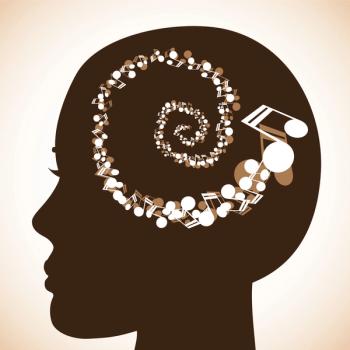
Researchers discovered the brains of people with epilepsy react differently to music, thus potentially opening to door to a new, conjunctive therapy.

Researchers investigate the 2-year and long-term results of resective surgery in children under 4 years old with epilepsy.

A group of doctors looked at the effect of incorporating quality of life management with traditional medical therapy for epilepsy treatment.

This study aims to identify demographic, medical, and psychosocial predictors of drug adherence in young children newly diagnosed with epilepsy.

How well versed are you in various epilepsy treatments? Our quiz covers medications and non-drug treatments.

Digital communities and online self-management tools have the potential to improve clinical outcomes among epilepsy patients.