













This podcast discusses preliminary evidence about the effects of karate on quality of life and several measures of gait, balance, and mobility in patients with PD.

This podcast discusses preliminary evidence about the effects of karate on quality of life and several measures of gait, balance, and mobility in patients with PD.

The systematic review and meta-analysis identified cNfL usefulness as a biomarker, with the potential to help differentiate between frontotemporal dementia and Alzheimer disease, as well as Parkinson disease from atypical parkinsonian syndromes.
Axovant reported positive safety data as well as improvements in a number of measurements of motor function and dyskinesias in patients with Parkinson disease who received treatment with their investigational gene therapy.
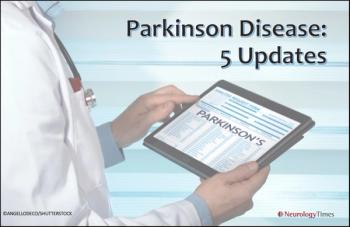
Pain related to more severe motor symptoms, phosphodiesterase 10A loss seen early, novel therapy shows promise, and other recent findings are summarized here.
New case-control findings suggest that glutamate and glutamine content may play a crucial role in the pathophysiology of functional motor symptoms.
The program director of neurology at Zucker School of Medicine, Northwell Health, reviewed the contributions of neurologist S. Weir Mitchell, MD, and how today’s neurologists can gain insights for their own practice from Mitchell’s complicated history.

In an interview with NeurologyLive, the vice president of neurosurgery at INSIGHTEC spoke about the clinical impact that the Exablate Neuro device has had on the treatment of tremor since its FDA approval.
Neurology News Network for the week ending May 18, 2019.
The associate professor of neurology at Mayo Clinic spoke about the findings of a population-based cohort study seeking to investigate the incidence of levodopa-induced dyskinesia in atypical parkinsonism.

Insights about where stem cell treatment of neurological diseases is headed.

New early-stage data suggest that vector‐mediated gene silencing of striatal CaV1.3 expression may hold promise for preventing the induction of levodopa-induced dyskinesias in Parkinson disease.

The FDA has expanded the indication for incobotulinumtoxinA, making it a first-line treatment for blepharospasm.
The chief medical officer of Neurocrine Biosciences spoke about how long-term data on valbenazine (Ingrezza) has helped shape the understanding of the effect tardive dyskinesia can have on patients, and how it can inform better utilization of the medication.

Although the primary end point of centrally video-rated TETRAS Performance Subscale did not achieve statistical significance, CX-8998-treated patients showed significant improvements in a number of other measurements.

The guideline, which is endorsed by the Child Neurology Society and the European Academy of Neurology, is the first guideline on the topic for US-based clinicians.
Although animal models and early phase studies suggested some potential for the hypertension medication to slow disability progression in Parkinson disease, a phase 3 assessment showed a lack of treatment effect.
The proprietary software utilizes sophisticated algorithms and 7T MRI data to predict the location of the subthalamic nuclei, a key target for deep brain stimulation for the treatment of Parkinson disease.

NuPlasma yFFP was associated with improvements in complications of therapy, motor examination scores, mentation, behavior, and mood, and in activities of daily living in patients with Parkinson disease.
Responses from 1300 physicians suggest that increasing patient load and adding ancillary services may be the key to increasing annual income.

Neurology News Network for the week of April 20, 2019.

It has been estimated that between 40% and 60% of patients with PD use at least one form of complementary medicine. In this podcast, neurologist Sarah Mulukutla, MD, MPH talks about CAM options for neurologists to discuss with their patients.
In an ongoing phase 2 study, 21 nonambulatory participants with Duchenne muscular dystrophy passed the 52-week treatment mark.
Neurology News Network for the week of April 13, 2019.
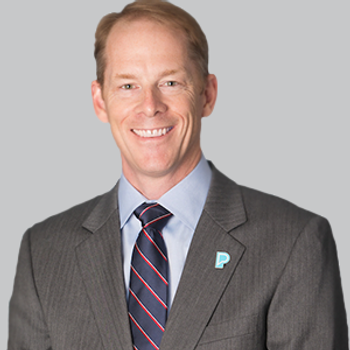
The chief scientific officer of the Parkinson’s Foundation spoke about the developing interest in genetic forms of Parkinson, the potential to target therapies in that direction, and how a genetic treatment is the next big stage for the field.
The chief scientific officer at the Parkinson's Foundation spoke about the need to increase awareness about the proper care of patients with Parkinson disease.