

The semi-retired neurologist and consultant with the PMD Alliance discussed the importance of the patient care team and having multiple specialists and disciplines included in that process. [WATCH TIME: 2 minutes]
The semi-retired neurologist and consultant with the PMD Alliance discussed the importance of the patient care team and having multiple specialists and disciplines included in that process. [WATCH TIME: 2 minutes]

In a presentation at the 2022 ATMRD Congress, Jill Farmer, DO, MPH, outlined several novel options for the treatment of OFF episodes in Parkinson disease, and stressed the need for individualized approaches to maximize patient quality of life.

On average, those with cluster headache had 4.8 cranial autonomic symptoms compared with 2.7 for those with migraine, regardless of aura status.

In a first, but indirect, comparison of the 3 available formulations of amantadine for the treatment of Parkinson disease, only the delayed-release/extended-release formulation (Gocovri) resulted in improvements in both in OFF time and dyskinesia.

Neurology News Network for the week ending June 18, 2022. [WATCH TIME: 3 minutes]

The agent will be evaluated in 2 pivotal trials of 225 patients requiring varying levels of assistance with daily living activities.
The semi-retired neurologist and consultant with the PMD Alliance shared her perspective on the progress that has been made in therapeutics for the treatment of movement disorders, and the role of social prescribing for these patients. [WATCH TIME: 3 minutes]

Members who voted no expressed that they would have liked to have seen results from an additional randomized controlled trial.
Take 5 minutes to catch up on NeurologyLive®'s highlights from the week ending June 17, 2022.

The investigators noted that the data on tolerability and efficacy support that treatment with opicapone among older adults with PD requires no age-related dose adjustments.

The graduate student at the University of Michigan provided insight on the ways to expand the current knowledge about the disparities among races and genders in sleep quality and long-term cognitive outcomes. [WATCH TIME: 3 minutes]
In the comparator study between ponesimod and teriflunomide, the risk of both 12- and 24-week confirmed disability accumulation at week 108 was significantly different between MAGNIMS score groups.

Mind Moments®, a podcast from NeurologyLive®, brings you exclusive interviews with Afsara Zaheed; Richard Bogan, MD, FCCP, FAASM; and Ruth Benca, MD, PhD. [LISTEN TIME: 18 minutes]

Meghan Garabedian, CRNP, MSN, nurse practitioner at the Penn Neuroscience Center, discussed her presentation at the 2022 CMSC Annual Meeting regarding the patient experience on diroximel fumarate.

The digital tool was used to evaluate more than 12,500 recorded upper body movements among a cohort of 41 adults undergoing poststroke rehabilitation exercises.

The associate clinical professor at the University of South Carolina School of Medicine discussed the strides, but also challenges still in treating patients with narcolepsy. [WATCH TIME: 2 minutes]

Over a 24-week treatment period, 72.2% of those on erenumab achieved relevant improvement on HIT-6 scores compared with 53.9% of those on topiramate.

The associate professor at the North Carolina Agricultural and Technical State University provided insight on the widespread feasibility of a new initiative that aims to teach and attract young professionals to the MS field. [WATCH TIME: 4 minutes]

Although new treatments and innovations are a sign of growth in migraine care, it is important to realize that growth comes with a certain amount of pain. In clinical practice, choosing the right treatment option for patients in a time-limited visit is often a dilemma.

The oral tablet formulation of rofecoxib has been shown to reach maximum plasma concentrations at 2 hours post dose compared with 3 for the historical formulation, which the company believes can improve the time to onset of action.

Galit L. Dunietz, PhD, MPH, assistant professor of neurology, University of Michigan, provided insight on women’s health, menopause cycles, and how sleep can have a direct impact on long-term cognitive health.

In the open-label extension where the highest dose of atogepant (Qulipta; AbbVie) was observed, 24.1% of participants had at least 7% weight loss compared with 14.7% of those on standard of care.
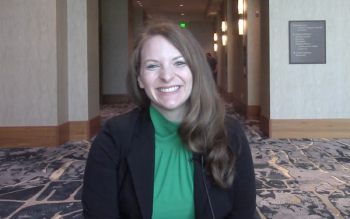
The MD-PhD student at Wake Forest School of Medicine shared her perspective on the findings of a study suggesting that mindfulness practices can alter pain perception and migraine attack awareness, among other results. [WATCH TIME: 4 minutes]

The associate neurologist at Brigham and Women’s Hospital discussed the potential of a nasal anti-CD3 monoclonal antibody, foralumab, and its impact on biomarkers specific to patients with progressive multiple sclerosis.

A systematic review and meta-analysis suggested that the risk of anxiety and depressive symptoms was nearly doubled for those with migraine compared with healthy controls, indicating a need to screen this patient population.

Given the importance of mitochondrial and endoplasmic reticulum function in ALS, the disruption of intracellular mitochondria-endoplasmic reticulum contacts presents yet another avenue for neuronal degeneration—perhaps the primary point of underlying dysfunction.

The approval was based on results from the phase 3 HELIOS-A study, which showed that vutrisiran met its primary end point of change in modified Neuropathy Impairment Score + 7 over a 9-month treatment period.

The associate professor at the North Carolina Agricultural and Technical State University discussed a newfound initiative that helps encourage more professionals in multiple sclerosis and across neurology. [WATCH TIME: 4 minutes]

The most common adverse events reported by individuals using the dihydroergotamine nasal powder were nasal discomfort, dysgeusia, and nasal congestion, all of which were mild and transient in nature.

Secondary outcomes, assessed by the change in the number of monthly headache days by at least 25%, 75%, or 100%, were also not significant following treatment with CGRP monoclonal antibodies.