
The senior investigator in the Neuromuscular and Neurogenetic Disorders of Childhood Section at NINDS shared his perspective on the data coming out of neuromuscular research and the promise of genetic medicine. [WATCH TIME: 2 minutes]
The senior investigator in the Neuromuscular and Neurogenetic Disorders of Childhood Section at NINDS shared his perspective on the data coming out of neuromuscular research and the promise of genetic medicine. [WATCH TIME: 2 minutes]

The risk of autism after perinatal ischemic stroke and childhood stroke was 2.7-fold and 3.30-fold, respectively, compared with matched controls in the study.
Topline data from the phase 3 ADAPT-SC study (NCT04735432) suggest that the subcutaneous formulation of the Argenx product was statistically noninferior to the recently approved IV formulation, efgartigimod afla-fcab (Vyvgart).
The president and chief executive officer of The ALS Association provided commentary on the most pertinent issues with managing patients with ALS and the ways to improve current treatment standards. [WATCH TIME: 4 minutes]
The president and chief executive officer of The ALS Association provided insight on how the organization is advancing the therapeutic pipeline of ALS agents for the foreseeable future. [WATCH TIME: 3 minutes]
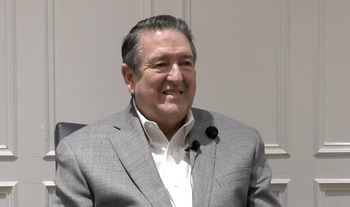
The founding chair of the department of brain health at UNLV discussed a recently awarded NIH grant dedicated to advancing neuroscience research for the long-term future.

The director of neuromuscular clinical trials at Columbia University Irving Medical Center shared her perspective on the discussions that took place at MDA 2022 and the importance of collaboration among clinicians and researchers.
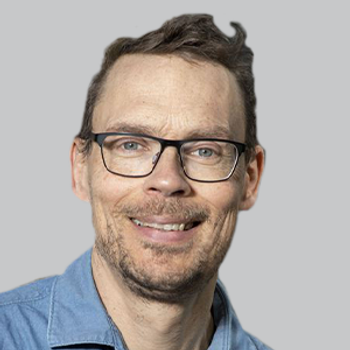
The president and CEO of the Muscular Dystrophy Association spoke about the need for increased participation in neuromuscular disorder clinical trials and the rapid therapeutic progress the field is seeing. [WATCH TIME: 4 minutes]
Data from the ProTEct-MS trial (NCT04480307) suggest that temelimab is safe and well-tolerated in patients with relapsing MS also treated with rituximab, and data were consistent with prior findings. More analysis will be necessary to define an optimal dose.
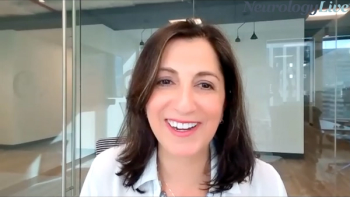
The president and chief executive officer of The ALS Association expanded on the organization’s greatest goal—making ALS livable by 2030—and how it plans to work towards that over the next decade. [WATCH TIME: 3 minutes]
In addition to the moderating role of age and sex, investigators found that high-sensitivity C-reactive protein moderated some associations between OSA risk and attention and episodic memory.
Eleven of the 12 individuals demonstrated at least a 50% reduction in creatine kinase, with 75% of participants reaching twice the normal range, suggesting a reduction in muscle breakdown.
More than 90% of the 65-patient cohort had evidence of normal swallowing and had no aspiration or pneumonia aspiration events reported in the phase 1 START and phase 3 STRIVE-EU and STRIVE-US trials.
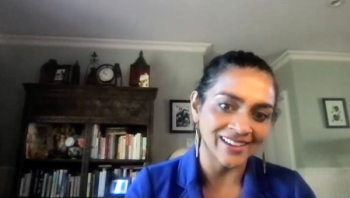
The director of the VA Southwest Parkinson’s Disease Research, Education, and Clinical Centers and clinical professor of neurology at UCLA discussed the lack of a more focused and specific approach to care for women with Parkinson disease. [WATCH TIME: 6 minutes]
In terms of cardiomyopathy, disease-modifying bioactivity of cardiosphere-derived cells was shown by improvements in left ventricular ejection fraction, a commonly used measure of global heart function.

ACNS Critical Care EEG Terminology 2021 is a series dedicated to teaching an understanding of the American Clinical Neurophysiology Society's terminology. Check back for new episodes featuring special guests in the field.
The neurologist and assistant professor at the University of Toronto provided perspective on the multiple different ways retinal imaging can alter and improve the efficiency of research for Alzheimer disease. [WATCH TIME: 2 minutes]

Here's what is coming soon to NeurologyLive®.
The division chief of neuromuscular disorders and vice-chair of research at Virginia Commonwealth University spoke to the ongoing success in the development of gene-mediated therapies and the challenges that come along with treating rare neuromuscular disease. [WATCH TIME: 3 minutes]
Test your neurology knowledge with NeurologyLive®'s weekly quiz series, featuring questions on a variety of clinical and historical neurology topics. This week's topic is optic neuritis and neuromyelitis optica spectrum disorder (NMOSD).
Kaplan-Meier estimates showed a 61% decreased risk of death on CNM-Au8 compared with predicted median survival from a published European Network to Cure ALS model.
The gene therapy from Novartis showed that it was both efficacious and well-tolerated in presymptomatic patients with SMA with 3 copies of SMN2, with no patients experiencing treatment-related serious adverse events.
Neurology News Network for the week ending March 19, 2022.
The American Academy of Sleep Medicine has previously pointed to evidence showing that the sudden change from standard time to daylight saving time is associated with significant public health, safety risks, and circadian rhythm.
Take 5 minutes to catch up on NeurologyLive®'s highlights from the week ending March 18, 2022.
Mind Moments®, a podcast from NeurologyLive®, brings you an exclusive interview with Richard K. Bogan, MD, FCCP, FAASM. [LISTEN TIME: 18 minutes]

Future research is required to include EEG analyses of neurodiverse patient populations.
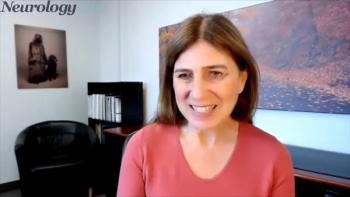
The neurologist and assistant professor at the University of Toronto commented on the next research efforts needed to further validate and demonstrate the diagnostic capabilities of RetiSpec. [WATCH TIME: 3 minutes]
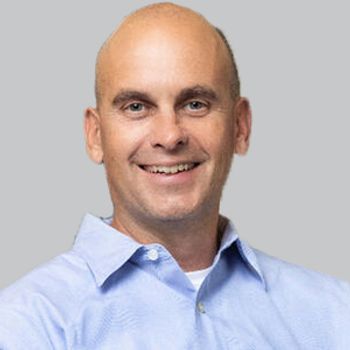
The newly awarded grant will build upon the efforts of phase 1, the foundation of a research infrastructure, which consisted of several different innovative projects aimed at understanding commonalities of neurodegenerative disorders.
The chairman of the department of neurology at George Washington University discussed the reasons to be optimistic, but cautiously, about the expanding myasthenia gravis treatment toolbox. [WATCH TIME: 3 minutes]