
News
Advertisement
Advertisement

The RAISE trial will examine the proportion of patients with refractory status epilepticus who experience status cessation within 30 minutes of initiation of intravenous ganaxolone.
Advertisement
The annual meeting will now take place October 25–28, 2021 at the Rosen Shingle Creek in Orlando, Florida.

Researchers compared CMH rates in PSEN1, PSEN2, and APP mutation carriers and noncarriers of dominantly inherited Alzheimer disease.
The director of the Dartmouth Epilepsy Program provided an overview of some of the critical unmet needs within ongoing epilepsy research following the recent AES Annual Meeting.

Researchers also observed that PAP machines from ISPs were used for a longer median duration than those from DMEs.

Observation of pain freedom at 30 minutes was more accurate than the observation of relief at 30 minutes in predicting pain freedom at 2 hours.
The Evelyn F. McKnight Neurocognitive Scholar at the University of Miami Miller School of Medicine provided thoughts on why cognitive care and sleep disorder care should crossover more often.

Researchers found that time between assessments was the only predictor of PACC score differences.

Earlier AD diagnosis with the AlzoSure assay could potentially make it feasible to initiate disease-modifying therapies much earlier in the disease process.
The chief scientific officer of the Parkinson’s Foundation discussed strategies to close the gap between household income and telehealth use.

A score based on these variables was found to show good discrimination and calibration in predicting early neurological deterioration of ischemic origin, or ENDi.

The Cassava Sciences agent showed 6-month improvements in both ADAS-Cog and NPI scores, and a phase 3 trial is expected to begin in late 2021.
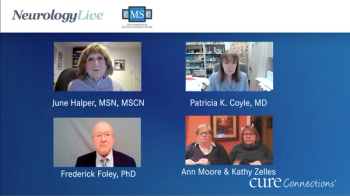

Episode 6 of the AUPN Leadership Minute features Mud M Alvi, MD, of West Virginia University and Robert C. Byrd Health; and David G Standaert, MD, PhD, of University of Alabama at Birmingham. [WATCH TIME: 4 minutes]
Gocovri is now the only therapy to be approved in the US to treat both off episodes and dyskinesia in patients with Parkinson disease.
The AASM board of directors member and professor of medicine at UCLA discussed some strengths of CBT.
Barbara Karp, MD, and Sharon Meropol, MD, discuss the recently launched NeuroCOVID databank from the NIH, which will track neurologic symptoms associated with COVID-19.

Neurocrine Biosciences and Voyager Therapeutics have terminated the Parkinson disease portion of their partnership, ending development for VY-AADC, also known as NBIb-1817.

RACE, G-FAST, and CG-FAST were among the best performing prehospital stroke scales out of 8 scales tested and approached the performance of the clinician-assessed NIHSS.

The director of the Massachusetts General Hospital ALS Care Center spoke on the importance of data-based registries and how they can grow ALS research.
Treatment with low-dose protocol of rituximab is sufficient to maintain suppression of inflammatory disease activity in most patients with relapsing-remitting multiple sclerosis.

The results suggest that BACE-1 inhibitors, while a promising option to slow progression of Alzheimer disease, require further study with careful safety monitoring.

After Theranica’s remote electrical neuromodulation was approved for those aged 12 years and older with migraine, study investigator Jennifer McVige, MD, MA, shared her insight.
Advertisement
Advertisement
Trending on NeurologyLive - Clinical Neurology News and Neurology Expert Insights
1
FDA Accepts Troriluzole NDA Resubmission for Spinocerebellar Ataxia
2
Advances in Spinal Cord MRI for Multiple Sclerosis: Julien Cohen-Adad, PhD
3
Real-World Data Show Switch to Subcutaneous Ocrelizumab Well Tolerated
4
Early Data Show Dual-Targeting CAR-T Agent CTA313 Stabilizes Progressive Multiple Sclerosis
5