

Experts share effective communication strategies and metaphors to enhance patient understanding and engagement in managing neurological disorders.
Experts share effective communication strategies and metaphors to enhance patient understanding and engagement in managing neurological disorders.

In this final episode, Migvis Monduy, MD, discussed long-term data needed to define vamorolone’s durability, safety, and impact across disease stages, including unanswered questions around bone health, growth, cardiomyopathy, and combination strategies.

The research portfolio director at the Muscular Dystrophy Association highlighted the collaborative spirit, the expanding therapeutic pipeline, and the growing emphasis on patients’ voices in neuromuscular disease on display at MDA 2026. [WATCH TIME: 8 minutes]
In this episode, the panel explores the role of treatment satisfaction questionnaires in NMOSD, discussing how patient-reported experience—alongside efficacy and safety—may shape future prescribing decisions and how complement inhibition could redefine long-term management paradigms.
The child neurologist at Children’s Hospital of Philadelphia discussed the real-world safety data of givinostat use in patients with Duchenne muscular dystrophy at the 2026 MDA Conference. [WATCH TIME: 5 minutes]
In this episode, 'Recognizing Narcolepsy Across the Lifespan', the experts explore the clinical presentation of narcolepsy, beginning with the one symptom universal to all patients: excessive daytime sleepiness. The expert panel notes that sleepiness can manifest differently across individuals, with some patients actively masking it through compensatory behaviors, making it easy to underestimate or overlook.
Welcome back to another Neurology Times Peer Exchange series. In this episode titled, 'Understanding Narcolepsy as More Than a Sleep Disorder', the moderator, Dr. Karl Doghramji, led the conversation about excessive daytime sleepiness as a widespread clinical challenge, with the expert panel narrowing the focus to narcolepsy, a central disorder of hypersomnolence that is frequently missed in practice.

The professor of neurology at Cleveland Clinic’s Mellen Center for MS provided thoughts on how radiologic biomarkers may help shape the next generation of multiple sclerosis clinical trials. [WATCH TIME: 3 minutes]
Global trial tests ascendexian after ischemic stroke/TIA, showing low bleeding and raising questions about diversity and real-world fit.

Early BB-301 gene therapy data show durable swallowing gains and benign safety in OPMD dysphagia, hinting at disease modification.
Experts unpack a global stroke-prevention trial, weighing real-world fit, diversity gaps, reperfusion patients, and surprisingly low bleeding.
A neurologist at Georgetown University, MedStar Health, discussed phase 2/3 data presented at the 2026 MDA Conference that supports efgartigimod as a novel treatment for inflammatory myopathies. [WATCH TIME: 2 minutes]

At the 2026 MDA Conference, a neurologist at Nemours Children's Hospital discussed practical strategies for navigating insurance to ensure patients can access newly available neuromuscular therapies. [WATCH TIME: 3 minutes]

Neurology News Network for the week ending March 14, 2026. [WATCH TIME: 4 minutes]
Effective patient communication transforms complex disease concepts into understandable insights, fostering trust and empowering individuals with MS.
A forward-looking discussion on the continued role of vamorolone as background steroid therapy in patients receiving gene or mutation-specific treatments, including what is known, what remains uncertain, and how clinicians are navigating combination strategies in practice.
Experts discuss the importance of systematic longitudinal follow-up in multiple sclerosis care, emphasizing holistic assessments and cognitive testing for better patient outcomes.
A practical discussion on how vamorolone is being incorporated into Duchenne management, including its role in steroid initiation, reintroduction after prior intolerance, and long-term planning across different stages of disease.
In this episode, the panel discusses the real-world safety signals seen with rituximab—particularly serious and recurrent infections—how to think beyond IgG levels alone, and what clinicians can do to better monitor and mitigate infectious risk while balancing relapse prevention.

The president and chief executive officer of the Biotechnology Innovation Organization shared insights on his keynote speech delivered at MDA 2026, reflecting on the evolving rare disease ecosystem. [WATCH TIME: 3 minutes]
Experts explain how factor XIa inhibitors may prevent post‑stroke clots while sparing hemostasis, offering safer anticoagulation ahead of Phase III.

The associate professor of neurology at Mayo Clinic College of Medicine discussed how migraine trials can evolve to better incorporate patient-centered outcomes that reflect daily function and quality of life. [WATCH TIME: 3 minutes]
Experts explain why lowering blood pressure below 130/80 cuts stroke risk, and share practical tips on adherence, apps, and polypill therapy.

Neurology News Network for the week ending March 7, 2026. [WATCH TIME: 5 minutes]
Experts discuss reconciling discrepancies in MS diagnosis through clinical judgment, imaging, and biomarker analysis for better patient outcomes.
A closer look at how LIONHEART and VISION-DMD reinforce vamorolone’s distinct profile in Duchenne muscular dystrophy
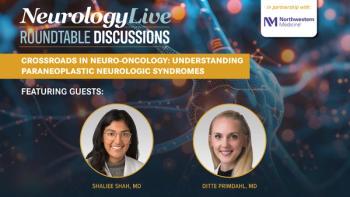
Neuro-oncology experts examined how emerging cancer therapies may reshape the spectrum of paraneoplastic neurologic syndromes. [WATCH TIME: 4 minutes]
Migvis Monduy, MD, provided clinical perspective on how vamorolone compares with traditional corticosteroids and why its safety profile matters in long-term Duchenne management.
Discover emerging imaging techniques and biomarkers for multiple sclerosis that enhance clinical practice and improve patient outcomes.
The neurologist at LMU Munich University Hospital discussed newly published data supporting plasma brain-derived tau as a dynamic biomarker of infarct growth and treatment response in acute ischemic stroke. [WATCH TIME: 4 minutes]