Now Playing
A decade of diagnostic, biologic, and therapeutic change has shifted MS from fixed phenotypes toward a spectrum, and distinguishing disease activity, impact, and progression clarifies what current treatment still leaves unaddressed.
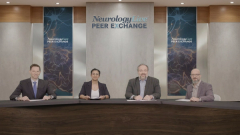
Welcome back to another NeurologyLive Peer Exchange series. In "How MS Understanding Has Evolved: Activity, Impact, and Progression," moderator Benjamin Greenberg, MD is joined by Jacqueline Rosenthal, MD, Stephen Krieger, MD, and Barry Singer, MD to open the series on multiple sclerosis.
Dr. Krieger opens by describing how the field has rethought MS over the past decade. Revised McDonald criteria changed diagnosis, and a deeper grasp of biology changed how clinicians see the disease. The familiar phenotypes of relapsing-remitting, secondary progressive, and primary progressive MS remain foundational, he says, but they are giving way to a spectrum model. He points to the theme of this year's unified meeting in Toronto, "Unifying MS," as evidence.
Dr. Krieger adds that treatment has moved toward very high-efficacy strategies. Clinicians have become highly skilled at preventing relapses, but that success has revealed progression continuing across the entire disease continuum. In his view, understanding that progression, designing medicines to address it, and personalizing care instead of relying on crude categories is the field's mandate for the next ten years.
Dr. Greenberg then raises past survey work showing a gap between what patients and clinicians identify as priorities. He asks Dr. Rosenthal to separate disease activity, disease impact, and disease progression. Dr. Rosenthal defines activity as inflammatory activity, including the focal inflammation linked to the relapsing phenotype and the chronic, compartmentalized inflammation tied to progressive disease. Impact reflects day-to-day symptoms, including effects on work, community engagement, and function.
Progression, she explains, is the slow, persistent worsening of disability over time. Dr. Rosenthal stresses that the three concepts overlap without being interchangeable. A patient can have activity without impact, or impact that is not temporally related to activity. Progression can occur without activity, and it can also occur with minimal impact. Dr. Greenberg observes that this overlap reflects the intersection of a complex biology and a complex clinical phenotype, which sets up the panel's closer look at the underlying immune mechanisms.
The next episode in this series, "MS Immune Networks: Acute and Chronic Inflammation Beyond Single Cells," features Dr. Singer and Dr. Krieger on how acute and chronic inflammation interact.