
Opinion|Videos|October 30, 2026
MS Immune Networks: Acute and Chronic Inflammation Beyond Single Cells
Acute lesions are only one part of MS biology. Compartmentalized inflammation behind the blood-brain barrier suggests a network problem that targeting a single cell type cannot fully solve.
Advertisement
Episodes in this series
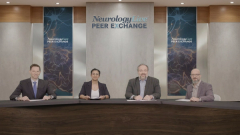
"MS Immune Networks: Acute and Chronic Inflammation Beyond Single Cells" takes up how immune activity drives MS both from outside and within the central nervous system.
Dr. Singer explains that two processes run in parallel in MS. Early in the disease, perivascular and perivenular cuffs of lymphocytes and monocytes move from the periphery into the central nervous system and create the acute lesion. As that lesion resolves, roughly 20% of the cells remain, including CD8 cells, leaving chronic inflammation behind.
In the chronic phase, Dr. Singer describes ongoing compartmentalized inflammation inside the central nervous system. He highlights chronic active lesions with microglial rims and meningeal inflammation, where soluble factors drive demyelination in the cortex. Microglial activation is also widespread in normal-appearing white matter. Axonal injury and Wallerian degeneration mean that this tissue is not truly normal, and remyelination fails as patients age. Inflammation arriving from the periphery is only part of the picture.
Dr. Greenberg notes that explanations to patients were easier when understanding was incomplete, and he asks Dr. Krieger how to integrate these distinct entities. Dr. Krieger observes that clinicians tend to define the disease by whatever they can see. Lesions were once viewed as static, yet they can expand at the rim in ways conventional MRI does not capture.
Dr. Krieger adds that B-cell depleting therapies have defined the past decade because they are so effective. That success may have encouraged a one-cell-at-a-time view of the disease. He argues instead that MS is a network problem, involving compartmentalized immune processes in the central nervous system and immune influx across the blood-brain barrier. Meningeal aggregates of lymphocytes and B cells cannot be seen on conventional MRI but may still potentiate disease. He calls for targeted strategies that interrupt these networks, perhaps without depleting cells at all, to address both relapsing and progressive pathology.
Our next episode, "When MS Progression Begins: Early Injury and Relapsing vs Progressive Biology," turns to Dr. Rosenthal and Dr. Singer on when irreversible injury begins.
Advertisement
Related to this article

The phase 3 TRONTIER 1 and 2 trials will test whether trontinemab's faster brain entry and rapid amyloid clearance translate into slower clinical decline in early Alzheimer disease.

Mind Moments®, a podcast from NeurologyLive®, brings you an exclusive interview with M. Scott Perry, MD. [LISTEN TIME: 15 minutes]
Sara Cuccurullo, MD, FAAPMR, and Talya Fleming, MD, FAAPMR, of Hackensack Meridian JFK Johnson Rehabilitation Institute, discuss the updated adult stroke rehabilitation and recovery guidelines and their implications for clinical practice.
Shadi Yaghi, MD, FAHA, Chair of Neurology at Hackensack Meridian Neuroscience Institute at Jersey Shore University Medical Center, discusses a new calculator that predicts stroke risk within 30 days of a procedure.
The clinical professor of neurology and pediatrics at The Ohio State University Wexner Medical Center discussed payer step therapy, earlier preventive treatment, and questions the updated guideline leaves open.
Brian Snelling, MD, director of the stroke program at Marcus Neuroscience Institute discussed delays in calling 911 after stroke onset, gaps in awareness of atypical symptoms, and how to reach underserved populations.
Kim Henriksen, PhD, discusses research evaluating blood-based biomarkers of blood-brain barrier remodeling and immune cell activity in multiple sclerosis, including their potential to track treatment responses and inform future biomarker development.
Mitzi Joi Williams, MD, is joined by Temitope Adeola, MD, and Chantale Branson, MD, to discuss migraine as a complex neurological condition, including recognizing symptoms and triggers, navigating acute and preventive treatment options, and incorporating lifestyle modifications to improve migraine management.
Advertisement
Advertisement
Trending on NeurologyLive - Clinical Neurology News and Neurology Expert Insights
1
Incorporating the Updated AAN/AHS Migraine Prevention Guideline Into Practice
2
Machine Learning Spots Early Signs of MS and NMOSD Years in Advance
3
World Stroke Day 2026: Closing the Gap Between Stroke Onset and the Emergency Call Number
4
Blood-Based Biomarkers for Monitoring Treatment Response in Multiple Sclerosis
5