


Dementia and Alzheimer Disease
Latest News
Advertisement
Latest Videos



CME Content





Advertisement
More News
Neurology News Network for the week ending November 20, 2021.
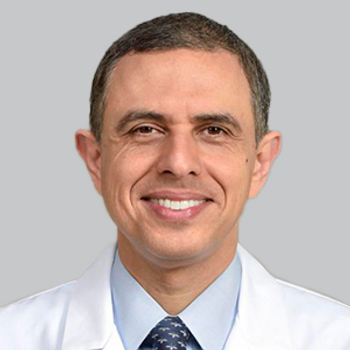
Ali Rezai, MD, executive chair at the Rockefeller Neuroscience Institute at West Virginia University, outlined early data from a clinical trial utilizing focused ultrasound to open the blood-brain barrier in patients with mild AD.
Take 5 minutes to catch up on NeurologyLive®'s highlights from the week ending November 19, 2021.
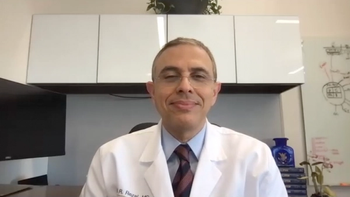
The executive chair of the Rockefeller Neuroscience Institute at West Virginia University spoke on how technology can be used to open the blood-brain barrier in patients with AD. [WATCH TIME: 7 minutes]
The magnitude of neflamapimod’s effect on several efficacy measures proved to be consistent with the mechanism of action and prior preclinical data, with p-tau181 data suggesting a stronger effect on nonmixed Lewy body pathology.

The findings, which suggest that high plasma GFAP levels are parallel with AD and are markers of tau pathology, hold important implications in facilitating the detection of Alzheimer disease, particularly in the preclinical stage.
Ali Rezai, MD, executive chair of the Rockefeller Neuroscience Institute at West Virginia University, provided an overview of FUS technology and its use in opening the blood-brain barrier.

A higher incidence of gastrointestinal events was observed in the treatment group compared with placebo, similar to what was seen in clinical trials of AMX0035 in amyotrophic lateral sclerosis.

Results outline secondary end points, which follow previously reported data on the AMBAR study’s primary end points, including delay in cognitive and functional decline in patients with AD.

Over 26 weeks of treatment, masupirdine demonstrated a sustained and durable effect on outcomes such as cognition and dementia-related psychosis.

Ivana Rubino, PhD, the head of Medical for Global Alzheimer at Biogen, offered her perspective on the recently presented data at CTAD 2021.
Here's what is coming soon to NeurologyLive.
A presentation at CTAD 2021 included data from 5 patients enrolled in a phase 2a trial to evaluate neurocognitive, imaging, and safety outcomes of the therapeutic approach in early AD dementia.

Findings presented at CTAD 2021 included data from surveyed participants with dementia and healthy volunteers about starting in-person or remote research.

Having previously served as head of the organization during the Obama administration, Califf will replace current Acting Commissioner Janet Woodcock, MD.
Take 5 minutes to catch up on NeurologyLive's highlights from the week ending November 12, 2021.

The new registry will collect routine clinical practice data from the care of patients with Alzheimer disease who are taking an FDA-approved disease-modifying therapy.

Despite the cohort only consisting of 3 patients with Alzheimer disease, autologous cellular therapy data highlighted the potential of the treatment’s results on cognitive assessments such as Montreal Cognitive Assessment.

The data, which suggest that a lessened decline in cognition and function was correlated with a reduction in plasma p-tau181 levels in those with Alzheimer disease treated with aducanumab (Aduhelm; Biogen), were presented at CTAD 2021.
Study of semorinemab in a larger mITT population confirmed statistically significant reduction in rate of cognitive decline in patients with Alzheimer disease, compared with placebo, but failed to achieve other end points.
Here's what is coming soon to NeurologyLive.
Take 5 minutes to catch up on NeurologyLive's highlights from the week ending November 5, 2021.
Expert clinicians offer their perspectives on the ongoing shortage of neurologists, stigmas associated with migraine, diets for those with epilepsy, mesenchymal stem cells in MS, and other topics.
Catch up on any of the neurology news headlines you may have missed over the course of the last month, compiled all into one place by the NeurologyLive team.

The Renew Biosciences device is designed to enhance circulation and improve cerebrovascular health by stimulating the physiological effects of exercise and the function of endothelial cells.
Advertisement
Advertisement
Trending on NeurologyLive - Clinical Neurology News and Neurology Expert Insights
1
2026 Rachel Horne Prize Winner Sandra Vukusic, MD, PhD, on Advancing Women's Health in MS
2
FDA Accepts Fenebrutinib NDA Under Priority Review for Relapsing and Primary Progressive MS
3
Givinostat Data Point to Delayed Loss of Ambulation, Preserved Muscle Tissue in DMD
4
Early Spinal Muscular Atrophy Treatment Tied to Milder Pediatric Phenotype
5