











November news includes potential Alzheimer treatments, FDA approval of a device to prevent recurrent stroke, & a newly typified headache disorder.

November news includes potential Alzheimer treatments, FDA approval of a device to prevent recurrent stroke, & a newly typified headache disorder.

Researchers evaluated cognitive and motor development, receptive language, and memory in 214 children who had experienced febrile status epilepticus.

Although tremendous advances in research and medical ethics have been made since the mid-20th century, questions continue.
Oct. news includes an approved deep brain stimulation system for movement disorders & biomarkers that improve risk assessment in atrial fibrillation.

To investigate an association between epilepsy and autoimmune disease, researchers reviewed 25 studies, covering patients of various ages.
Our Sept. news includes a possible clinical marker and therapy target in Alzheimer disease and MS findings from an optical coherence tomography study.

Little evidence exists to guide drug choice in elderly patients with epilepsy. The KOMET study compared carbamazepine, levitiracetam, and valproate.
New research covers treating MS early, identifying those at risk for AED-induced psychosis, & selecting a drug for epilepsy patients with migraines.
Our August news includes a potential classification system for Alzheimer disease, new findings in a 3D model of TBI, and migraine treatments.

Cardiac arrhythmias associated with long QT syndrome could explain an association with seizures, but researchers looked at other mechanisms.

A study from South Korea suggests epilepsy may have a direct effect on certain autistic symptoms.
Our July news includes the Alzheimer-diabetes link, increased rates of Parkinson, and guidelines for acute migraine treatment in the ED.

In this Medical News Minute, Dr. Bobby Lazzara highlights possible birth defects resulting from women taking pregabalin during pregnancy.

This study is the first to evaluate a possible link between parental infertility or fertility treatment and idiopathic generalized epilepsy.
Researchers used simulations to predict the outcomes of epilepsy patients with partial-onset seizures converting to Aptiom monotherapy (800 mg QD).
Research leading up to the ongoing phase 3 trial of SAGE-547, a potential drug for super-refractory status epilepticus, was presented at AAN 2016.

One-year results from the PREVAIL OLE extension trial discuss the safety and efficacy of topiramate for refractory partial onset seizures.
Neurologic conditions, such as epilepsy, migraine, and stroke, often have real-world consequences, such as those described in three new studies.
Do you and your patients with epilepsy agree on treatment decisions? A national survey compares AED attribute preferences of patients and neurologists.
Our May news includes memory replay disruption in Alzheimer disease, impulse control disorder in Parkinson disease, and return to play in TBI.

How do you respond when a patient with epilepsy asks about the safety of pregnancy? The WEPOD study investigated pregnancy outcomes and deliveries.
Can use of an online platform improve patient self-management in a group of Veterans with epilepsy?
Researchers studied the prevalence and incidence of epilepsy in the elderly and confirmed three risk factors in this patient population.
To improve the quality of care for patients with epilepsy, AAN updated a set of measures and guidelines in 2014, but does a gap still exist?
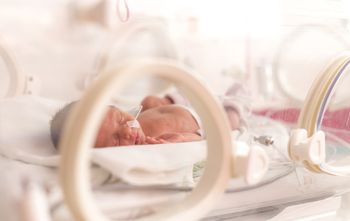
Although extremely premature boys tend to have a higher burden of neurocognitive impairments than girls, some unexpected similarities were found.