

MS and Demyelinating Disorders
Latest News
Advertisement
Video Series

Latest Videos



Shorts

1:06
Using Personalized Risk Tools to Guide MS Treatment Conversations
11 hours ago
by
Robert Bermel, MD

0:57
Measuring PIRA More Sensitively in the MS Clinic
a day ago
by
Robert Bermel, MD

0:53
Why Pharmacogenomics Deserves More Attention in Multiple Sclerosis
2 days ago
by
Rebecca Cebull, CNP
0:42
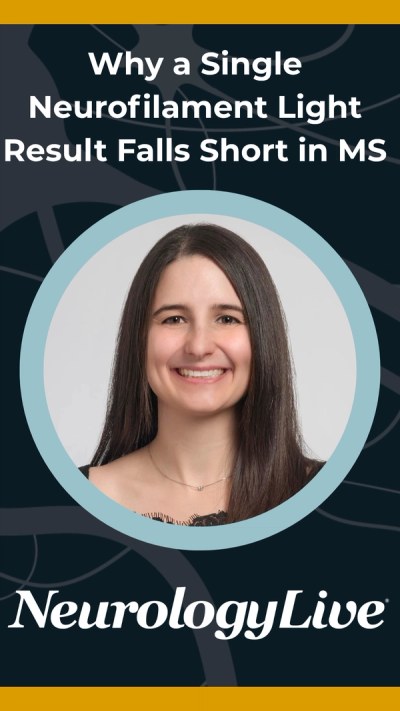
Why a Single Neurofilament Light Result Falls Short in MS
4 days ago
by
Marisa McGinley, DO

1:22
The Compounding Effect of Sleep Apnea on Neurodegeneration
5 days ago
by
KuangHua Guo, MD, PhD
0:42
Defining True Precision Medicine in Multiple Sclerosis
5 days ago
by
Robert Bermel, MD

1:17
How Sleep Symptoms Could Help Identify Neurodegeneration Before It Starts
6 days ago
by
KuangHua Guo, MD, PhD

1:17
RECAP: Neurology News Network - September 26th
17 days ago
by
Louie Pasculli

0:57
What Other Nerve Conditions Are Teaching Us About Reversing DPN
18 days ago
by
Brian Callaghan, MD, MS

0:57
The 5 to 10 Year Outlook for Diabetic Peripheral Neuropathy
19 days ago
by
Brian Callaghan, MD, MS
Podcasts




CME Content













Advertisement
More News

Here's some of what is coming soon to NeurologyLive® this week.

The positive opinion for intravenous ocrelizumab was supported by phase 3 OPERETTA 2 findings demonstrating noninferior relapse control and superior suppression of MRI-detected brain lesions compared with fingolimod in pediatric patients with relapsing MS.

An ACT–based group intervention did not significantly improve resilience at 3 months in patients with MS but was associated with improvements in anxiety, well-being, psychological flexibility, and health-related quality of life.
Here's some of what is coming soon to NeurologyLive® this week.

Take 5 minutes to catch up on NeurologyLive®'s highlights from the week ending September 18, 2026.

A recent MS cohort study suggests that higher EBV nuclear antigen 1 antibody levels are associated with a lower risk of confirmed disability worsening, particularly among patients carrying both HLA-A02:01 and HLA-DRB115:01.
The FDA clearance allows AbelZeta to study bispecific CAR T-cell therapy C-CAR168 in refractory progressive multiple sclerosis.
Here's some of what is coming soon to NeurologyLive® this week.

A new case report underscored the need to consider CNS lymphoproliferative disease when patients on chronic immunosuppression for neuromyelitis optica spectrum disorder develop unexplained neurologic decline.
Take 5 minutes to catch up on NeurologyLive®'s highlights from the week ending September 11, 2026.

The FDA granted priority review to satralizumab for MOGAD, positioning it to become the first approved treatment for the rare autoimmune disease.
Here's some of what is coming soon to NeurologyLive® this week.
Take 5 minutes to catch up on NeurologyLive®'s highlights from the week ending September 4, 2026.
Catch up on any of the neurology headlines you may have missed in August 2026, compiled into 1 place by the NeurologyLive® team.

A recent study suggests that cumulative genetic variation associated with lymphocyte counts may help identify patients living with multiple sclerosis at increased risk of dimethyl fumarate-associated lymphopenia.

A recently published multiple sclerosis study suggests disease-modifying therapy use may be associated with higher rates of human papillomavirus positivity, cervical abnormalities, and other gynecologic complications.

Findings showed that remibrutinib outperformed teriflunomide in the REMODEL-1 and REMODEL-2 phase 3 trials among adults with relapsing MS, lowering relapse rates and MRI lesions with a favorable safety profile.

Hannah Kopinsky, MD, an MS specialist at Northwestern Medicine, discussed recent updates to multiple sclerosis diagnostic criteria, the shift toward early high-efficacy treatment, and the unmet needs that remain in progressive MS.

A case report documented MOG-IgG antibodies in a mother's breast milk following severe MOGAD, though her breastfed infant's serum tested negative.
Here's some of what is coming soon to NeurologyLive® this week.
Here's some of what is coming soon to NeurologyLive® this week.
Here's some of what is coming soon to NeurologyLive® this week.

A large claims-based cohort study found that two doses of the recombinant zoster vaccine reduced the risk of shingles by 64% to 81% in adults with multiple sclerosis, a population with elevated shingles risk and historically low vaccine uptake.

Experimental small molecule CN045 promoted oligodendrocyte maturation and modest remyelination in preclinical models of multiple sclerosis, supporting further development of the compound as a potential remyelination therapy.

The FDA has cleared Quantum BioPharma's investigational new drug application for Lucid-MS, allowing the company to begin a phase 2 trial of the first-in-class demyelination-targeting compound in progressive multiple sclerosis.
Advertisement
Advertisement
Trending on NeurologyLive - Clinical Neurology News and Neurology Expert Insights
1
ELEVIDYS Shows Sustained Functional Differences vs External Controls in Older Ambulatory Duchenne Patients
2
Dompé Begins Phase 2 Trial Testing Intranasal Nerve Growth Factor for Cerebral Palsy
3
The Road Ahead for Precision Medicine in Multiple Sclerosis
4
Telitacicept Shows Deepening, Durable Response in Myasthenia Gravis
5