



MS and Demyelinating Disorders
Latest News
Advertisement
Latest Videos




CME Content






Advertisement
More News
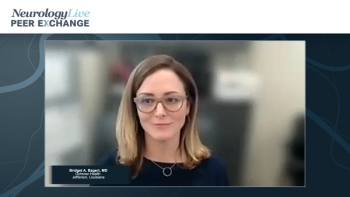
Amit Bar-Or, MD, FRCPC, and Bridget A. Bagert, MD, share their opinions on how to move investigative treatments for multiple sclerosis off the laboratory bench and into clinical practice.
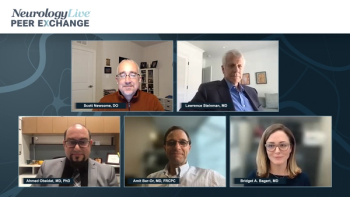
Doctors in neurology comment on the hidden symptoms of multiple sclerosis and debate whether they should be treatment targets.
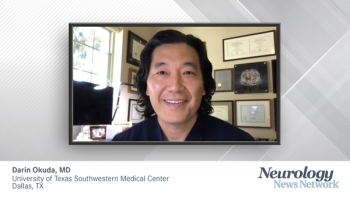
Dr Okuda shares his thoughts on the importance of patient dialogue in successful management of multiple sclerosis.
A multiple sclerosis expert, Dr Darin Okuda reviews long-term outcomes with ozanimod in DAYBREAK trial based on the number of relapses that was presented at EAN 2022.
Dr Darin Okuda discusses strategies for treatment selection and management of relapses in multiple sclerosis.

Dr Jacqueline Nicholas hypothesizes about the utility of neurofilaments as a biomarker of disease severity in patients with multiple sclerosis.
Heidi Crayton, MD, and Jacqueline Nicholas, MD, review the importance of long-term safety data in the management of patients with multiple sclerosis, and Flavia Nelson, MD, discusses her approach to counseling patients on the safety considerations regarding new S1P modulating agents.
Catch up on any of the neurology news headlines you may have missed over the course of the last month, compiled all into one place by the NeurologyLive® team.

Here's some of what is coming soon to NeurologyLive® this week.
Test your neurology knowledge with NeurologyLive®'s weekly quiz series, featuring questions on a variety of clinical and historical neurology topics. This week's topic is the history of the Alzheimer's Association.
Take 5 minutes to catch up on NeurologyLive®'s highlights from the week ending July 29, 2022.
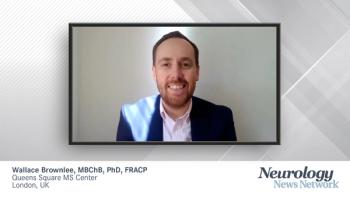
Dr Brownlee shares his advice and recommendations from national MS society on providing cognitive care for patients suffering from MS.
A multiple sclerosis expert, Dr Brownlee shares study design and clinical data on relapse following discontinuation of ozanimod in patients with multiple sclerosis.
Dr Wallace Brownlee discusses reasons of and clinical impact of treatment discontinuation in multiple sclerosis.
Mind Moments®, a podcast from NeurologyLive®, brings you an exclusive interview with Darin T. Okuda, MD, and Karin Cook. [LISTEN TIME: 55 minutes]

Experts in neurology discuss the considerations and practicalities of treating patients with multiple sclerosis who may undergo surgery and explore the role of treatment holidays.
Regina Berkovich, MD, PhD, comments on the role of patient education in engaging ethnically diverse and underrepresented patient populations with multiple sclerosis in their treatment plans.
Experts in neurology comment on clinical trial design considerations and discuss novel imaging techniques and biomarkers that they consider most important to investigate for multiple sclerosis.
Bridget A. Bagert, MD, leads a discussion on the ideal patient populations for using a potential vaccine for multiple sclerosis, and the panel comments on other factors to consider when administering vaccines.
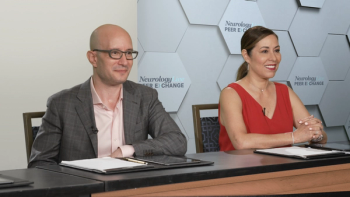
Dr Flavia Nelson comments on the impact of S1P modulators on brain volume measures; highlighting thalamic atrophy and its correlation with brain volume loss in MS.

Experts in neurology review data surrounding the role of disease-modifying therapies in preventing grey matter brain atrophy and cognitive decline.
Dr Macaron shares her interpretation of the data and importance of individualizing treatment for patients with multiple sclerosis.
Dr Gabrielle Macaron reviews data with ozanimod in treatment naïve vs experienced patients with relapsing multiple sclerosis presented at EAN 2022.
A multiple sclerosis expert, Dr Gabrielle Macaron, discusses factors that can lead to a change of therapy for patients with multiple sclerosis.
Chaired by Annette Okai, MD, of North Texas Institute of Neurology & Headache, the presentations also feature Fernando Cuascut, MD, MPH, of Baylor College of Medicine; and Lauren Tardo, MD, and Rebecca Romero, MD, of UT Southwestern Medical Center. [WATCH TIME: 1 hour, 18 minutes]
Advertisement
Advertisement
Trending on NeurologyLive - Clinical Neurology News and Neurology Expert Insights
1
uniQure Submits BLA for Gene Therapy in HD, AAN, AHS Issue Updated Guideline on Migraine Prevention, CTE Prevalence, Brain Donation Findings in Former NFL Players
2
American Academy of Neurology, American Headache Society Issue Updated Guideline on Migraine Prevention
3
EU Approves Modified-Release Carbidopa/Levodopa Capsules for Parkinson Disease Motor Fluctuations
4
uniQure Submits BLA for Gene Therapy in Huntington Disease
5