




MS and Demyelinating Disorders
Latest News
Advertisement
Latest Videos




CME Content






Advertisement
More News
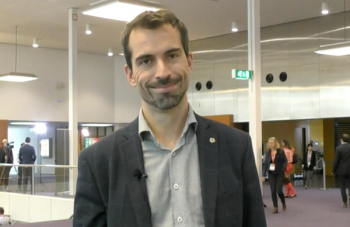
The professor of neurology and biostatistician at University of Melbourne and Royal Melbourne Hospital spoke on stem cell transplantation in patients with MS and its effectiveness in comparison with other traditional approaches. [WATCH TIME: 2 minutes]

In the meta-analysis, the Paleolithic and Mediterranean diets continued to outperform other dietary interventions such as ketogenic, anti-inflammatory, fasting, and calorie restriction on fatigue and quality-of-life outcomes.

Findings from a randomized phase 2 trial resulted in patients with relapsing multiple sclerosis treated with evobrutinib displaying an increase in S1/S2 IgG antibody levels.

As the treatment landscape for relapsing MS continues to strengthen, the neurologist at Allegheny Health Network discussed the reasons for continued pursuit of drug development. [WATCH TIME: 3 minutes]

Here's some of what is coming soon to NeurologyLive® this week.

Among those on early highly-effective treatments, shorter disease duration and shorter time between first treatment and current treatment led to more patients achieving no evidence of disease activity.
Test your neurology knowledge with NeurologyLive®'s weekly quiz series, featuring questions on a variety of clinical and historical neurology topics. This week's topic is epilepsy and seizure disorders.

Two weeks after natalizumab infusion, patients demonstrated significantly less central fatigue, with a trend for a reduction in supraspinal fatigue, among other notable findings.

In a late-breaking presentation in ECTRIMS, data from the MSBase international registry was suggestive of higher disability accumulation risk compared with those who did not experience relapse, in both treated and untreated patients with MS.
Take 5 minutes to catch up on NeurologyLive®'s highlights from the week ending October 28, 2022.

Using a prespecified noninferiority margin of 0.2 rate ratio, rituximab failed to distinguish itself from ocrelizumab on the primary end point of annualized relapse rate.

In the first of its kind ARISE study, treatment with dimethyl fumarate resulted in more than 80% reduction in risk of first demyelinating event relative to placebo.
After preliminary data suggested that humoral response may be delayed among those vaccinated against COVID-19 treated with ocrelizumab, new data from the ECTRIMS Congress suggest a third booster dose can revive such response safely.

Data from the CLARIFY-MS study showed significant improvements in Multiple Sclerosis Quality of Life-54 physical and mental composite scores, with consistent safety and tolerability among patients with MS.

Dose-dependent reductions in neurofilament light were observed at week 144 in both those who continued treatment from the double-blind period and those who switched from placebo.
Using a cohort of more than 2000 pregnancies, the data showed an extremely rare number of major congenital anomalies while on ocrelizumab, as most patients underwent live birth with no issue.
Using phenotypically “extreme” MS groups, annualized brain volume loss was higher in progressors vs non-progressors and was predicted by baseline GFAP and NfL levels.

In a small real-world cohort, annualized relapse rates were reduced for patients with multiple sclerosis who switched to cladribine (Mavenclad; EMD Serono) from ocrelizumab (Ocrevus; Genentech), natalizumab (Tysabri; Biogen), and alemtuzumab (Lemtrada; Sanofi Genzyme).

The favorable annualized relapse rates for fingolimod over interferon beta-1a observed in the 2-year core phase continued in a 5-year open-label extension.

Over a median of 73.5 weeks of follow-up time, zero adjudicated relapses were observed for those with AQP4+ NMOSD on ravulizumab.

Among 43 cycles that achieved pregnancy, investigators observed decreases of annualized relapse rates from 0.26 to 0.09.
The neurologist at Allegheny Health Network’s Neuroscience Institute provided perspective on a new phase 3 trial assessing fenebrutinib, an investigational BTK inhibitor for relapsing multiple sclerosis.
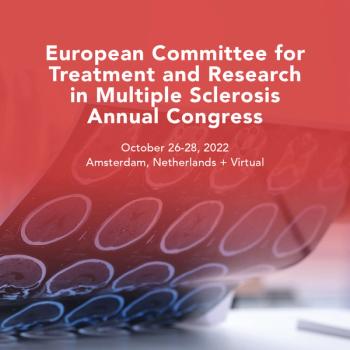
The 2022 Congress of the European Committee for Treatment and Research in Multiple Sclerosis will take place in Amsterdam, the Netherlands, from October 26 to 28, and is expected to feature almost 250 presenters.

Permanent disability, found in 51% of patients with NMOSD at follow-up, was attributed mainly to age of disease onset, delay in diagnosis, and initial EDSS score.
Here's some of what is coming soon to NeurologyLive® this week.
Advertisement
Advertisement
Trending on NeurologyLive - Clinical Neurology News and Neurology Expert Insights
1
uniQure Submits BLA for Gene Therapy in HD, AAN, AHS Issue Updated Guideline on Migraine Prevention, CTE Prevalence, Brain Donation Findings in Former NFL Players
2
American Academy of Neurology, American Headache Society Issue Updated Guideline on Migraine Prevention
3
EU Approves Modified-Release Carbidopa/Levodopa Capsules for Parkinson Disease Motor Fluctuations
4
uniQure Submits BLA for Gene Therapy in Huntington Disease
5