






MS and Demyelinating Disorders
Latest News
Advertisement
Latest Videos





CME Content






Advertisement
More News

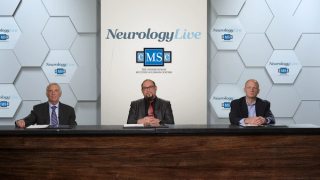
Chaired by Riley Bove, MD, of the University of California, San Francisco (UCSF), the presentations also feature Emmanuelle Waubant, MD, PhD, of UCSF; William L. Conte, MD, MS, of Methodist Hospitals; and Maria K. Houtchens, MD, of Harvard Medical School. [WATCH TIME: 1 hour, 31 minutes]
In a recent phase 2 study, 6-months of ketogenic diet for people with relapsing multiple sclerosis resulted in a significant reduction in weight, fatigue, and depression, and improved quality of life.

Catch up on any of the neurology news headlines you may have missed over the course of the last month, compiled all into one place by the NeurologyLive® team.

In a phase 3 trial, ULTIMATE I and II, ublituximab resulted in lower annualized relapse rates and fewer brain lesions on MRI than teriflunomide among participants with relapsing multiple sclerosis.

Experts such as Brenda Banwell, MD; Sean Pittock, MD; and Michael Levy, MD, PhD, cover topics related to differences in rare neuroimmune disorders, how they're approached and treated.

Here's some of what is coming soon to NeurologyLive® this week.
Test your neurology knowledge with NeurologyLive®'s weekly quiz series, featuring questions on a variety of clinical and historical neurology topics. This week's topic is general neurology, related to the recent 4th Annual International Congress on the Future of Neurology®.

Neurology News Network for the week ending October 1, 2022. [WATCH TIME: 4 minutes]
Take 5 minutes to catch up on NeurologyLive®'s highlights from the week ending September 23, 2022.

Although data from the EMSES study failed to reveal a reduction in relapse rates or global brain atrophy, half of the important motor-related tracts and nuclei observed displayed higher structural integrity in exercise patients.

Consistent with the overall population, newly diagnosed, treatment-naïve patients with MS showed better relapse rates, all-cause disability worsening—including progression independent of relapse activity—with ofatumumab over teriflunomide.
Over a 3.5-year treatment period, the risk of serious infections or malignancies, few of which were previously reported, did not increase with additional ofatumumab exposure.

Over a long-term follow-up, a high proportion of patients were compliant to therapy, with adverse events mild-to-moderate in nature, regardless of individuals being on continuous treatment or switched from placebo.

Ahmed Obeidat, MD, PhD; Benjamin Greenberg, MD; and Hesham Abboud, MD, share their hopes about the evolution of future mutiple sclerosis care and express their gratitude for the next generation of neurologists.

Drs Hesham Abboud and Benjamin Greenberg share their excitement for the future of multiple scelrosis treatment and comment on emerging therapies and novel mechanisms of action.
Here's some of what is coming soon to NeurologyLive® this week.
Test your neurology knowledge with NeurologyLive®'s weekly quiz series, featuring questions on a variety of clinical and historical neurology topics. This week's topic is the history of the American Association of Neuromuscular & Electrodiagnostic Medicine.
Take 5 minutes to catch up on NeurologyLive®'s highlights from the week ending September 23, 2022.
Mind Moments®, a podcast from NeurologyLive®, brings you an exclusive interview with Ambereen Mehta, MD, MPH. [LISTEN TIME: 40 minutes]

The Mapi Pharma treatment, administered intramuscularly at 40 mg, reduced annualized relapse rates among a population of patients with relapsing multiple sclerosis. Secondary outcomes are still being analyzed.
Here's some of what is coming soon to NeurologyLive® this week.
Test your neurology knowledge with NeurologyLive®'s weekly quiz series, featuring questions on a variety of clinical and historical neurology topics. This week's topic is stroke and cerebrovascular disease.
Take 5 minutes to catch up on NeurologyLive®'s highlights from the week ending September 16, 2022.

Treatment with NurOwn resulted in response on several secondary outcomes, including timed 25-foot walk, 12-item multiple sclerosis walking scale, and low contrast letter acuity, among others.

Advertisement
Advertisement
Trending on NeurologyLive - Clinical Neurology News and Neurology Expert Insights
1
uniQure Submits BLA for Gene Therapy in HD, AAN, AHS Issue Updated Guideline on Migraine Prevention, CTE Prevalence, Brain Donation Findings in Former NFL Players
2
American Academy of Neurology, American Headache Society Issue Updated Guideline on Migraine Prevention
3
EU Approves Modified-Release Carbidopa/Levodopa Capsules for Parkinson Disease Motor Fluctuations
4
uniQure Submits BLA for Gene Therapy in Huntington Disease
5