


MS and Demyelinating Disorders
Latest News
Advertisement
Latest Videos
CME Content






Advertisement
More News
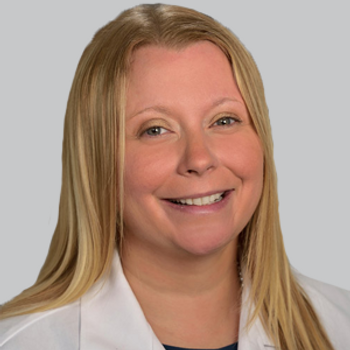
Meghan Garabedian, CRNP, MSN, nurse practitioner at the Penn Neuroscience Center, discussed her presentation at the 2022 CMSC Annual Meeting regarding the patient experience on diroximel fumarate.
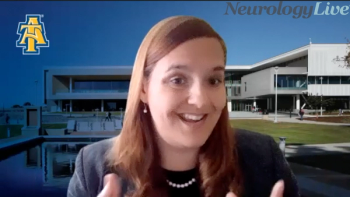
The associate professor at the North Carolina Agricultural and Technical State University provided insight on the widespread feasibility of a new initiative that aims to teach and attract young professionals to the MS field. [WATCH TIME: 4 minutes]
The associate neurologist at Brigham and Women’s Hospital discussed the potential of a nasal anti-CD3 monoclonal antibody, foralumab, and its impact on biomarkers specific to patients with progressive multiple sclerosis.
The health research assistant at the Shepherd Center discussed the importance of interventions that address mental health for patients with multiple sclerosis, including counseling and support groups. [WATCH TIME: 2 minutes]
The associate professor at the North Carolina Agricultural and Technical State University discussed a newfound initiative that helps encourage more professionals in multiple sclerosis and across neurology. [WATCH TIME: 4 minutes]
After previously being approved for use in the stroke and acquired brain injury populations, the Ekso Bionics product now becomes the first such device approved in the multiple sclerosis patient population.

Here's what is coming soon to NeurologyLive®.
Robert Fox, MD, who presented the DISCO-MS study results at the CMSC 2022 Annual Meeting, offered his closing thoughts on the data and the take-home messaging for clinicians.
Test your neurology knowledge with NeurologyLive®'s weekly quiz series, featuring questions on a variety of clinical and historical neurology topics. This week's topic is the history of the American Headache Society.
Robert Fox, MD, offered perspective on data from the DISCO-MS study of disease-modifying therapy discontinuation in patients with multiple sclerosis and how it compares with day-to-day clinical practice.
Neurology News Network for the week ending June 11, 2022. [WATCH TIME: 3 minutes]
Robert Fox, MD, shared the details of the DISCO-MS study of disease-modifying therapy discontinuation in patients with multiple sclerosis, presented at the CMSC 2022 Annual Meeting.
Take 5 minutes to catch up on NeurologyLive®'s highlights from the week ending June 10, 2022.
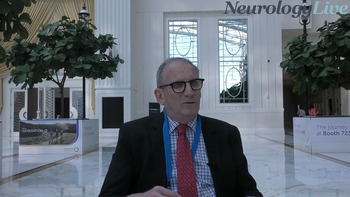
The president and chief executive officer of Mapi Pharma discussed the differences and additional benefits from glatiramer acetate depot, a new intramuscular extended-release version of the known multiple sclerosis medication. [WATCH TIME: 4 minutes]
Dr Regina Berkovich evaluates the use of mRNA COVID-19 vaccines in patients treated with high efficacy disease-modifying therapies for MS.
Barry A. Hendin, MD, reviews guidance on COVID-19 vaccines for patients with MS, including highlights from the AAN position statement.
Daniel Kantor, MD, discussed the data from his presentation at the 2022 CMSC annual meeting on COVID-19 vaccine response in patients with multiple sclerosis, and what questions are still lingering among the clinical community.
Drs Obeidat and Okai share clinical pearls for physicians taking care of patients with MS.
Two MS experts discuss use and efficacy of vaccinations in patients with MS, especially in patients who are on oral DMTs.
Drs Okai and Obeidat share their excitement about an emerging new drug class for the treatment of MS.
Daniel Kantor, MD, discussed his presentation at the 2022 CMSC annual meeting on COVID-19 vaccine response in patients with multiple sclerosis who are being treated with sphingosine 1 phosphate receptor modulators.
The head of the MS Center at the University of Basel discussed an analysis presented at CMSC’s Annual Meeting, focusing on the effects of BTK inhibitor evobrutinib on neurofilament light levels.
Jeffrey Cohen, MD, spoke about the topic of his CMSC Presidential Lecture at the 2022 annual meeting, stem cell transplantation in multiple sclerosis, and what questions remain unanswered in this realm of treatment.
Jeffrey Cohen, MD, shared his perspective on the current use and study of stem cells for the treatment of multiple sclerosis, which he covered in the CMSC Presidential Lecture at the 2022 annual meeting.
Here's what is coming soon to NeurologyLive®.
Advertisement
Advertisement
Trending on NeurologyLive - Clinical Neurology News and Neurology Expert Insights
1
uniQure Submits BLA for Gene Therapy in HD, AAN, AHS Issue Updated Guideline on Migraine Prevention, CTE Prevalence, Brain Donation Findings in Former NFL Players
2
American Academy of Neurology, American Headache Society Issue Updated Guideline on Migraine Prevention
3
EU Approves Modified-Release Carbidopa/Levodopa Capsules for Parkinson Disease Motor Fluctuations
4
uniQure Submits BLA for Gene Therapy in Huntington Disease
5