



MS and Demyelinating Disorders
Latest News
Advertisement
Latest Videos



CME Content






Advertisement
More News

Amit Bar-Or, MD, FRCPC, and Bridget A. Bagert, MD, share their opinions on the role the Epstein-Barr virus plays in the development of multiple sclerosis, highlighting recent publications examining this link.

The director of the Mayo Clinic Center for Multiple Sclerosis and Autoimmune Neurology provided insight on a unique way the institution cares for patients who present with an inflammatory or autoimmune entity. [WATCH TIME: 5 minutes]
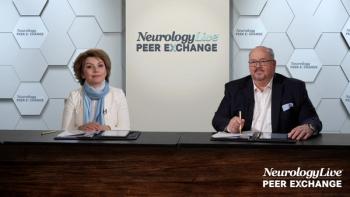
Drs Jeffrey Dunn and Regina Berkovich provide insight into the biochemistry and reversibility of currently available S1P treatments for patients with multiple sclerosis.
Experts in neurology comment on factors relating to treatment selection in pregnancy for women with multiple sclerosis; highlighting efficacy and reversibility considerations of disease-modifying therapies.
Chaired by Stephen Krieger, MD, the presentations also feature Mount Sinai experts Erin Beck, MD, PhD; James Sumowski, PhD; and Ilana Katz Sand, MD. [WATCH TIME: 1 hour, 34 minutes]
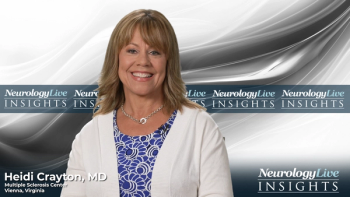
Heidi Crayton, MD, comments on cognitive and brain health considerations in patients with multiple sclerosis and shares her experiences with both patients and their caregivers.
An expert in neurology provides insight into the considerations of oral versus injectable therapies in patients with multiple sclerosis, highlighting their impact on quality of life, brain volume, and cognitive health.

Experts in neurology comment on the level of patient awareness surrounding cognitive decline in multiple sclerosis and highlight how to engage patients in difficult conversations regarding their cognitive health.

Heidi Crayton, MD; Jacqueline Nicholas, MD; and Flavia Nelson, MD, share their practices and diagnostic assessments for cognitive decline in their patients with multiple sclerosis.

Dr DeLuca shares his advice and recommendations from National MS Society on providing cognitive care for patients suffering from MS.
Multiple sclerosis expert, Dr DeLuca, shares study design and clinical data on the association between brain volume and long-term cognition in patients with relapsing MS.
The chair of Cleveland Clinic’s Department of Physical Medicine discussed a new rehabilitative approach using a robotic exoskeleton to improve fatigue and gait in patients with multiple sclerosis.

All 12 of the children met diagnostic criteria for multiple sclerosis and were seropositive for MOG-IgG at baseline experienced a disease course different than typical MS through the observed time.

The director of the Mayo Clinic Center for Multiple Sclerosis and Autoimmune Neurology discussed the complexities in diagnosing autoimmune encephalitis and the approach needed to be taken. [WATCH TIME: 5 minutes]

The senior vice president for research and training at the Kessler Foundation discussed the assessment of cognitive challenges among patients with multiple sclerosis and planning for treatment options when necessary. [WATCH TIME: 4 minutes]
Catch up on any of the neurology news headlines you may have missed over the course of the last month, compiled all into one place by the NeurologyLive® team.

Here's what is coming soon to NeurologyLive®.

The chair of Cleveland Clinic’s Department of Physical Medicine detailed a pilot study on the rehabilitative impacts of the EksoRN robotic exoskeleton in patients with multiple sclerosis. [WATCH TIME: 5 minutes]
Test your neurology knowledge with NeurologyLive®'s weekly quiz series, featuring questions on a variety of clinical and historical neurology topics. This week's topic is epilepsy and seizure disorders.
Neurology News Network for the week ending July 2, 2022. [WATCH TIME: 4 minutes]
Take 5 minutes to catch up on NeurologyLive®'s highlights from the week ending July 1, 2022.
The senior vice president for research and training at the Kessler Foundation spoke about the critical need to prioritize cognitive challenges among patients with multiple sclerosis, as it remains among the chief complaints. [WATCH TIME: 4 minutes]
Regina Berkovich, MD, PhD, provides insight into considerations regarding the management of pregnancy in patients with multiple sclerosis and highlights available resources and discussion points.
Jeffrey Dunn, MD, and Regina Berkovich, MD, PhD, discuss misconceptions surrounding pregnancy and multiple sclerosis and highlight how to approach conversations with this patient population.

The BTK inhibitor is currently the subject of several ongoing phase 3 clinical trials that include more than 2000 patients currently on the therapy.
Advertisement
Advertisement
Trending on NeurologyLive - Clinical Neurology News and Neurology Expert Insights
1
uniQure Submits BLA for Gene Therapy in HD, AAN, AHS Issue Updated Guideline on Migraine Prevention, CTE Prevalence, Brain Donation Findings in Former NFL Players
2
American Academy of Neurology, American Headache Society Issue Updated Guideline on Migraine Prevention
3
EU Approves Modified-Release Carbidopa/Levodopa Capsules for Parkinson Disease Motor Fluctuations
4
uniQure Submits BLA for Gene Therapy in Huntington Disease
5