



MS and Demyelinating Disorders
Latest News
Advertisement
Latest Videos




CME Content






Advertisement
More News
Take 5 minutes to catch up on NeurologyLive's highlights from the week ending April 30, 2021.

NMOSD is associated with elevated levels of the pleiotropic cytokine interleukin-6, making the cytokine an apt therapeutic target.

The Vice-Chair for Research at the Cleveland Clinic Neurological Institute discussed topline results from the EMPhASIS trial of IMU-838.
"Mind Moments," a podcast from NeurologyLive, brings you exclusive interviews with Stephanie J. Nahas, MD; Bruce Cree, MD, PhD, MAS; Sana Somani, MD, MBBS; Hubert Fernandez, MD; Daniel Ontaneda, MD, PhD; and Richard Gershon, PhD.
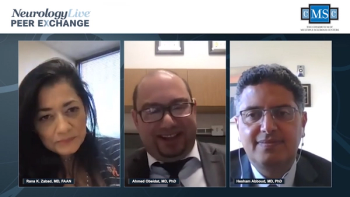
Join Ahmed Obeidat, MD, PhD; Hesham Abboud, MD, PhD; and Rana K. Zabad, MD, FAAN, for perspectives on how the diagnostic criteria for multiple sclerosis have evolved over time.

Just weeks after receiving an EU marketing authorization, the FDA has issued a complete response letter to Biogen for its sBLA related to the subcutaneous administration of natalizumab (Tysabri).
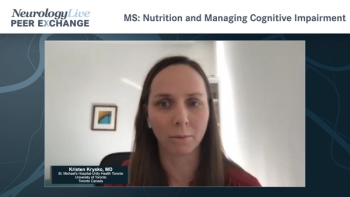
The importance of proper nutrition as a therapy for symptom control in multiple sclerosis and some strategies to manage cognitive impairment.
Joseph R. Berger, MD, elaborates on the importance of shared decision making in the treatment of multiple sclerosis and how it relates to complementary and natural therapies for symptom control.

The Ralph and Luci Schey Chair and Director of the Schey Center for Cognitive Neuroimaging at Cleveland Clinic, outlined the different tests that make up the MSPT battery.

Researchers also found that EDSS score pre-pregnancy was associated with the likelihood of post-partum relapse for patients with multiple sclerosis.

The senior investigator at the National Institutes of Neurological Disorders and Stroke spoke about new opportunities for research into brain lesions and microglia.
Expert neurologists discuss drugs in development for pediatric multiple sclerosis and consider the potential for biomarkers to monitor treatment response or new disease activity in the future.
Lauren B. Krupp, MD considers how treatment failure in pediatric multiple sclerosis may be defined as disease relapse, new or enlarging legions, inability to tolerate treatment, or lack of adherence.

The senior director of patient management, care, and rehabilitation research at the National MS Society discussed symptoms of MS that need more research, as well as other factors impacting care, such as comorbidities.
The rationale for initiating aggressive therapy early on to treat patients who present with relapsing-remitting multiple sclerosis.
An overview of the clinical subtypes of multiple sclerosis and factors that help neurologists distinguish between each type for an appropriate diagnosis.
Strategies for diagnosing and treating cognitive issues of multiple sclerosis during COVID-19.

Maintaining a healthy diet and exercise when combating multiple sclerosis.

Here's what is coming soon to NeurologyLive.

Researchers compared Neuro-QoL scores between patients treated with natalizumab and ocrelizumab, another high-efficacy treatment for MS.

The clinical research director at the UCSF Multiple Sclerosis Center discussed the findings of the long-term open-label assessment of inebilizumab in neuromyelitis optica spectrum disorder.

Neurology News Network for the week ending April 24, 2021.
Take 5 minutes to catch up on NeurologyLive's highlights from the week ending April 23, 2021.
The associate professor of neurology and neurologist at Duke University discussed the positive results of nipocalimab, a monoclonal antibody, in patients with myasthenia gravis.
Considerations regarding age in treatment decisions in patients with nonactive multiple sclerosis progression.
Advertisement
Advertisement
Trending on NeurologyLive - Clinical Neurology News and Neurology Expert Insights
1
uniQure Submits BLA for Gene Therapy in HD, AAN, AHS Issue Updated Guideline on Migraine Prevention, CTE Prevalence, Brain Donation Findings in Former NFL Players
2
American Academy of Neurology, American Headache Society Issue Updated Guideline on Migraine Prevention
3
uniQure Submits BLA for Gene Therapy in Huntington Disease
4
FDA Approves Zilganersen, First Treatment for Alexander Disease
5