

Epilepsy
Latest News
Advertisement
Video Series
Latest Videos


Shorts
1:22
Implementing Zeto One EEG Headset Into Clinical Care Settings
2 months ago
by
Marco Meglio(+1 more)

1:54
RECAP: Neurology News Network - May 2nd
3 months ago
by
Louie Pasculli

1:16
Communicating Evidence-Based Information to Scientific Communities
3 months ago
by
Bill Nye
0:45
AAN 2026: Clinical Pearls for Identifying and Treating CNS Vasculitis
3 months ago
by
Edith Graham, MD
0:19
AAN 2026: Call to Action on Epilepsy for the Wider Neurology Community
3 months ago
by
Anup Patel, MD
1:05
AAN 2026: Notable Advances and Overused Buzzwords
3 months ago
by
Johan Luthman, PhD
1:28
Emerging Concepts on the Horizon for Neurointerventional Surgery
3 months ago
by
Marco Meglio(+1 more)
1:28
Functionality of Zeto One EEG Headset for Seizure Detection
3 months ago
by
Marco Meglio(+1 more)
1:28
Clinical Considerations to Optimize Neurointerventional Surgery
3 months ago
by
Marco Meglio(+1 more)
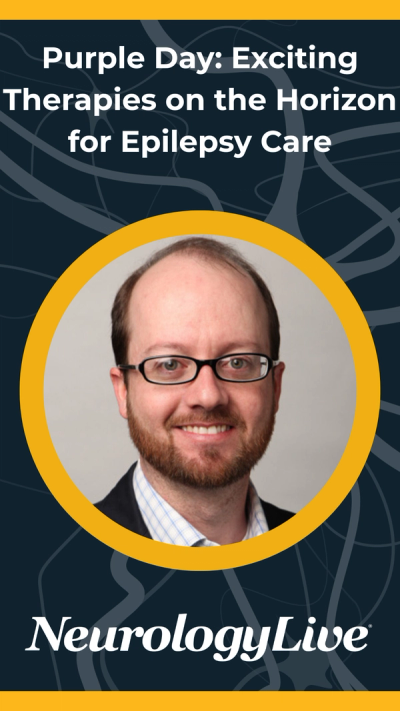
1:17
Purple Day: Exciting, Novel Treatments on the Horizon for Epilepsy
4 months ago
by
Marco Meglio(+1 more)
Podcasts

CME Content














Advertisement
More News

Take 5 minutes to catch up on NeurologyLive®'s highlights from the week ending June 26, 2026.

A duo of neurologists discussed a new analysis suggesting that gender-affirming hormone therapy was not associated with an increased risk of seizure-related hospitalization among transgender women.

Three of six patients in the first low-dose cohort achieved seizure reductions of 79% to 100% at months four through six, with no serious adverse events reported to date.
Take 5 minutes to catch up on NeurologyLive®'s highlights from the week ending June 19, 2026.

Irfan Qureshi, MD, chief medical officer at Biohaven, discusses newly reported data on opakalim, highlighting durable seizure control, favorable CNS tolerability, and the investigational agent’s potential role across multiple epilepsy syndromes.

Updated clinical data highlight opakalim’s ongoing development in epilepsy, with pivotal focal epilepsy results expected later this year.
Take 5 minutes to catch up on NeurologyLive®'s highlights from the week ending May 29, 2026.
Take 5 minutes to catch up on NeurologyLive®'s highlights from the week ending May 22, 2026.

Anup Patel, MD, pediatric epileptologist at Nationwide Children’s Hospital and leader within the Pediatric Epilepsy Research Consortium, discusses evolving AI-driven initiatives, Lennox-Gastaut syndrome research priorities, and future directions in pediatric epilepsy care.
Armin Jewell, MD, neurologist and epilepsy specialist at Allina Health Brain and Spine Institute, discusses the clinical implementation of the Zeto One point-of-care EEG headset and its potential role in improving seizure assessment and neurologic care access in community settings.
A prospective postapproval study showed that responsive neurostimulation with the RNS System was associated with sustained seizure reductions and a favorable interim safety profile over 3 years in adults with drug-resistant focal epilepsy.
Take 5 minutes to catch up on NeurologyLive®'s highlights from the week ending May 8, 2026.

First-time seizures were associated with more than a 5-fold increase in short-term cancer risk and persistent long-term risk in a nationwide cohort study of nearly 50,000 adults.

A recently published review reinforces ketogenic diet therapies as a clinically relevant option for epilepsy, particularly in pediatric and metabolic populations, while underscoring the need for more rigorous evidence to guide their optimal use.

New pharmacokinetic data presented at AAN 2026 show that adolescents with focal epilepsy achieve cenobamate exposures comparable to adults, supporting simplified fixed-dose strategies and informing future pediatric development.

A national survey presented at AAN 2026 revealed significant gaps between patients with epilepsy and clinicians in seizure expectations, treatment decisions, and communication around risks like SUDEP.

Edith Graham, MD, assistant professor of neurology at Northwestern Feinberg School of Medicine, discussed diagnostic challenges and induction therapy outcomes in primary CNS vasculitis.

Phase 3 EPIC trial design highlights NRTX-1001 cell therapy as a potential single-administration approach to achieving durable seizure reduction in drug-resistant MTLE.
A data-driven slideshow for National Public Health Week highlights the global burden of neurologic diseases, featuring key statistics on prevalence, disability, and workforce gaps across major conditions.
Take 5 minutes to catch up on NeurologyLive®'s highlights from the week ending March 27, 2026.

Purple Day, observed each March 26, highlights the global impact of epilepsy while encouraging awareness, education, and open dialogue to reduce stigma and improve care for millions worldwide.

For Purple Day, M. Scott Perry, MD, a leader within the epilepsy community, shared thoughts and perspectives on the persistent gaps in epilepsy awareness, the hope for precision therapies, and the need for holistic care.

Adult epileptologist Danielle Becker, MD, MS, FAES, emphasized the need for improved education and structured, lifespan-based care to better address sex-specific risks in women with epilepsy.

The POLARIS program includes 3 ongoing phase 1/2 clinical trials investigating the efficacy and safety of investigational gene therapy EXT101 in patients with SCN1A postive Dravet syndrome.

In honor of Purple Day®, held on March 26, 2026, Mary Anne Meskis, chief executive officer of the Dravet Syndrome Foundation, highlighted ongoing efforts and future steps to raise awareness for rare epileptic disorders.
Advertisement
Advertisement
Trending on NeurologyLive - Clinical Neurology News and Neurology Expert Insights
1
Roche Unveils PrevenTRON, a Phase 3 Prevention Trial of Trontinemab in Cognitively Unimpaired Individuals at High Risk of Alzheimer Decline
2
Alzheimer's Association Launches PROTECT-Cog Combination Prevention Trial
3
Advances in Fragile X Syndrome Therapeutics: Overviewing the Pipeline
4
Investigating Codabakalner in a Phase 2b/3 Trial for the Treatment of Fragile X Syndrome: The CLARITY Study
5