
The request to reverse CMS’s April 2022 decision is based on new data on lecanemab, an antiamyloid therapy from Biogen/Eisai that is currently under FDA review until January 6, 2023.
The request to reverse CMS’s April 2022 decision is based on new data on lecanemab, an antiamyloid therapy from Biogen/Eisai that is currently under FDA review until January 6, 2023.
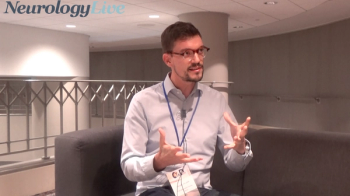
The cognitive and behavioral neurology fellow at Pitié-Salpêtrière Hospital in Paris, France, provided background on a study presented at CTAD 2022 assessing the efficacy of prominent, up-and-coming anti-amyloid therapies. [WATCH TIME: 7 minutes]
The professor of clinical geriatric epidemiology at Karolinska Institutet provided perspective on the FINGERS trial, the first study to show it is possible to prevent cognitive decline using a multidomain lifestyle intervention.
An updated literature review provided data to assist with the revisioning of quality measures in in clinical practice for adults with obstructive sleep apnea.

In preclinical studies, ENTR-601-44 has demonstrated a robust ability to skip exon 44 in the muscles of nonhuman primates and full-length human DMD mice.
The chief medical officer of Alzheon detailed the phase 2 safety findings of ALZ-801, and the lack of amyloid-related imaging abnormalities observed. [WATCH TIME: 3 minutes]

The director of the Tuberous Sclerosis Clinic at Cincinnati Children’s provided background on the idea of TSC Steps, a trial designed to assess whether early intervention with sirolimus could significant impact disease course of tuberous sclerosis complex. [WATCH TIME: 5 minutes]
After 6 weeks of treatment, WVE-N531 was found to be safe, well-tolerated, and resulted in mean dystrophin production that was below the level of quantification.
The pediatric neurologist and epileptologist at the University of Michigan's Mott Children's Hospital spoke at the 2022 AES conference about disparities that currently exist in epilepsy care. [WATCH TIME: 4 minutes]
The director of the Mellen Center for MS at Cleveland Clinic offered an overview of the State of the Science Summit that was held on November 10, 2022, featuring a panel of expert clinicians. [WATCH TIME: 4 minutes]
James Galvin, MD, MPH, director of the Comprehensive Center for Brain Health at the University of Miami Miller School of Medicine, provided insight on the unmet needs for dementia with Lewy bodies, and whether success in Alzheimer disease can help.
Using a cohort of more than 2500 patients with MS on disease-modifying therapies, treatment initiation within the first 2 years of disease onset was more beneficial on patient-reported outcomes than 2-4 years postonset.
The senior VP of clinical research at Eisai discussed findings from a phase 2 study assessing irsenontrine in patients with dementia with Lewy bodies and Parkinson disease dementia. [WATCH TIME: 4 minutes]

Here's some of what is coming soon to NeurologyLive® this week.
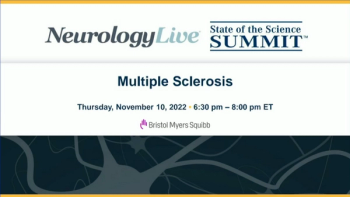
Chaired by Robert Bermel, MD, of Cleveland Clinic, the presentations also feature Jeffrey Cohen, MD; Amy Kunchock, MBBS, MMed; and Brandon Moss, MD. [WATCH TIME: 1 hour, 30 minutes]
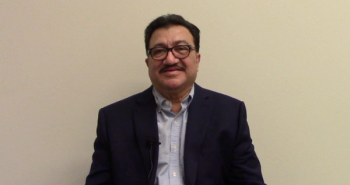
The division director of pediatric neurology, and director of the pediatric sleep program at Cohen, Children's Medical Center, Northwell Health, spoke about sudden unexpected death in epilepsy and sleep at the 2022 AES Conference. [WATCH TIME: 3 minutes]
Test your neurology knowledge with NeurologyLive®'s weekly quiz series, featuring questions on a variety of clinical and historical neurology topics. This week's topic is multiple sclerosis.
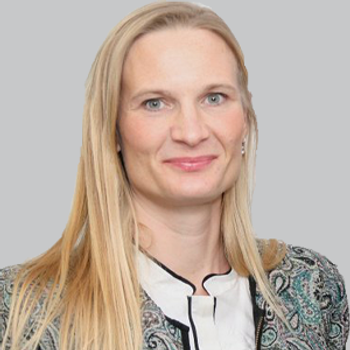
Short objective sleep duration was associated with weight regain and attenuated improvements in body composition one year after weight loss, independent of intervention allocation, age, and sex.

A recent review from the National MS Society revealed eight themes based on previous clinical trials focused on exercise and physical activity in MS.
Neurology News Network for the week ending December 17, 2022. [WATCH TIME: 4 minutes]
Take 5 minutes to catch up on NeurologyLive®'s highlights from the week ending December 16, 2022.
Almost 3 years since the beginning of the pandemic, continuous research efforts have begun to paint a better picture of the impact the virus has on the brain and the central nervous system.
The division director of pediatric neurology, and director of the pediatric sleep program at Cohen Children's Medical Center of Northwell Health, spoke about the association between sleep disorders and pediatric epilepsy at the 2022 AES annual meeting. [WATCH TIME: 3 minutes]
The director of the Headache Center at Allegheny Health Network provided perspective on whether focusing in on medications or lifestyle choices has better impacts on improving chronic migraine. [WATCH TIME: 4 minutes]
Mind Moments®, a podcast from NeurologyLive®, brings you an exclusive interview with Marwan Sabbagh, MD, FAAN. [LISTEN TIME: 21 minutes]

Findings from a recent randomized study demonstrated effective sleep maintenance of insomnia, as shown by increased sleep time and reduced awakenings, with low concentration of carbon dixoide.

In the largest collected of PML DNA samples, the study identified 4 immune-linked, high effect size, rare variants for use in an iatrogenic PML risk genetic test.
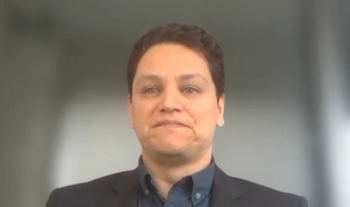
The clinical assistant professor in the division of Sleep Medicine, Department of Neurology, University of Michigan spoke about the associations of mental health with insomnia in transgender youth. [WATCH TIME: 5 minutes]
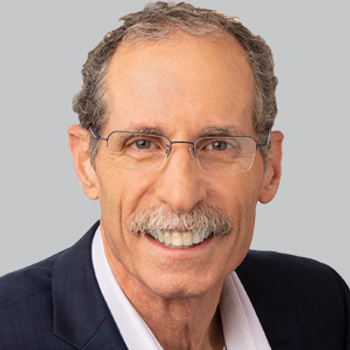
AOC 1001, an agent consisting of a proprietary monoclonal antibody that binds to the transferrin receptor 1, was safe, tolerable, and showed significant reductions in DMPK, a disease-related mRNA.
The clinical assistant professor in the division of Sleep Medicine, Department of Neurology, University of Michigan, spoke about sleep disorders associated with transgender youths. [WATCH TIME: 4 minutes]