
Lucy Morse, MD, a movement disorders specialist at Northwestern Medicine, discussed the push toward a biological definition for Parkinson disease, newly approved therapies, and why she believes referrals shouldn't wait.
Lucy Morse, MD, a movement disorders specialist at Northwestern Medicine, discussed the push toward a biological definition for Parkinson disease, newly approved therapies, and why she believes referrals shouldn't wait.
Hannah Kopinsky, MD, an MS specialist at Northwestern Medicine, discussed recent updates to multiple sclerosis diagnostic criteria, the shift toward early high-efficacy treatment, and the unmet needs that remain in progressive MS.
Kyle Marden, MD, sports neurologist and medical director of the Concussion and Sports Neurology Program at Northwestern Medicine, discusses emerging developments in concussion diagnosis and management, ongoing challenges in the field, and the future of individualized care.
Senda Ajroud-Driss, MD, director of the ALS Clinic at Northwestern Medicine, discussed why adults with spinal muscular atrophy continue to need multidisciplinary care and where the evidence still falls short.
The associate professor of neurology at Northwestern University Feinberg School of Medicine reviewed key aspects of the 2026 AHA/ASA stroke guidelines in acute ischemic stroke. [WATCH TIME: 5 minutes]
In honor of Huntington Disease Awareness Month, held annually in May, the director of the Huntington's Disease Center at Northwestern Medicine discussed the design of the INVEST-HD trial.
Edith Graham, MD, assistant professor of neurology at Northwestern Feinberg School of Medicine, discussed diagnostic challenges and induction therapy outcomes in primary CNS vasculitis.
Since paraneoplastic neurologic syndromes remain underrecognized in oncology, experts recently discussed diagnostic challenges, treatment strategies, and the need for clinical vigilance.
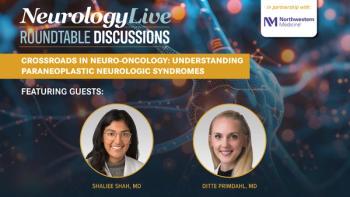
Neuro-oncology experts examined how emerging cancer therapies may reshape the spectrum of paraneoplastic neurologic syndromes. [WATCH TIME: 4 minutes]
Neuro-oncology experts discussed best practices for initiating immunomodulatory therapy in patients with PNS, factors influencing neurologic recovery, and the role of early specialty involvement and supportive care in optimizing long-term outcomes. [WATCH TIME: 4 minutes]
Neuro-oncology experts examined how cumulative neurotoxicity from cytotoxic and targeted therapies can obscure paraneoplastic neurologic syndromes, and how treatment timing and modification decisions influence neurologic outcomes. [WATCH TIME: 6 minutes]
Neuro-oncology experts discussed how to differentiate classic PNS from immune-related neurologic adverse events, including the impact of prior immunotherapy exposure and the challenge of balancing neurologic stabilization with ongoing cancer treatment. [WATCH TIME: 5 minutes]
Neuro-oncology experts outlined screening strategies, antibody testing, and patient factors that help distinguish paraneoplastic neurologic syndromes from treatment toxicity and immune-related events. [WATCH TIME: 6 minutes]
A duo of neuro-oncologists from Northwestern Medicine discussed how paraneoplastic neurologic syndromes differ from other cancer-related neurologic complications, highlighting key diagnostic challenges.
A duo of neuro-oncologists from Northwestern Medicine explained how to distinguish paraneoplastic neurologic syndromes from treatment toxicity and metastatic disease. [WATCH TIME: 8 minutes]
A movement disorder specialist at Northwestern Medicine discussed developments in disease-modifying research, adaptive clinical trial designs, and evolving device-based therapies in Parkinson disease. [WATCH TIME: 5 minutes]
Neurology experts highlighted ongoing developments in artificial intelligence applications, disease-modifying mechanisms, and genetic therapies expected to undergo evaluation. [WATCH TIME: 9 minutes]
The clinical assistant professor at Feinberg School of Medicine outlined some of the major revisions proposed for the NMOSD diagnostic criteria presented at ECTRIMS 2025. [WATCH TIME: 8 minutes]
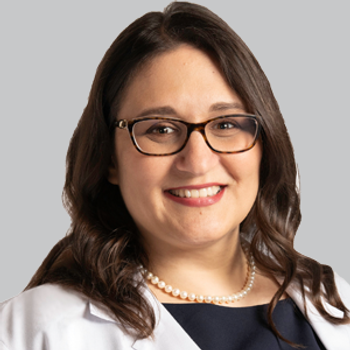
Elizabeth Gerard, MD, an epileptologist at Northwestern Medicine, provided clinical insights on a new consortium, GEAN, which aims to expand genetic testing and define adult phenotypes for rare genetic epilepsies across North America.
The director of the Adult Epilepsy Genetics Clinic at Northwestern University discussed short- and long-term goals for research, natural history development, and community engagement of the AES-sponsored GEAN Consortium. [WATCH TIME: 3 minutes]
The director of the Les Turner ALS Center at Northwestern Medicine talked about his lab’s preclinical research on identifying genetic targets for neurodegenerative diseases. [WATCH TIME: 5 minutes]
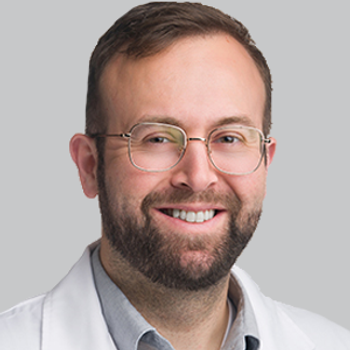
Ryan Donaghy, MD, an assistant professor of neurology at Northwestern Medicine, discussed the evolving landscape of ALS clinical trials, including advances in biomarkers, genetics, and modern trial design.
The assistant professor of neurology at Northwestern University explained key diagnostic, therapeutic, and management considerations for clinicians caring for patients with NMOSD across diverse and evolving clinical scenarios.
The assistant professor of neurology at Northwestern University shared important clinical insights for early-career clinicians entering neuroimmunology, emphasizing best practices in recognizing, testing, and confirming NMOSD. [WATCH TIME: 3 minutes]
A case series reveals safe use of vamorolone and prednisolone during microdystrophin gene therapy for Duchenne muscular dystrophy in two boys.
The neurosurgeon at Northwestern Medicine discussed diagnostic approaches, evolving treatment strategies, and the importance of timely referral in managing peripheral nerve injuries. [WATCH TIME: 3 minutes]
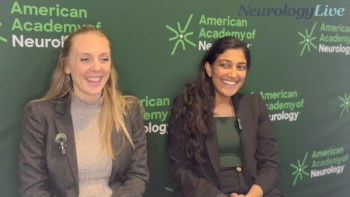
A duo of experts from Feinberg School of Medicine discussed the growing role of clinical algorithms, risk stratification, and treatment considerations in managing paraneoplastic neurologic syndromes alongside cancer therapies. [WATCH TIME: 4 minutes]
A duo of neurology experts from Feinberg School of Medicine talked about the diagnostic challenges, evolving understanding, and clinical implications of paraneoplastic neurological syndromes. [WATCH TIME: 3 minutes]
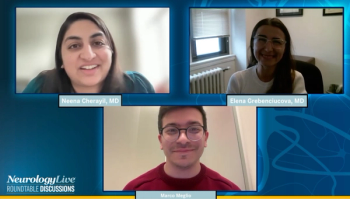
In this final episode, neurologists discuss the role of advanced imaging, like OCT, in diagnosing and managing MS, emphasizing the need for further research to optimize its clinical application. [WATCH TIME: 2 minutes]
A pair of neurologists provide clinical insight on the difficulties with identifying and differentiating optic neuritis in various autoimmune conditions like multiple sclerosis and neuromyelitis optica spectrum disorder. [WATCH TIME: 4 minutes]