




MS and Demyelinating Disorders
Latest News
Advertisement
Latest Videos


CME Content






Advertisement
More News
Test your neurology knowledge with NeurologyLive®'s weekly quiz series, featuring questions on a variety of clinical and historical neurology topics. This week's topic is sleep disorders.

Bruce Cree, MD, PhD, MAS, FAAN, offered his perspective on data from the phase 2/3 N-MOmentum trial of the recently approved inebilizumab (Uplizna; Horizon Therapeutics) and why the therapy stands out from other NMOSD treatments.
Neurology News Network for the week ending November 26, 2022. [WATCH TIME: 4 minutes]
Take 5 minutes to catch up on NeurologyLive®'s highlights from the week ending November 25, 2022.

CBT as an Effective Mood Therapy for Patients with MS Experiencing Fatigue: Federica Picariello, PhD
The postdoctoral researcher and health psychologist at King's College, London spoke at ECTRIMS 2022 about the relationship between mood and fatigue in patients with MS. [WATCH TIME: 2 minutes]

Cognitive problems have been reported to occur in as many as 7 in 10 individuals with MS, yet they remain a difficult and undertreated challenge in clinical care.

Peginterferon beta-1a, a pegylated form of interferon designed to maintain biologic effects in the body for longer periods, is being evaluated against CinnaGen’s interferon beta-1a formulation, CinnoVex.

The paradigm-shifting evidence of the link between MS and EBV does not exist in isolation. In fact, the relationship has been suspected for more than 40 years, and evidence therein has been accumulating over the past 2 decades.
The associate professor of neurology at the Cleveland Clinic Lerner College of Medicine provided perspective on how the clinical community can improve trials for multiple sclerosis that help improve treatment decisions. [WATCH TIME: 4 minutes]
The postdoctoral researcher and health psychologist at King's College, London spoke at ECTRIMS 2022 about the most important aspect for improving fatigue in MS. [WATCH TIME: 4 minutes]

Compared with conventional treatments, which included routine pharmaceutical treatments or occupational therapy without exercise, aquatic therapy showed several benefits in physical, cognitive, and psychosocial fatigue for patients with MS.
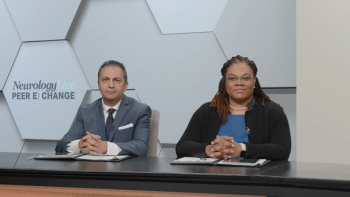
Stephen Krieger, MD; Daniel Bandari, MD, MS; Bruce Hughes, MD; Mitzi Williams, MD; and Heidi Crayton, MD, review the OPTIMISE study and reflect on the differences between patient characteristics in clinical trial settings vs clinical practice.
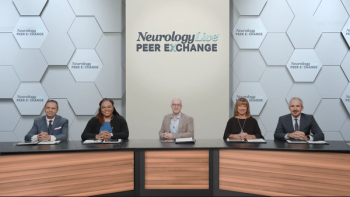
Stephen Krieger, MD; Daniel Bandari, MD, MS; Bruce Hughes, MD; Mitzi Williams, MD; and Heidi Crayton, MD, discuss the prevalence of comorbidities in patients with multiple sclerosis.
Fatigue, although not immediately visible, is among the most debilitating symptoms of multiple sclerosis, affecting not only patients' day-to-day functioning but their quality of life.

The professor of neurology at Washington University in St. Louis offered an overview of the State of the Science Summit that was held on November 3, 2022, featuring a panel of expert clinicians. [WATCH TIME: 3 minutes]

Nearly 95% of patients treated with vidofludimus calcium were free from 12-week confirmed disability worsening events at week 96 of the open-label extension trial.
The executive vice principal of advocacy and healthcare access at the National MS Society spoke about the implementation of the Inflation Reduction Act and how clinicians may use health navigator services to advocate for their patients with MS. [WATCH TIME: 4 minutes]
Cognitive and other symptoms in multiple sclerosis can be invisible—meaning not readily observed in the individual. However, their impact on a patient’s life can be obvious.
Here's some of what is coming soon to NeurologyLive® this week.
The executive vice principal of advocacy and healthcare access at the National MS Society spoke about the role of the National MS Society with patient advocacy and the Inflation Reduction Act of 2022. [WATCH TIME: 5 minutes]
Test your neurology knowledge with NeurologyLive®'s weekly quiz series, featuring questions on a variety of clinical and historical neurology topics. This week's topic is neuromuscular disorders.

Through a culmination of previous research, the International Advisory Committee on Clinical Trials in Multiple Sclerosis suggests that multiple sclerosis disability progression is not caused by a single uniform disease mechanism but a combination of several mechanisms that play out variably over time.

The chief of neurology and codirector of the neuroscience Center at the Children's Hospital of Philadelphia spoke at ECTRIMS 2022 about the difference in conversation for therapies between pediatric patients and adult patients with MS. [WATCH TIME: 5 minutes]
Take 5 minutes to catch up on NeurologyLive®'s highlights from the week ending November 18, 2022.
The chief of neurology and codirector of the neuroscience Center at the Children's Hospital of Philadelphia spoke at ECTRIMS 2022 about how her patients with pediatric MS have been inspirational to her in her practice. [WATCH TIME: 4 minutes]
Advertisement
Advertisement
Trending on NeurologyLive - Clinical Neurology News and Neurology Expert Insights
1
uniQure Submits BLA for Gene Therapy in HD, AAN, AHS Issue Updated Guideline on Migraine Prevention, CTE Prevalence, Brain Donation Findings in Former NFL Players
2
American Academy of Neurology, American Headache Society Issue Updated Guideline on Migraine Prevention
3
EU Approves Modified-Release Carbidopa/Levodopa Capsules for Parkinson Disease Motor Fluctuations
4
uniQure Submits BLA for Gene Therapy in Huntington Disease
5