



MS and Demyelinating Disorders
Latest News

Advertisement
Latest Videos



CME Content






Advertisement
More News

At the 12- and 24-week time points, patients in both diet groups demonstrated statistically significant differences in total cholesterol, low-density lipoprotein, body weight, and body mass index.

For patients who remained on 60-mg tolebrutinib through Part B of the study, the number of new Gadolinium-enhancing lesions and new/enlarging T2 lesions remained low.
Investigators caution health care providers to consider specific risks of severe COVID-19 infection before initiating this therapy.

Investigators conducted a study to assess the effects of CR diet on immune cell subsets, concluding that observed changes could be mediated by changes in classes of lipid metabolites.

There were no statistically significant differences in infusion-related reactions among patients with multiple sclerosis who tested positive or negative for treatment-emergent antidrug antibodies.

The professor of neurology at Cleveland Clinic and president of ACTRIMS noted his excitement for this year’s Forum, which will feature presentations on a variety of topics in the field of multiple sclerosis. [WATCH TIME: 2 minutes]

After 12 months of treatment, the 2 disease-modifying therapies were comparable in efficacy, with less treatment switching and discontinuation in cladribine-treated patients.
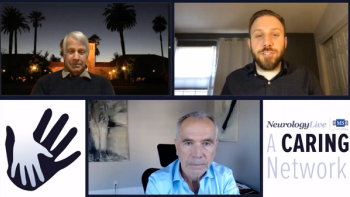
Alberto Ascherio, MD, DrPH, and Lawrence Steinman, MD, join NeurologyLive in a conversation about the clinical and research implications of a causative relationship between Epstein-Barr virus and multiple sclerosis.
ACTRIMS president Jeffrey Cohen, MD, offered insight into what’s to come from the upcoming Americas Committee for Treatment and Research in Multiple Sclerosis Annual Forum 2022.

Here's what is coming soon to NeurologyLive®.
Findings from a new post hoc analysis of data from the randomized-controlled period of the N-MOmentum phase 2/3 pivotal trial (NCT02200770), suggest the Horizon agent is effective in NMOSD.
Take 5 minutes to catch up on NeurologyLive®'s highlights from the week ending February 18, 2022.
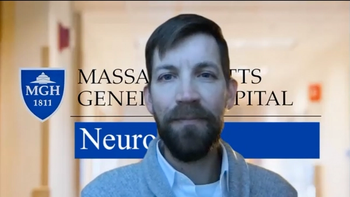
The director of the Multiple Sclerosis and Neuromyelitis Optica Unit at Massachusetts General Hospital commented on presentations given at the recent event, as well as key takeaways from his own discussion on novel imaging approaches in multiple sclerosis. [WATCH TIME: 2 minutes]
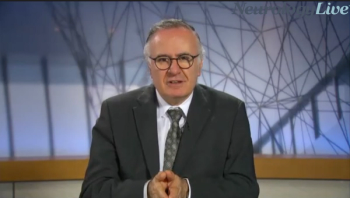
The director of Cleveland Clinic’s Epilepsy Center discussed the currently known overlap between neurological diseases and the need to identify causative biomarkers. [WATCH TIME: 4 minutes]
The director of the Multiple Sclerosis and Neuromyelitis Optica Unit at Massachusetts General Hospital outlined a presentation he gave at a recent Institutional Perspectives in Neurology: MS event. [WATCH TIME: 3 minutes]
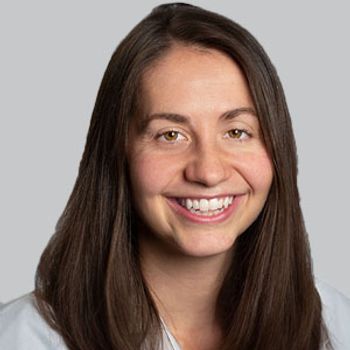
Kristin Galetta, MD, MSEd, provided insight on differences between B-cell depleting disease-modifying therapies for MS and how they continue to shape the future of drug development.
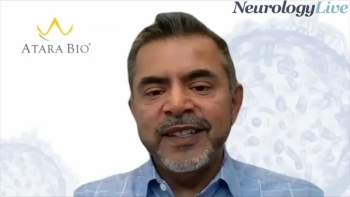
The chief medical officer at Atara Biotherapeutics provided insight on the future direction of its investigational agent ATA188 following new data that suggested a link between Epstein-Barr virus and multiple sclerosis. [WATCH TIME: 4 minutes]

With the physician deficit projected to grow larger within a decade, this global challenge has become a major focus of large organizations and medical societies.
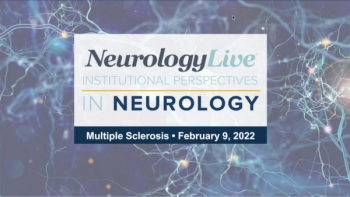
Chaired by Eric Klawiter, MD, MSc, the presentations also feature Mass General and Brigham and Women's experts Tanuja Chitnis, MD; Kristin Galetta, MD; and Michael Levy, MD, PhD. [WATCH TIME: 1 hour, 26 minutes]
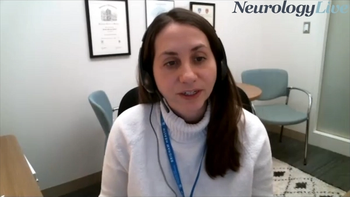
The professor of neurology at Brigham and Women’s Hospital discussed her presentation on B-cell depleting therapies such as ocrelizumab and ofatumumab for the treatment of multiple sclerosis. [WATCH TIME: 2 minutes]
Here's what is coming soon to NeurologyLive®.
Neurology News Network for the week ending February 12, 2022. [WATCH TIME: 3 minutes]
Take 5 minutes to catch up on NeurologyLive®'s highlights from the week ending February 11, 2022.
Jeffrey Cohen, MD, director, Mellen Center for MS Treatment and Research, Cleveland Clinic; and president, ACTRIMS, discussed what he is looking forward to at the 2022 ACTRIMS Forum, as well as the overarching themes of the meeting. [WATCH TIME: 2 minutes]
The chief medical officer at Atara Biotherapeutics discussed the investigational agent ATA188, its mechanism to treat multiple sclerosis, and what to look for in its upcoming EMBOLD trial data readout. [WATCH TIME: 4 minutes]
Advertisement
Advertisement
Trending on NeurologyLive - Clinical Neurology News and Neurology Expert Insights
1
uniQure Submits BLA for Gene Therapy in HD, AAN, AHS Issue Updated Guideline on Migraine Prevention, CTE Prevalence, Brain Donation Findings in Former NFL Players
2
American Academy of Neurology, American Headache Society Issue Updated Guideline on Migraine Prevention
3
uniQure Submits BLA for Gene Therapy in Huntington Disease
4
EU Approves Modified-Release Carbidopa/Levodopa Capsules for Parkinson Disease Motor Fluctuations
5