


MS and Demyelinating Disorders
Latest News
Advertisement
Latest Videos

CME Content






Advertisement
More News
As part of NeurologyLive®'s Year in Review, take a look at some of the best features that have been published on the site this year.

Here's what is coming soon to NeurologyLive®.
Take a look back at some of the most top video interviews with key experts in neurology and their insights and perspectives on topics in neurology subspecialties, as part of NeurologyLive®'s Year in Review.

Neurology News Network for the week ending December 25, 2021.
Take 5 minutes to catch up on NeurologyLive®'s highlights from the week ending December 24, 2021.

The chief medical officer of Cognetivity Neurosciences outlined the benefits a new integrated assessment has for clinicians and patients with dementias and multiple sclerosis. [WATCH TIME: 4 minutes]

An expert neurologist, advocacy director, and a pair of patients with NMOSD discuss the current landscape of the demyelinating disorder.

The research assistant professor at the Buffalo Neuroimaging Analysis Center provided insight on a new study that looks at the connection between brain structure and cognitive decline in patients with multiple sclerosis and other neurodegenerative disorders.
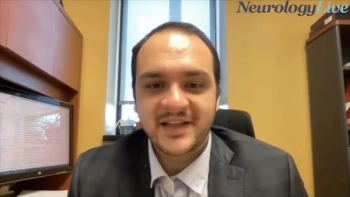
The research assistant professor at the Buffalo Neuroimaging Analysis Center discussed a recently awarded grant to determine which brain structures are responsible for cognitive decline in patients with multiple sclerosis. [WATCH TIME: 3 minutes]
Here's what is coming soon to NeurologyLive®.

These findings have clinical implications for the diagnosis of AQP4-NMOSD and in helping clinicians differentiating it from other demyelinating diseases such as MOGAD.

Amy Kunchok, MD, staff neurologist at the Mellen Center for Multiple Sclerosis and Research at Cleveland Clinic, discussed a recent talk she gave that highlighted the different phenotypes of AQP-IgG NMOSD and MOGAD.
Neurology News Network for the week ending December 18, 2021. [WATCH TIME: 3 minutes]
Take 5 minutes to catch up on NeurologyLive®'s highlights from the week ending December 17, 2021.
The staff neurologist at the Cleveland Clinic Mellen Center for Multiple Sclerosis outlined key findings from her talk at a recent Institutional Perspectives in Neurology: Multiple Sclerosis event. [WATCH TIME: 3 minutes]

Clinicians have begun to incorporate more holistic ways to approach the treatment of multiple sclerosis symptoms by focusing on better overall health, exercising, and dieting.

The FDA has set a prescription drug user fee act goal date of September 28, 2022, for the investigational treatment from TG Therapeutics.

Chris Kalafatis, MD, MRCPsych, discussed a new tool, the Integrated Cognitive Assessment, developed by Cognetivity, and its potential for patients with dementias and multiple sclerosis.
Here's what is coming soon to NeurologyLive®.

Results from the cohort study contrast with reports in multiple sclerosis, finding that new remission silent lesions were rare in both myelin oligodendrocyte glycoprotein antibody disease and aquaporin-4 antibody neuromyelitis optica spectrum disorder.

The cohort study was conducted using data from the Danish Multiple Sclerosis Registry for women with clinically isolated syndrome and relapsing remitting multiple sclerosis.
Take 5 minutes to catch up on NeurologyLive®'s highlights from the week ending December 10, 2021.
Here's what is coming soon to NeurologyLive®.
Catch up on any of the neurology news headlines you may have missed over the course of the last month, compiled all into one place by the NeurologyLive® team.
Take 5 minutes to catch up on NeurologyLive®'s highlights from the week ending December 3, 2021.
Advertisement
Advertisement
Trending on NeurologyLive - Clinical Neurology News and Neurology Expert Insights
1
uniQure Submits BLA for Gene Therapy in HD, AAN, AHS Issue Updated Guideline on Migraine Prevention, CTE Prevalence, Brain Donation Findings in Former NFL Players
2
American Academy of Neurology, American Headache Society Issue Updated Guideline on Migraine Prevention
3
uniQure Submits BLA for Gene Therapy in Huntington Disease
4
EU Approves Modified-Release Carbidopa/Levodopa Capsules for Parkinson Disease Motor Fluctuations
5