



MS and Demyelinating Disorders
Latest News
Advertisement
Latest Videos
CME Content






Advertisement
More News
Dr Schmierer explains how the SARS-CoV-2 infection and COVID-19 pandemic have impacted treating patients with MS with DMTs.

Looking to the future of multiple sclerosis care, the panel of thought leaders pose important questions that remain to be answered in the research and treatment of multiple sclerosis.
Expert panelists review the viability of new treatments in development for multiple sclerosis.
Alberto Ascherio, MD, DrPH, addresses the range of latency periods for Epstein-Barr virus and the impact on onset multiple sclerosis.
Alberto Ascherio, MD, DrPH; Anne Cross, MD; and Michael Racke, MD, discuss implications for patient communication and other advances from bench to bedside.
The expert panelists comment on intervention efforts underway to address multiple sclerosis prevention and treatment.
A panel of experts probe the variations in immune response to Epstein-Barr virus in patients with multiple sclerosis.
Alberto Ascherio, MD, DrPH, highlights key risk factors leading to increased prevalence of multiple sclerosis.
Anne Cross, MD, and Michael Racke, MD, discuss how the immune system is primed in multiple sclerosis.

Avindra Nath, MD, explains the importance of understanding virology when treating autoimmune diseases.
Alberto Ascherio, MD, DrPH, recaps key findings and learning from a recently published study that he coauthored demonstrating a causal relationship between MS and Epstein-Barr virus.
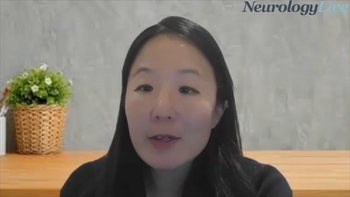
The staff neurologist and medical director of the Barlo Multiple Sclerosis Program at St Michaels Hospital discussed how investigational BTK inhibitors will be used among an ever-growing MS treatment toolbox. [WATCH TIME: 3 minutes]

Here's what is coming soon to NeurologyLive®.

Speaking on his own presentation on economic burden in MS, Bruce Bebo, PhD, further shared his thoughts on areas of unmet need and the potential relationship of Epstein-Barr virus and MS.
Test your neurology knowledge with NeurologyLive®'s weekly quiz series, featuring questions on a variety of clinical and historical neurology topics. This week's topic is sleep disorders.

A systematic literature review of randomized controlled trials in neuromyelitis optica spectrum disorder was performed, with 7 studies identified and 2 used in analyses.
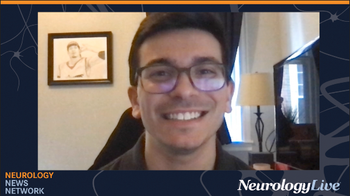
Neurology News Network for the week ending March 12, 2022. [WATCH TIME: 4 minutes]

Investigators noted the long-term cost-effectiveness and safety of this approach, as it does not require the regular use of disease-modifying therapies.
Take 5 minutes to catch up on NeurologyLive®'s highlights from the week ending March 11, 2022.
Dr Schmierer introduces the disease-modifying therapies (DMT) that are available for patients with MS and their impact on the immune system.
Klaus Schmierer, MB BS, PhD, FRCP, defines the pathophysiology of multiple sclerosis (MS).

The assistant professor of neurology at the University of Pennsylvania discussed how 7T MRI features of newly developed MS lesions can predict the development of chronic active lesions. [WATCH TIME: 3 minutes]
The staff neurologist and medical director of the Barlo Multiple Sclerosis Program at St Michaels Hospital provided insight on the tolebrutinib’s mechanism of action, and new data presented at ACTRIMS Forum 2022. [WATCH TIME: 4 minutes]
The staff neurologist at Cleveland Clinic’s Mellen Center for Multiple Sclerosis Treatment and Research offered her insight into improving the recognition of autoimmune encephalitis. [WATCH TIME: 2 minutes]
Bruce Bebo, PhD, outlined findings from a recent analysis presented at ACTRIMS Forum 2022, with investigators concluding costs associated with the disease have previously been underestimated.
Advertisement
Advertisement
Trending on NeurologyLive - Clinical Neurology News and Neurology Expert Insights
1
uniQure Submits BLA for Gene Therapy in HD, AAN, AHS Issue Updated Guideline on Migraine Prevention, CTE Prevalence, Brain Donation Findings in Former NFL Players
2
American Academy of Neurology, American Headache Society Issue Updated Guideline on Migraine Prevention
3
uniQure Submits BLA for Gene Therapy in Huntington Disease
4
EU Approves Modified-Release Carbidopa/Levodopa Capsules for Parkinson Disease Motor Fluctuations
5