


MS and Demyelinating Disorders
Latest News


COVID-19 Vaccine Booster Increases Protective Effects of Anti-CD20 Therapy in Patients With MS
By Marco Meglio
Advertisement
Latest Videos






CME Content






Advertisement
More News
The staff neurologist at Cleveland Clinic’s Mellen Center for Multiple Sclerosis Treatment and Research discussed the results of a new study on age and sex as determinants of autoimmune encephalitis. [WATCH TIME: 3 minutes]

Nine of 15 tested patients in the intrathecal stem cell group had a reduction of more than 50% in neurofilament light levels, compared with only 1 of 15 in the placebo group.

Investigators noted the need for more transformational treatments to improve disability for patients with both primary and secondary progressive multiple sclerosis.

Data suggest that there is a greater cognitive benefit for patients with higher levels of baseline neurological disability treated with the training and transcranial direct current stimulation.
The professor of neurology at the NYU Grossman School of Medicine discussed her presentation at ACTRIMS Forum 2022, which showed better cognitive outcomes in MS following treatment with tDCS. [WATCH TIME: 3 minutes]
The assistant professor of neurology at the University of Pennsylvania provided insight on a new way to accurately predict chronic active lesion evolution from newly developing MS lesions using 7T MRI.

The study found that all COVID-19 cases were mild to moderate in severity, and all enrolled patients recovered and remained in the study.

Investigators utilized a novel method to accurately capture spinal cord area at C1 vertebral level from legacy brain MRI scans.
The executive vice president of the National MS Society spoke on recently published data suggesting the relationship between EBV and MS, also sharing his opinion on the potential of vaccines. [WATCH TIME: 2 minutes]

Most trials that reported on MS-related fatigue measured its change from baseline and whether that change was statistically significant.
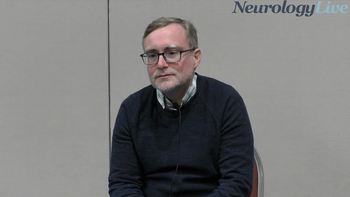
The assistant professor of neurology at the University of Pennsylvania discussed his abstract at ACTRIMS Forum using 7T MRI features of newly developed MS lesions to predict chronic active lesions. [WATCH TIME: 4 minutes]

Regardless of prophylactic or therapeutic paradigms, treatment with evobrutinib resulted in significantly reduced disease severity and improvement of immunopathological parameters of MS disease.

Here's what is coming soon to NeurologyLive®.
The executive vice president of the National MS Society spoke on the primary theme of ‘biomarkers’ at this year’s meeting, as well as the areas he believes require the most attention for patients with MS. [WATCH TIME: 3 minutes]

Three-year follow-up data presented at the ACTRIMS Forum 2022 suggest cortical lesion burden, particularly subpial lesions, is the primary driver of worsening disability and conversion to secondary progressive MS.

Mechanistic data from the phase 2 REPAIR-MS trial support blinded efficacy data from the VISIONARY-MS trial, suggesting that Clene Nanomedicine’s investigational CNM-Au8 has the potential to drive clinically meaningful improvements in recognized MS functional end points.

A pair of datasets from the CLASSIC-MS and GLIMPSE studies of cladribine (Mavenclad; EMD Serono) suggest that the oral tablet sustained delayed conversion to clinically definite MS as well as favorable efficacy to dimethyl fumarate, fingolimod, and teriflunomide.

Using a diagnostic threshold of at least 1 paramagnetic rim lesion, MS was identified with a sensitivity of 80% and specificity of 88%, which increased to 95% after excluding patients with RIS and CIS.

Additional study is required to further investigate the integration of FES cycling into clinical practice for management of SPMS.

Investigators concluded that the Multiple Sclerosis Disease Activity test can assist in monitoring therapeutic response to glatiramer acetate and biologic agents.
Take 5 minutes to catch up on NeurologyLive®'s highlights from the week ending February 25, 2022.
At the ACTRIMS Forum 2022, the executive vice president of the National MS Society commented on the need to diagnose and initiate treatment for MS early, as well as employing wellness strategies to reduce risk of comorbidities. [WATCH TIME: 4 minutes]

At the 12- and 24-week time points, patients in both diet groups demonstrated statistically significant differences in total cholesterol, low-density lipoprotein, body weight, and body mass index.

For patients who remained on 60-mg tolebrutinib through Part B of the study, the number of new Gadolinium-enhancing lesions and new/enlarging T2 lesions remained low.

Investigators caution health care providers to consider specific risks of severe COVID-19 infection before initiating this therapy.
Advertisement
Advertisement
Trending on NeurologyLive - Clinical Neurology News and Neurology Expert Insights
1
Incorporating the Updated AAN/AHS Migraine Prevention Guideline Into Practice
2
World Stroke Day 2026: Closing the Gap Between Stroke Onset and the Emergency Call Number
3
Blood-Based Biomarkers for Monitoring Treatment Response in Multiple Sclerosis
4
Machine Learning Spots Early Signs of MS and NMOSD Years in Advance
5