

The Pharma Two B therapy combines a dopamine agonist, pramipexole, and an MAO-B inhibitor, rasagiline, and has shown significant improvements on UPDRS total scores and ESS scores for untreated patients with PD.

Matt Hoffman is the editorial director for NeurologyLive, Contagion, IJMSC, and CGTLive, as well as the Eye Care Network (Ophthalmology Times, Modern Retina, Ophthalmology Times Europe, and Optometry Times). He has covered medical news for MJH Life Sciences, the parent company, since 2017.
He executive produces the Optometry Times podcast, From Paper to Clinic, and previously hosted the Medical World News shows Deep Dive and Second Opinion.
You can follow him on X @byMattHoffman and on LinkedIn, or email him at mhoffman@mjhlifesciences.com.
The Pharma Two B therapy combines a dopamine agonist, pramipexole, and an MAO-B inhibitor, rasagiline, and has shown significant improvements on UPDRS total scores and ESS scores for untreated patients with PD.

One-year data from the single-arm phase 3b CONSONANCE trial (NCT03523858) suggest that the Genentech agent (Ocrevus) resulted in low levels of disease activity and improved cognitive performance in those with secondary and primary progressive multiple sclerosis.

In an AAN 2022 Hot Topics plenary session, Miranda E. Orr, PhD, highlighted the potential of targeting senescent cells with senolytics as a therapeutic approach to age-related diseases such as Alzheimer disease, and detailed the ongoing phase 2 SToMP-AD clinical trial (NCT04685590).

In an assessment including 23 patients, the novel and standardized quick neurologic examination showed excellent interrater reliability and agreement, suggesting good validity.
Test your neurology knowledge with NeurologyLive®'s weekly quiz series, featuring questions on a variety of clinical and historical neurology topics. This week's topic is Alzheimer disease and dementia.

Sage Therapeutics’ investigational NMDA receptor positive allosteric modulator was well-tolerated, with signs of cognitive and functional improvements reported for patients with AD in the phase 2 LUMINARY study.

Interim data from the phase 2 RESCUE-ALS trial open-label extension suggest that Clene Nanomedicine’s investigational agent, CNM-AU8, offered benefits to patients with ALS in terms of survival, in addition to prior results suggestive of slowed progression.
This year’s meeting, themed “the Great Neuro-Reunion,” will feature a dual virtual and in-person format, spanning 9 days and including more than 200 sessions and 11 plenaries, as well as featuring 2400 abstracts presentations.

The company anticipates the first patient to be screened in May 2022, with a primary end point of cognitive decline at 18 months, measured by the Clinical Dementia Rating-Sum of Boxes.

Mind Moments®, a podcast from NeurologyLive®, brings you exclusive interviews with Scott Demarest, MD, MSCS, and Kelly Knupp, MD, MSCS, FAES. [LISTEN TIME: 21 minutes]

The investigational antisense oligonucleotide, previously known as IONIS-C9Rx, failed to meet any of the secondary efficacy end points in its phase 1 trial but was well-tolerated. The companies plan to present the data at a future medical meeting.
Test your neurology knowledge with NeurologyLive®'s weekly quiz series, featuring questions on a variety of clinical and historical neurology topics. This week's topic is headache and migraine.

How Tracy Dixon-Salazar, PhD, the executive director of the LGS Foundation, went from a new mother to a neuroscientist, and her decades-long quest to improve the lives of patients like her daughter, Savannah.
Mind Moments™, a podcast from NeurologyLive®, brings you an exclusive interview with Friedmann Paul, MD. [LISTEN TIME: 27 minutes]

Topline data from the phase 3 ADAPT-SC study (NCT04735432) suggest that the subcutaneous formulation of the Argenx product was statistically noninferior to the recently approved IV formulation, efgartigimod afla-fcab (Vyvgart).

The director of neuromuscular clinical trials at Columbia University Irving Medical Center shared her perspective on the discussions that took place at MDA 2022 and the importance of collaboration among clinicians and researchers.

Data from the ProTEct-MS trial (NCT04480307) suggest that temelimab is safe and well-tolerated in patients with relapsing MS also treated with rituximab, and data were consistent with prior findings. More analysis will be necessary to define an optimal dose.

The gene therapy from Novartis showed that it was both efficacious and well-tolerated in presymptomatic patients with SMA with 3 copies of SMN2, with no patients experiencing treatment-related serious adverse events.
Mind Moments®, a podcast from NeurologyLive®, brings you an exclusive interview with Richard K. Bogan, MD, FCCP, FAASM. [LISTEN TIME: 18 minutes]

Jinsy Andrews, MD, MSc, FAAN, offered her perspective on the ongoing therapeutic boom in neuromuscular disease and some of the critical needs for physicians to keep up with a rapidly progressing treatment paradigm.

Steven Wolf, MD, and Patricia McGoldrick, NP, MPA, MSN, offered their perspectives into the value of awareness days for rare disease communities and the potential to improve the diagnosis of LGS.
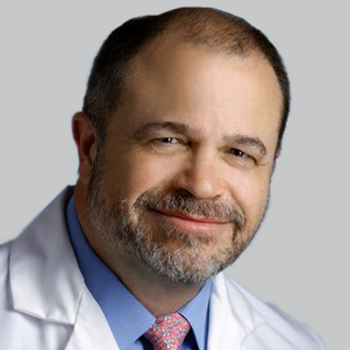
Data from the phase 2 NURTURE study of nusinersen (Spinraza; Biogen) suggest that long-term treatment with the agent is beneficial, and point to the importance of newborn screening and early treatment for spinal muscular atrophy.
Mind Moments®, a podcast from NeurologyLive®, brings you an exclusive interview with Seema Khosla, MD, FCCP, FAASM. [LISTEN TIME: 29 minutes]

The neurodegeneration program lead at Genentech offered his perspective on the phase 3 SKYLINE trial and the historical data on gantenerumab ahead of this new clinical assessment.

The trial will use PACC-5 score as its primary end point and expects to enroll 1200 participants who have confirmed amyloid pathology without signs of cognitive impairment.
A group of experts in the care of patients with rare diseases—James F. Howard, MD; Sabrina Paganoni, MD, PhD; Darcy Kruger, MD, PhD; Veronica Hood, PhD; and Bruce Cree, MD, PhD—shared their perspectives on hot topics of treatment and management.
In recognition of Rare Disease Day, the NeurologyLive® team offered an extensive update on the state of care and treatment for a wide range of rare neurological diseases, including Kleine-Levin syndrome, amyotrophic lateral sclerosis, cerebral palsy, Lennox-Gastaut syndrome, and more.

Mechanistic data from the phase 2 REPAIR-MS trial support blinded efficacy data from the VISIONARY-MS trial, suggesting that Clene Nanomedicine’s investigational CNM-Au8 has the potential to drive clinically meaningful improvements in recognized MS functional end points.

A pair of datasets from the CLASSIC-MS and GLIMPSE studies of cladribine (Mavenclad; EMD Serono) suggest that the oral tablet sustained delayed conversion to clinically definite MS as well as favorable efficacy to dimethyl fumarate, fingolimod, and teriflunomide.
Mind Moments®, a podcast from NeurologyLive®, brings you an exclusive interview with Konstantin Karmazin, MD. [LISTEN TIME: 26 minutes]