




Epilepsy
Latest News
Advertisement
Latest Videos






CME Content












Advertisement
More News

New data highlights cenobamate's effectiveness in reducing focal seizures in Asian populations, showcasing significant improvements and potential long-term benefits for patients.

New AES 2025 data reinforce zorevunersen’s disease-modifying potential in Dravet syndrome, showing durable seizure reduction, functional improvements, and a consistent safety profile.

Recent analysis reveals Epidiolex significantly reduces seizures in patients with various developmental epileptic encephalopathies, showcasing its broad effectiveness.

Despite the availability of antiseizure medications approved for Dravet syndrome, a recent survey presented at AES 2025 showed that these therapies remain underutilized in patients.
A study reveals EEG and MRI biomarkers in MOGAD patients with epilepsy, highlighting potential early indicators for refractory epilepsy and improved treatment outcomes.

Following stiripentol’s market authorization in Japan in November 2012, a postmarketing surveillance study was conducted in all patients with Dravet syndrome who initiated treatment.

New findings reveal the challenges of treating pediatric epileptic encephalopathy with NBI-827104, highlighting the need for effective therapies.

New STIRUS data unveiled at AES 2025 demonstrate meaningful real-world reductions in seizures, status epilepticus, and healthcare needs with stiripentol in Dravet syndrome.

Here's some of what is coming soon to NeurologyLive® this week.
Take 5 minutes to catch up on NeurologyLive®'s highlights from the week ending November 28, 2025.

Mind Moments®, a podcast from NeurologyLive®, brings you an exclusive interview with Christina Briscoe, MD. [LISTEN TIME: 24 minutes]
The pediatric epileptologist at Boston Children’s Hospital discussed national variability in treating infantile epileptic spasms syndrome and the evidence gaps that continue to shape clinical decision making.

The pediatric epileptologist at Boston Children’s provided clinical commentary on the potential reasons behind variability existed in using sequential versus combination therapy, third therapies, and adverse event monitoring for infantile epileptic spasms syndrome. [WATCH TIME: 3 minutes]
Here's some of what is coming soon to NeurologyLive® this week.
Take 5 minutes to catch up on NeurologyLive®'s highlights from the week ending November 21, 2025.

Daniel Mikol, MD, PhD, vice president of neuroscience development at AbbVie, discussed how precision tools, AI, and patient partnership are reshaping the design and execution of modern neuroscience clinical trials.
Here's some of what is coming soon to NeurologyLive® this week.
Take 5 minutes to catch up on NeurologyLive®'s highlights from the week ending November 14, 2025.
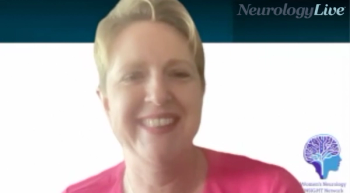
The co-founder of the Women Neurologists Group shared her experiences from the 4th Annual Women in Neurology Conference in Colorado Springs, highlighting its focus on education and wellness. [WATCH TIME: 6 minutes]
The vice president of Rare Disease Strategy at Worldwide Clinical Trials discussed how genetic counselors are becoming integral to the design, execution, and interpretation of clinical research. [WATCH TIME: 3 minutes]

Single-Center Study Highlights System-Wide Benefits of Pediatric Neurogenetic Counseling-Only Clinic
A genetic counselor-only clinic enhances access to genetic testing in pediatric neurology, proving efficient and effective for timely precision diagnostics.
Here's some of what is coming soon to NeurologyLive® this week.

A recent study highlights the link between genetic neurodevelopmental disorders and increased gastrointestinal issues in pediatric patients, emphasizing the need for targeted care.
Here's some of what is coming soon to NeurologyLive® this week.

The chief medical officer at Mandos Health discussed new CNS 2025 data on adrabetadex in infantile-onset Niemann-Pick type C and the growing evidence of its potential disease-modifying impact.
Advertisement
Advertisement
Trending on NeurologyLive - Clinical Neurology News and Neurology Expert Insights
1
12-Month Gluten-Free Diet Linked to Cognitive, Quality-of-Life Improvements in Parkinson Disease
2
GLP-1/GIP Agonist KP405 Shows Biomarker Signal in Parkinson Disease
3
LRRK2 Inhibitor BIIB122 Fails to Slow Early-Stage Parkinson Disease
4
Phase 1 Data Link ARV-102 LRRK2 Degradation to Oculomotor and CSF Biomarker Changes in Parkinson Disease
5