

Epilepsy
Latest News
Advertisement
Latest Videos
Podcasts



CME Content










Advertisement
More News
Final safety data from an open-label study presented at AES 2025 supported long-term fenfluramine use in pediatric and adult patients with Dravet syndrome or Lennox-Gastaut syndrome.
An AES study revealed the real-world persistence of fenfluramine in treating Lennox-Gastaut syndrome, highlighting patient demographics and treatment trends.
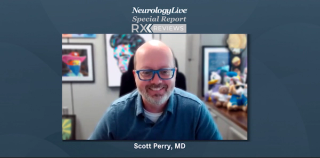
The Baldwin Keyes Professor of Neurology at the Sidney Kimmel Medical College at Thomas Jefferson University and Founder’s Award recipient discussed the state of the epilepsy care community and his outlook for the future. [WATCH TIME: 4 minutes]
Here's some of what is coming soon to NeurologyLive® this week.
Janelle Wagner, PhD, a clinical psychologist and research professor at the Medical University of South Carolina, provided clinical insights on a recently presented study on whether elevated ADHD symptoms impact post epilepsy surgery seizure freedom.
Take 5 minutes to catch up on NeurologyLive®'s highlights from the week ending January 2, 2026.
As part of NeurologyLive®'s Year in Review, take a look at our top expert interviews on the latest advances and use of artificial intelligence in neurology care.
As part of NeurologyLive®'s Year in Review, take a look at our top collaborative interviews with the Strategic Alliance Partnership program in 2025.
Here's some of what is coming soon to NeurologyLive® this week.
Assessing Antisense Oligonucleotide Apazunersen in Pediatric Angelman Syndrome: The Aspire Study
Published: | Updated:
Apazunersen, an investigational intrathecal therapy, is being evaluated in the phase 3 Aspire trial for pediatric Angelman syndrome, with study completion anticipated in the second half of 2026.
Take 5 minutes to catch up on NeurologyLive®'s highlights from the week ending December 26, 2025.
A look back at clinician-led features from 2025 that examine the questions, data, and decisions shaping neurologic care.
The director of the Pediatric Epilepsy Center at UCSF reviewed recently presented interim phase 1/2 data for ETX101, a one-time AAV9 gene regulation therapy aiming to increase SCN1A expression in inhibitory interneurons in Dravet syndrome.
Explore the transformative buzzwords in neurology for 2025, highlighting advancements in AI, gene therapy, personalized treatment, and neuroplasticity.
Explore the evolving landscape of developmental and epileptic encephalopathies in adults, highlighting precision therapies and the need for accurate diagnoses.
Here's some of what is coming soon to NeurologyLive® this week.
Take 5 minutes to catch up on NeurologyLive®'s highlights from the week ending December 19, 2025.
Frontlines with Frontera, a podcast hosted by neurointensivist Jennifer Frontera, MD, brings you an exclusive interview with Sahar Zafar, MD, MBBS. [LISTEN TIME: 30 minutes]
Elizabeth Gerard, MD, an epileptologist at Northwestern Medicine, provided clinical insights on a new consortium, GEAN, which aims to expand genetic testing and define adult phenotypes for rare genetic epilepsies across North America.
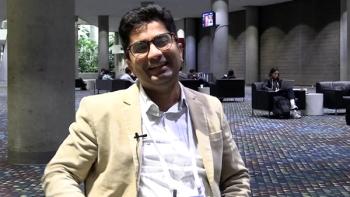
A neuroscientist associated with the Cleveland Clinic Epilepsy Center discussed the rapid expansion and excitement surrounding the continued integration of AI in the field of epilepsy care. [WATCH TIME: 5 minutes]
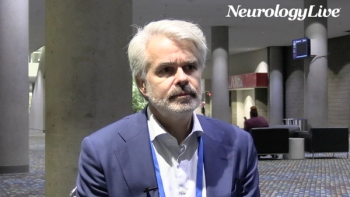
The senior vice president of clinical development for Lundbeck provided in-depth commentary on the mechanism of bexicaserin, and the promising early-stage data shown in those with developmental epileptic encephalopathies. [WATCH TIME: 4 minutes]
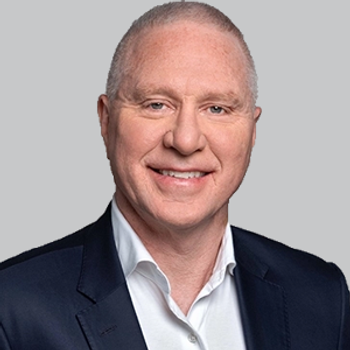
Christopher Kenney, MD, FAAN, chief medical officer at Xenon Pharmaceuticals, reviews encouraging long-term data behind azetukalner, a first-in-class Kv7 channel opener, as a potential treatment for focal onset seizures.
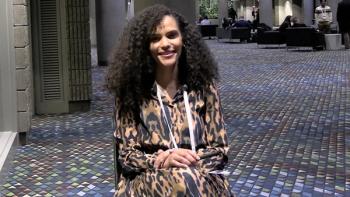
At AES 2025, a clinical neuropsychologist at the Cleveland Clinic Epilepsy Center discussed the growing challenges facing older adults with epilepsy and the need for more comprehensive, research-informed care strategies. [WATCH TIME: 4 minutes]
Here's some of what is coming soon to NeurologyLive® this week.
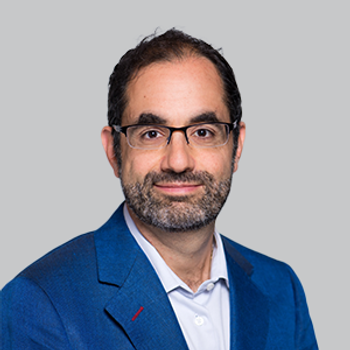
Andrea Rossetti, MD, director of the EEG/Epilepsy Unit at the Department of Clinical Neurosciences the Lausanne University Hospital in Switzerland, offers insight into post-resuscitation epilepsy care.
Advertisement
Advertisement
Trending on NeurologyLive - Clinical Neurology News and Neurology Expert Insights
1
uniQure Submits BLA for Gene Therapy in HD, AAN, AHS Issue Updated Guideline on Migraine Prevention, CTE Prevalence, Brain Donation Findings in Former NFL Players
2
Phase 4 Study Highlights Valbenazine's Positive Impact on Patient-Reported Quality of Life, Daily Functioning in Tardive Dyskinesia
3
Study Shows DMTs Associated With Higher Risk of Gynecologic Complications in Women With MS
4
FDA Action Update, August 2026: Approvals, Clearances, and Designations
5