




MS and Demyelinating Disorders
Latest News
Advertisement
Latest Videos


CME Content






Advertisement
More News

The founder of Food Matters 365, in Greensboro, North Carolina, commented on the benefits of adding a dietitian to the healthcare team for patients with multiple sclerosis. [WATCH TIME: 3 minutes]
An expert provided context on the need to improve awareness and education on cannabis for patients with multiple sclerosis.

Here's what is coming soon to NeurologyLive.
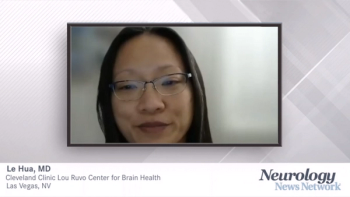
Le Hua, MD, provided insight on the current knowns and unknowns about older patients with multiple sclerosis, how their disease progresses, and the need for additional research.

Continued improvement in the pharmacodynamics and pharmacokinetics of S1PR modulators, particularly in modulator-receptor selectivity, should improve therapeutic efficacy while reducing the potential for AEs.
Neurology News Network for the week ending October 30, 2021.

The associate professor of pediatrics and neurology at Rutgers–Robert Wood Johnson Medical School discussed findings from a qualitative study that aimed at understanding priorities and concerns within this patient population during a transitional period.
Take 5 minutes to catch up on NeurologyLive's highlights from the week ending October 29, 2021.
The registered dietitian at Food Matters 365 in Greensboro, North Carolina, discussed the role nutrition can play in treating comorbidities, sharing her thoughts on popular elimination diets. [WATCH TIME: 2 minutes]

Anna Kratz, PhD, associate professor of Physical Medicine & Rehabilitation, and a research nonclinical psychologist, University of Michigan Medicine, offered insight into the multidisciplinary approach to managing fatigue for patients with multiple sclerosis.

The associate director of the Neuromyelitis Optica Clinic and Research Unit at Mass General spoke about some of the unmet needs and unanswered questions surrounding NMO management.

With the CMSC 2021 annual meeting having wrapped up, the director of the Multiple Sclerosis/MRI Research Group at the University of British Columbia offered his perspective on this year’s conference. [WATCH TIME: 1 minute]

Data presented at CMSC 2021 suggest worse COVID-19 outcomes were associated with patients with neuromyelitis optica spectrum disorder and other comorbidities.

Rates of infection or serious infection with satralizumab in the overall treatment period were not higher than those on placebo in the double-blind period and did not increase over time.
An expert provided context on a subanalysis of the EXPAND study that evaluated the effect of baseline age on the efficacy and safety of siponimod (Mayzent; Novartis) in secondary progressive multiple sclerosis.

In total, 72% of responders reported spasticity as a top 5 most problematic symptom, with 17% ranking it as the single most difficult symptom of MS to manage.
The director of the Multiple Sclerosis/MRI Research Group at the University of British Columbia spoke to some of the newer biomarkers and measures being assessed in the clinical management of multiple sclerosis. [WATCH TIME: 3 minutes]

The director of the Multiple Sclerosis Experimental Therapeutics Program at Johns Hopkins Medicine offered insight on the TREAT-MS trial to attendees of the CMSC 2021 annual meeting.

Data further investigated the impact of how individual disease-modifying therapies affect outcomes for this patient population.

The post-doctoral scholar at the University of Iowa outlined his presentation at CMSC 2021 which focused on the use of elimination diets to improve symptoms of MS. [WATCH TIME: 2 minutes]

All told, 48% of patients with MS reported that their most common primary person for guidance on cannabis use in MS was themself or no one, followed by a dispensary professional and MS physician.

The professor of neurology at the NYU Grossman School of Medicine provided his thoughts on the VIOLA study and the importance of monitoring cell response of post-vaccinated patients with MS on DMTs.

In the presidential lecture series at CMSC 2021, Ellen M. Mowry, MD, called into question whether or not the induction treatment approach in multiple sclerosis does in fact present a higher chance of preventing long-term disability.

Investigators provided 4 strategies for health care providers to implement when speaking to patients with MS, in an effort to improve communication between both parties.
An expert discusses takeaways about the anti-CD20 monoclonal antibody class of disease-modifying therapies for patients with relapsing multiple sclerosis through the lens of ofatumumab (Kesimpta; Novartis).
Advertisement
Advertisement
Trending on NeurologyLive - Clinical Neurology News and Neurology Expert Insights
1
uniQure Submits BLA for Gene Therapy in HD, AAN, AHS Issue Updated Guideline on Migraine Prevention, CTE Prevalence, Brain Donation Findings in Former NFL Players
2
American Academy of Neurology, American Headache Society Issue Updated Guideline on Migraine Prevention
3
uniQure Submits BLA for Gene Therapy in Huntington Disease
4
FDA Approves Zilganersen, First Treatment for Alexander Disease
5