


Neuromuscular
Latest News
Advertisement
Latest Videos
CME Content









Advertisement
More News
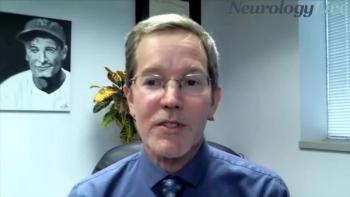
The codirector of the ALS Center at Washington University School of Medicine detailed the reasons for hope within the ALS space and the promising innovations in the coming future. [WATCH TIME: 4 minutes]

The president of the International Neuropalliative Care Society provided perspective on the growth of the field of neuropalliative care, the organization’s role, and how clinicians are overcoming current barriers in place.
The president of the International Neuropalliative Care Society discussed the area in which neuropalliative has expanded and improved, as well as the potential in the coming years. [WATCH TIME: 2 minutes]
The president of the International Neuropalliative Care Society provided an overview of the organization’s recently concluded conference and the significance of the growth of neuropalliative care. [WATCH TIME: 6 minutes]

Here's some of what is coming soon to NeurologyLive® this week.
Test your neurology knowledge with NeurologyLive®'s weekly quiz series, featuring questions on a variety of clinical and historical neurology topics. This week's topic is neuromuscular disorders.
Neurology News Network for the week ending November 19, 2022. [WATCH TIME: 3 minutes]
Take 5 minutes to catch up on NeurologyLive®'s highlights from the week ending November 18, 2022.
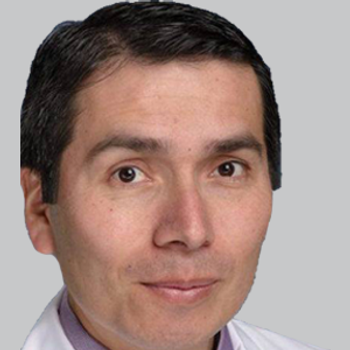
Compared with placebo, a greater proportion of patients on rituximab met the primary end point of minimal disease manifestations at 16 weeks, and demonstrated favorable results on several secondary end points.
Mind Moments®, a podcast from NeurologyLive®, brings you an exclusive interview with George Small, MD. [LISTEN TIME: 33 minutes]
The division chief of stroke and vascular neurology at Duke Health discussed advantages and capabilities, as well as limitations and barriers of transcranial direct current stimulation to treat poststroke symptoms. [WATCH TIME: 4 minutes]
The codirector of the ALS Center at Washington University School of Medicine in St. Louis provided perspective on the phase 3 VALOR findings of tofersen, an antisense agent currently under review to treat SOD1-mutated ALS.

Zilucoplan, a complement C5 inhibitor, demonstrated a safe and tolerable profile, while meeting its primary and secondary end points in the phase 3 RAISE trial—the basis for its new drug application.
Here's some of what is coming soon to NeurologyLive® this week.
Test your neurology knowledge with NeurologyLive®'s weekly quiz series, featuring questions on a variety of clinical and historical neurology topics. This week's topic is neuromuscular disorders.
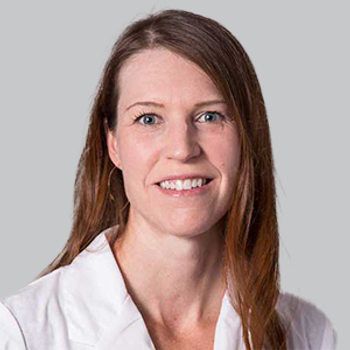
Jennifer Roggenbuck, MS, LGC, an associate professor of neurology and internal medicine at The Ohio State University Wexner Medical Center, discussed her presentation on evidence-based consensus guidelines for genetic testing and counseling from the 2022 NEALS Consortium.
Neurology News Network for the week ending November 12, 2022. [WATCH TIME: 4 minutes]

James Wymer, MD, FAAN, discussed his presentation at the 2022 Annual NEALS meeting on improving speech and swallowing using Neudexta for patients with ALS.
Take 5 minutes to catch up on NeurologyLive®'s highlights from the week ending November 11, 2022.
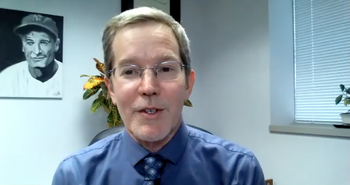
The codirector of the ALS Center at Washington University School of Medicine provided perspective on the lessons learned from the trials of tofersen, as it aims to become the first FDA-approved therapy specific to SOD1 ALS. [WATCH TIME: 4 minutes]
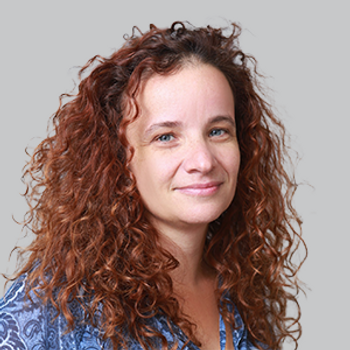
A phase 1/2a clinical trial resulted in showing that a single dosing of AstroRx was safe and tolerable, at either a low or high dose, for patients with ALS.
The Child Neurology Foundation is using community outreach and a new social services network to help children with neurological conditions feel included in contemporary society.
The codirector of the ALS Center at Washington University School of Medicine in St. Louis provided background on how tofersen would be used alongside other ALS medications if approved. [WATCH TIME: 3 minutes]

NurOwn, otherwise known as autologous mesenchymal stromal cells secreting neurotrophic factors cells, has demonstrated significant effects on disease progression in less severe forms of ALS.

Available neurodegenerative disease treatments are generally unsafe and ineffective at penetrating the blood-brain barrier, though the use of nanoparticles can provide improved penetration and exert a neuroprotective effect.
Advertisement
Advertisement
Trending on NeurologyLive - Clinical Neurology News and Neurology Expert Insights
1
Clene Submits NDA Seeking Accelerated Approval for ALS Drug
2
Real-World Data Show Switch to Subcutaneous Ocrelizumab Well Tolerated
3
Early Data Show Dual-Targeting CAR-T Agent CTA313 Stabilizes Progressive Multiple Sclerosis
4
FDA Accepts Troriluzole NDA Resubmission for Spinocerebellar Ataxia
5